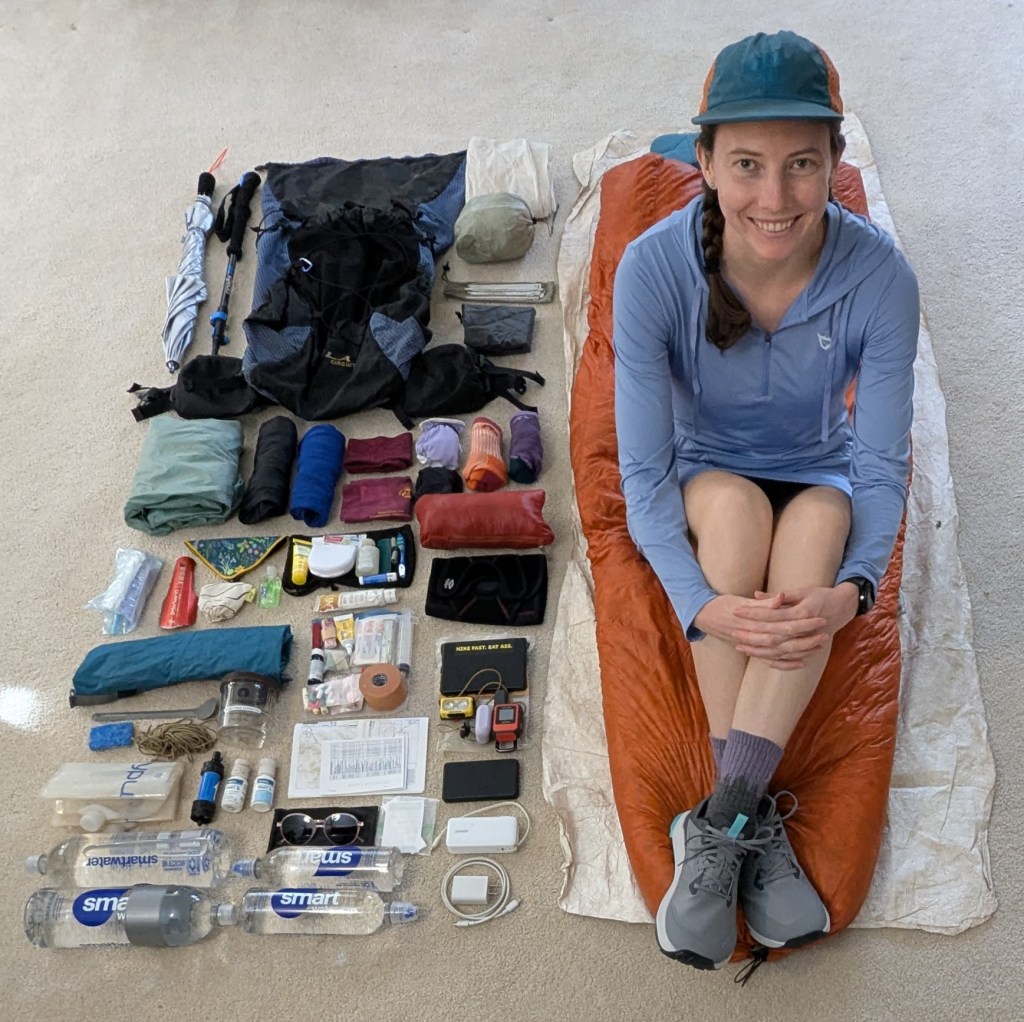
It’s a little surreal that I’m starting a thru-hike of the Continental Divide Trail later this month! I’m doing many things to prepare for my thru-hike, such as training. I’m also carefully deciding what gear to pack.
As with all thru-hikes, everything I bring must be carried on my back. So I choose my gear carefully, only taking what I will actually use. I’m trying to find the right balance for me between affordability, lightness, and comfort. This balance looks different on different trips. My Continental Divide Trail (CDT) gear will differ from what I’ve carried on past trips, such as the Appalachian Trail (AT) and Pacific Crest Trail (PCT).
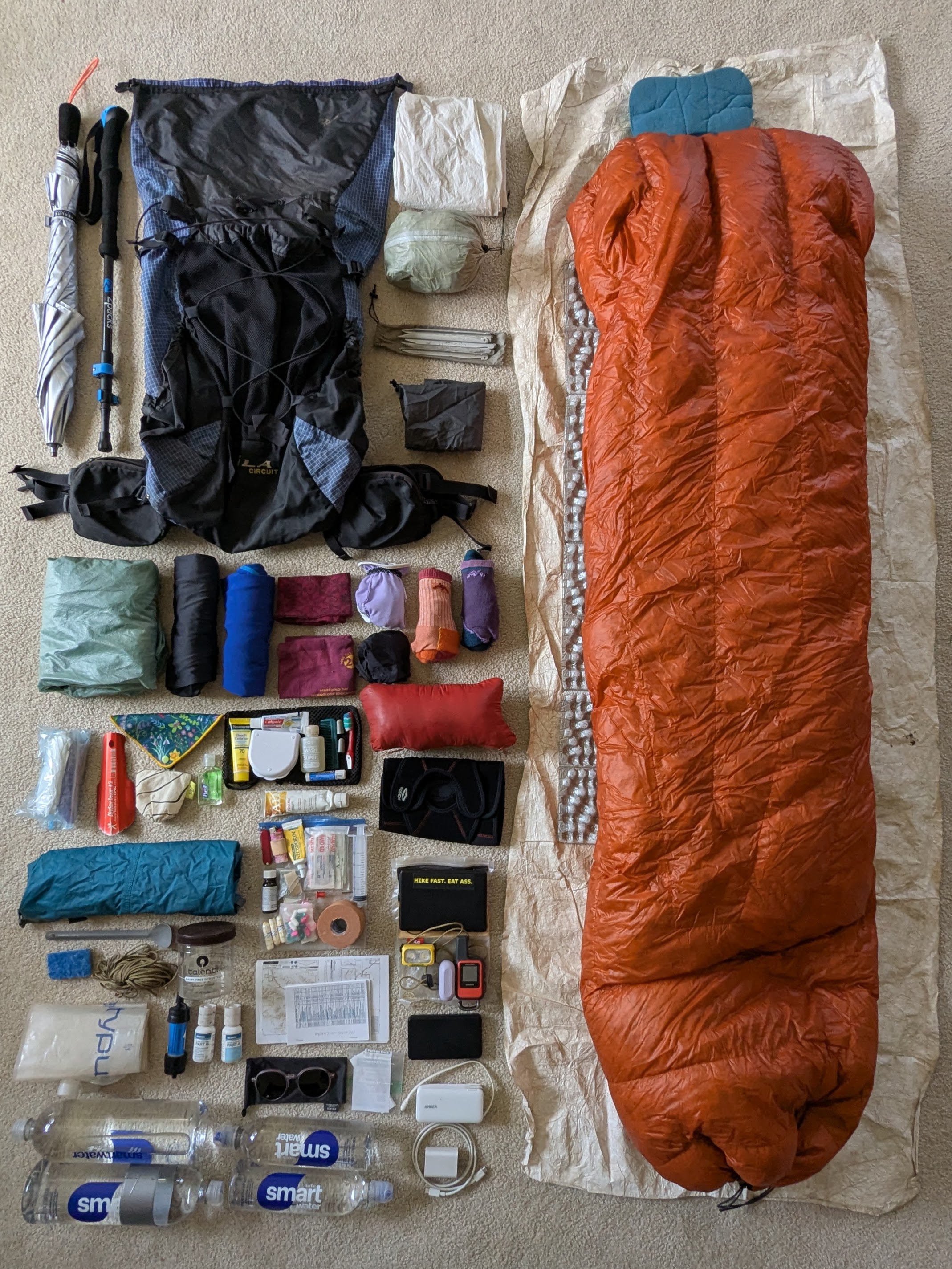
I’m thru-hiking the PCT and CDT in back-to-back years. Last fall, after I finished the PCT, I took stock of my gear and decided which items needed replacing. Some of my PCT gear was broken or completely worn out, like my trekking poles and my hiking dress. Additionally, I will add/change some items for the CDT, like adding an extra battery pack and a sun umbrella. But in many cases, I’ll bring similar or the same gear I brought for my 2025 Pacific Crest Trail thru-hike.
Big 4 & Related Accessories
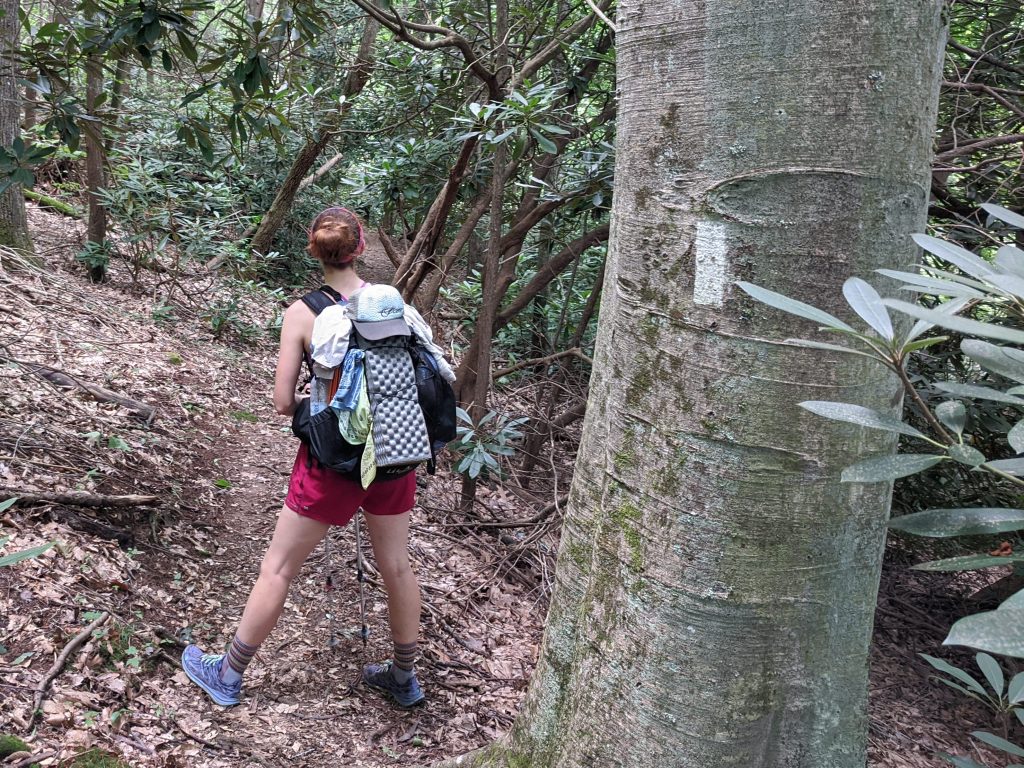
Backpack: ULA Circuit
With a heavy heart, I retired my beloved Gossamer Gear Kumo 36L Fastpack after the 2025 season. I loved this pack — so much that I loved it to death. However, between my PCT thru-hike and several shorter trips, it held up for over 3,000 miles of use. But on the CDT, I’ll bring my other backpack: a ULA Circuit.
I used my ULA Circuit on the Colorado Trail in 2016. From what I remember, I really like this pack too, though for different reasons. For example, it is designed to carry heavier loads. I think this will really come in handy on some of the longer water carries on the CDT. There will likely be times when I carry water for 20+ miles between sources.
Since this backpack isn’t waterproof, I’m using a pack liner (a trash bag) for some added water resistance. This will help keep my gear dry when it rains.
Quilt: Enlightened Equipment Revelation 20-degree
On the CDT, I’ll use the same quilt I took on the PCT: an Enlightened Equipment Revelation 20-Degree Quilt. This quilt does not fully zip closed like a mummy sleeping bag. Instead, it has a partial-length zipper, several snaps and buckles, and a string to cinch it closed below my feet.
I’m not totally convinced I’ll be warm enough in this quilt, especially at some of the higher elevations in Colorado. If I need to, I might add a sleeping bag liner for more warmth at some point.
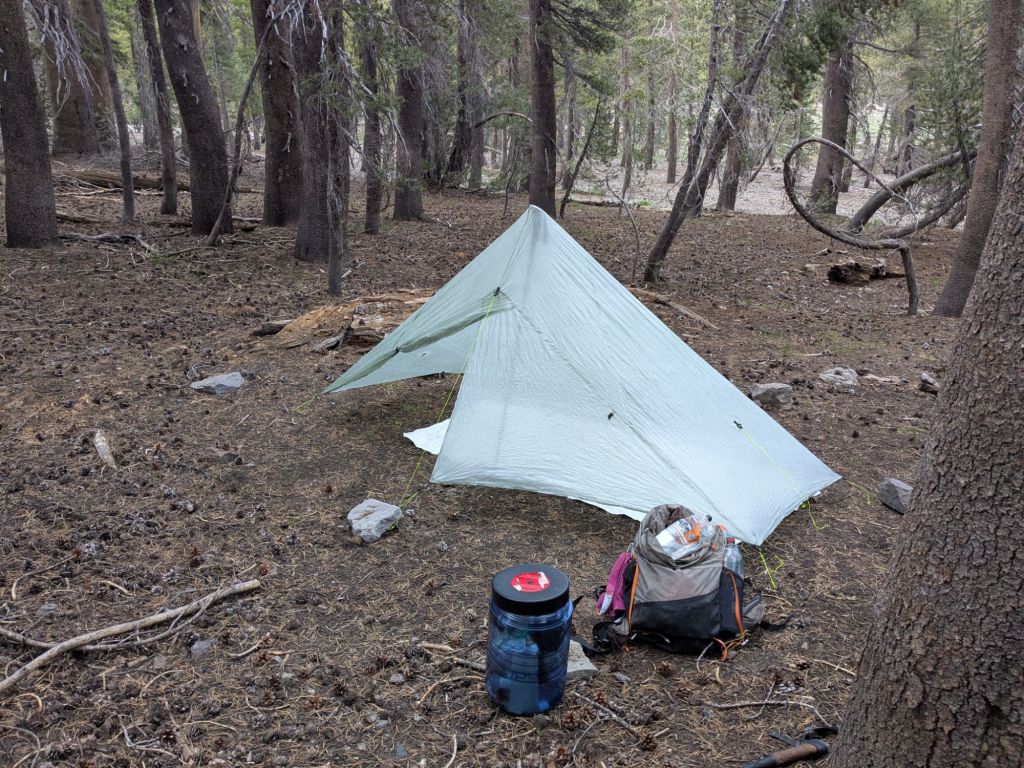
Shelter: Z-Packs Hexamid Pocket Tarp
Once again, I’ll carry my Z-Packs Hexamid Pocket Tarp with 10 Big Agnes Stakes and a Tyvek ground cloth. On the PCT, since it didn’t rain much, I mostly cowboy camped (slept under the stars). I rarely set up this shelter.
However, on the CDT, I will put this shelter to the test in more intense weather conditions. Afternoon thunderstorms are common in Colorado in the summertime. I’m curious if I will like this shelter as much in a wetter climate.
Pad: Nemo Switchback (8 sections)
This is a simplistic sleeping pad. My Nemo Switchback was given to me for free on the PCT, and it works fine. I don’t mind sleeping on closed-cell foam during thru-hikes. Inflatable pads are cushier but often heavier, more expensive, and prone to popping.
Pillow: car sponge
I use a car sponge as a pillow. This is a lightweight and inexpensive option for a backpacking pillow. A car sponge only costs a few bucks and is just as light (if not lighter) than fancy backpacking pillows from REI.
Clothes in my Pack
Insulated Jacket: Mountain Hardware Ghost Whisperer 2 Hooded Down Jacket
The Mountain Hardware Ghost Whisperer 2 is a very lightweight puffy jacket and, consequently, pretty pricey. I lucked out and found mine for cheap on the used clothing website Poshmark. I like its lightness and its cozy hood.
This jacket has seen many miles, but still has life left in it. I’m trying to take good care of it, so I can keep using it on many backpacking trips to come. I washed it after the PCT with a down laundry soap. I’m curious to see if washing it restored its original warmth.
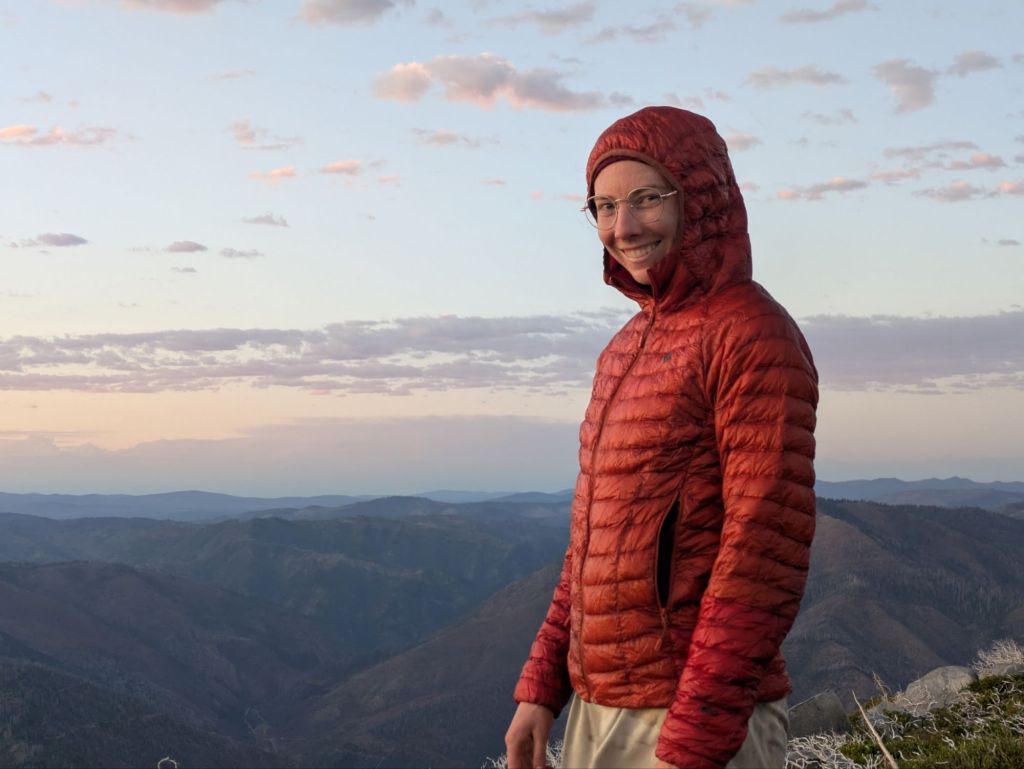
Rain Jacket: FrogToggs Xtreme Lite Women’s Rain Jacket
Similar to my tarp, I rarely used my FrogToggs rain jacket for rain on the PCT. Whether it rains or not, I like having this jacket. It adds a surprising amount of warmth, especially when layered over other clothing. Even with an umbrella, I’ll feel more comfortable having a rain jacket too.
Base Layer Top:
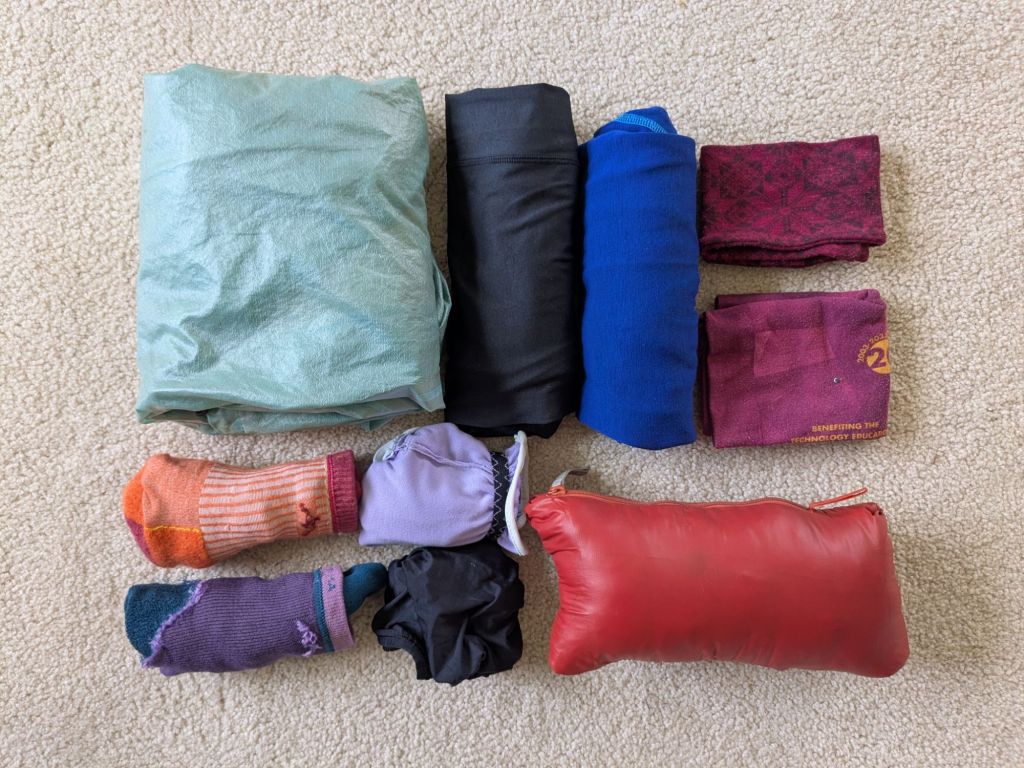
I’m swapping my REI synthetic base layer shirt (pictured below) for a fancy brand-new FarPoint Alpha 60 Crewneck Shirt (not pictured).
Base Layer Bottoms:
I have a talent for ruining base layer bottoms. I went through 2 pairs on the PCT. This year, I’m starting with a brand new pair of REI synthetic base layer tights. I’ll wear these for sleeping and sometimes under my dress while hiking on cooler days.
Other carried clothes:
- An extra pair of undies
- Merino wool headband – to keep my ears warm
- 2 pairs of extra socks – Darn Tough Micro Crew Light or Mid-Weight Hiking Socks
Clothes I’m Wearing
Sun Protection: Long-sleeve Hooded Beach Cover-Up Dress
I loved hiking in a dress on the Pacific Crest Trail! But if you saw my finish photos, you probably noticed that my dress had seen better days. So this year, I bought a new (used) beach cover-up on Poshmark. It’s got a quarter-length zipper, a hood, and pockets!
Hiking Top & Bottom: Spandex Workout Set
Under the dress, I’ll wear a spandex workout top and bottom. They also double as swimwear.
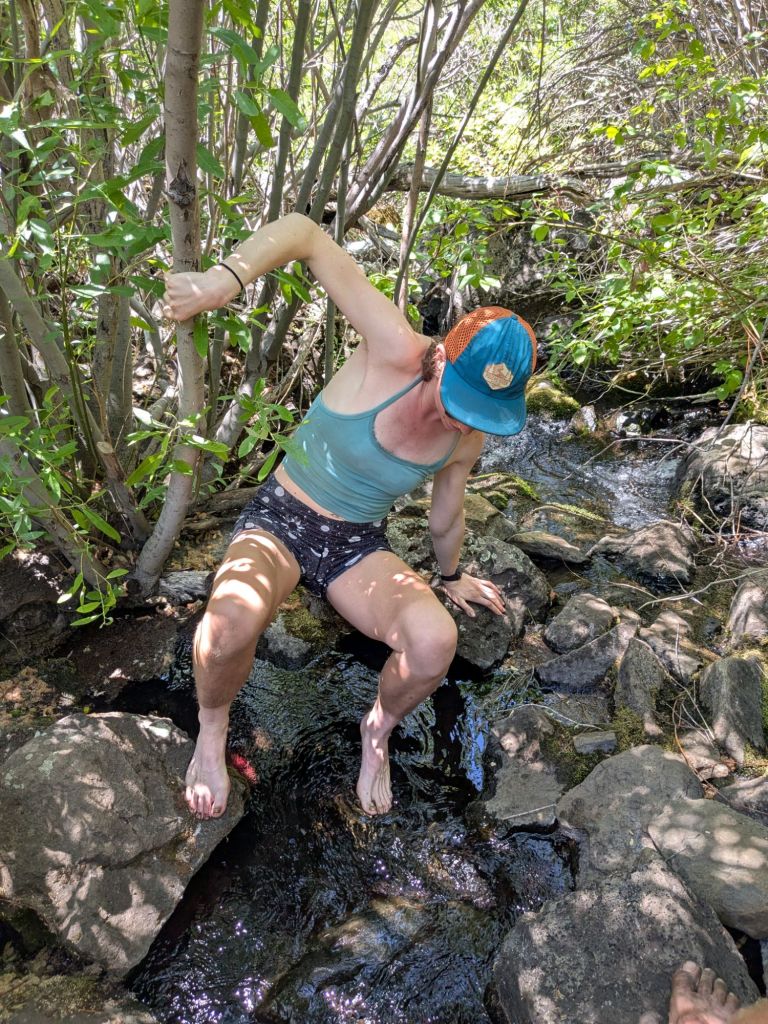
Shoes: Altra Lone Peak Women’s Trail Running Shoes
I’ll start the CDT in Altra Lone Peak trail running shoes. I loved these on the PCT, and I also wear them for trail running in my “normal” life. I will likely go through 5 pairs of them on the CDT (~600 miles/pair).
Socks: Darn Tough Micro Crew Light or Mid-Weight Hiking Socks
These socks have a lifetime warranty. If my Darn Toughs get a hole, the company replaces them, no questions asked. This is a great deal for thru-hikers, as we are much harder on our socks than most folks. I like bringing a total of 3 pairs of socks: one on my feet, one drying on my pack, and one for sleeping.
Additional worn items:
- Prescription glasses – w/ sunglasses clip-on
- Knee brace
- Hat
- Buff – a multi-purpose item
- Undies
- Gloves – a cheap pair of gardening gloves for sun protection and warmth
Water Stuff
Water Containers
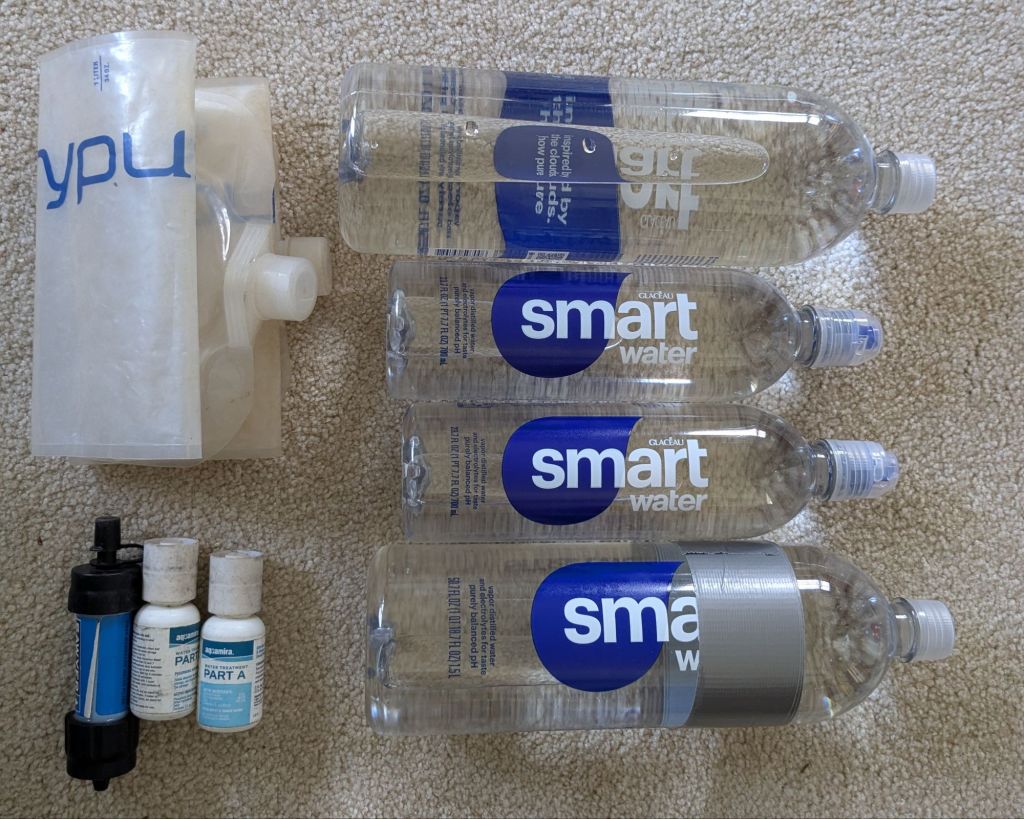
I’ll start the CDT with over 6 L of water capacity. This capacity comes from a combination of SmartWater bottles and 2 L Platypus bags. As I head north, I will add or discard bottles as I see fit, depending on the water situation.
Water Treatment
I primarily use AquaMira to purify water I collect from natural sources. AquaMira is a chemical treatment that kills bacteria, viruses, and other scary stuff growing in water sources. According to the package, each 2-bottle set treats 30 gallons of water. I expect to consume/use about a gallon of water each day. So I will need to mail myself more AquaMira or buy more in stores along the way.
I began the PCT carrying a Sawyer Mini filter as a backup treatment method, but sent it home after the desert because I didn’t use it. I thought it would be useful for filtering chunks and bugs out of water from the murkiest sources. But instead, I ended up pre-filtering using my buff or shirt sleeve before treating my water with AquaMira.
Though I sent my filter home on the PCT, I’m once again debating bringing this filter. I have a suspicion that CDT water sources will be yuckier than PCT sources. The CDT frequently crosses areas where cattle graze. Unlike (most) people, cattle are unaware that it’s bad to use the water source as a toilet.
Food Stuff
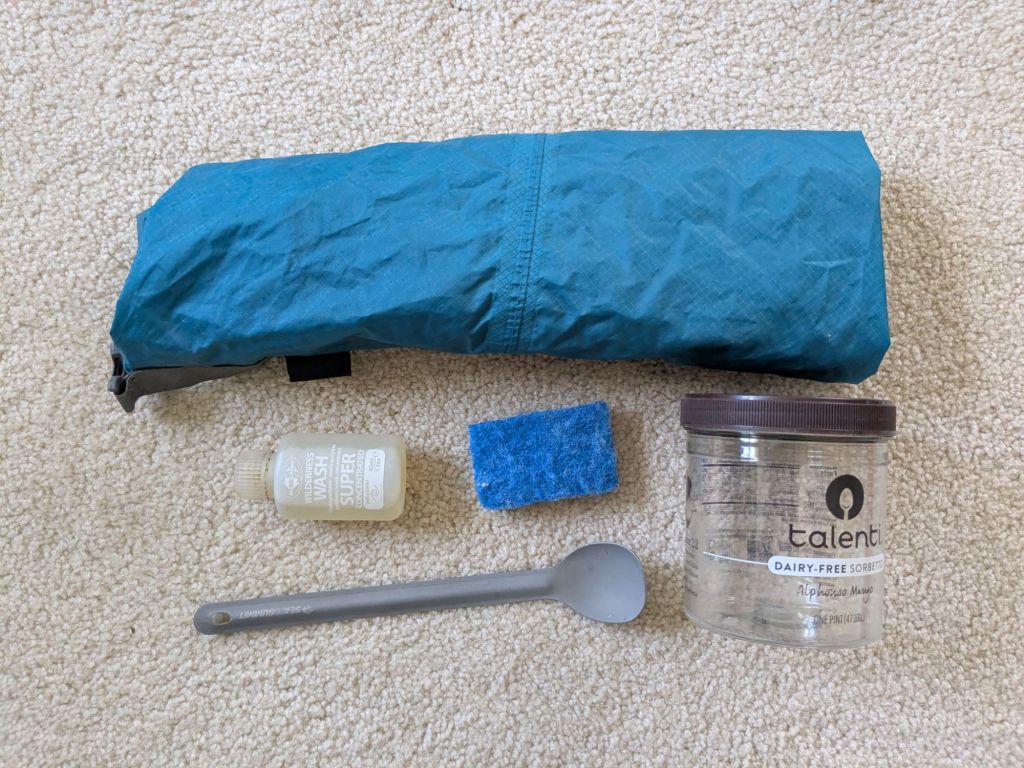
I’ll be stove-free on the CDT! That means that I’ll eat all my meals at room temperature (which can be pretty warm in the desert). I’ll eat a combination of cold-soaked foods like ramen and couscous, and wraps/sandwiches.
For food preparation and storage, I will carry:
- Talenti plastic jar
- Long-handled metal backpacking spoon
- 1/3 kitchen sponge
- Camp Soap
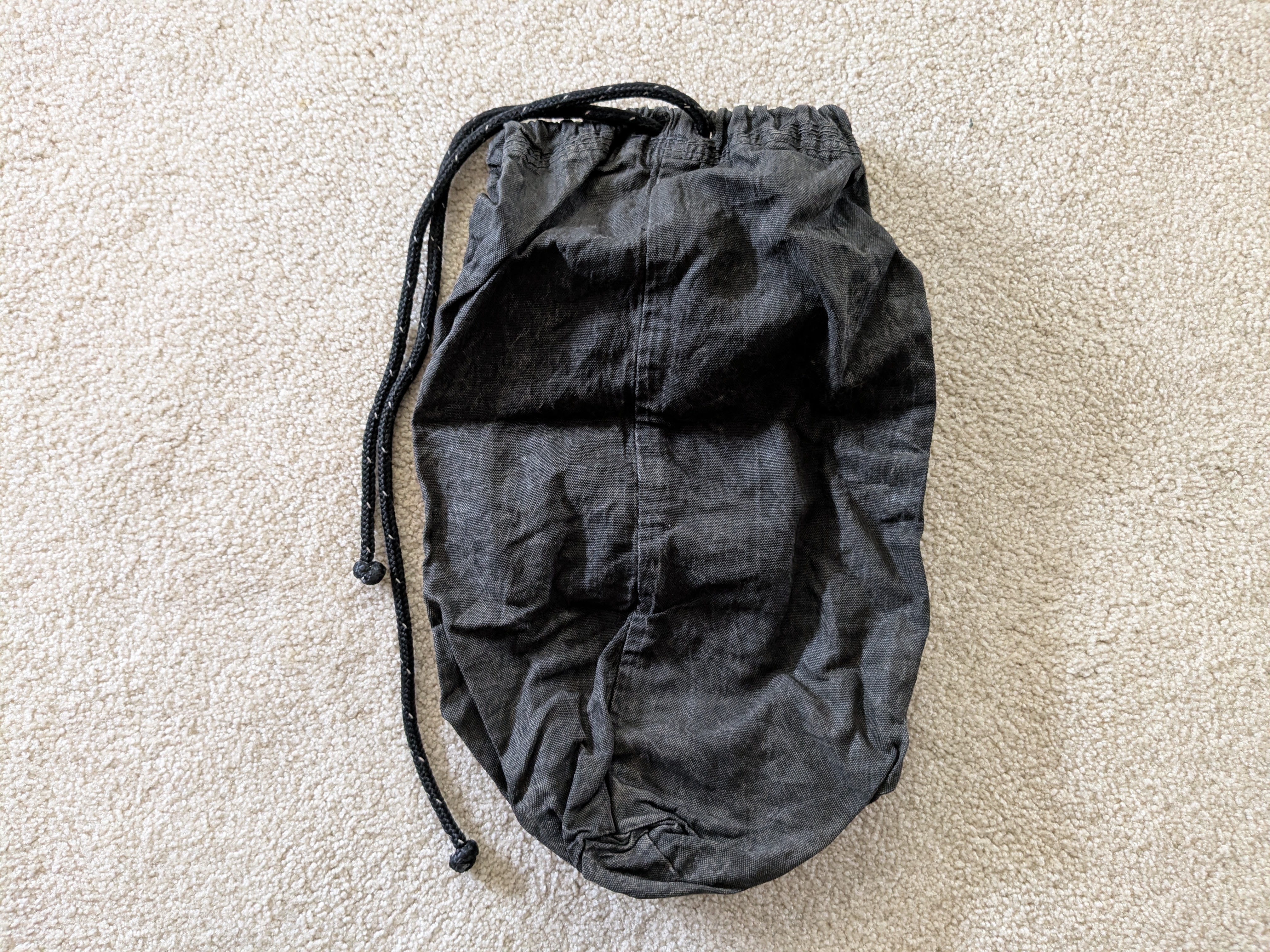
- Sea to Summit Ultra-Sil Dry Bag 20 L – I’ve sized up from the 13 L bag, to accommodate long food carries and my insatiable hiker hunger.
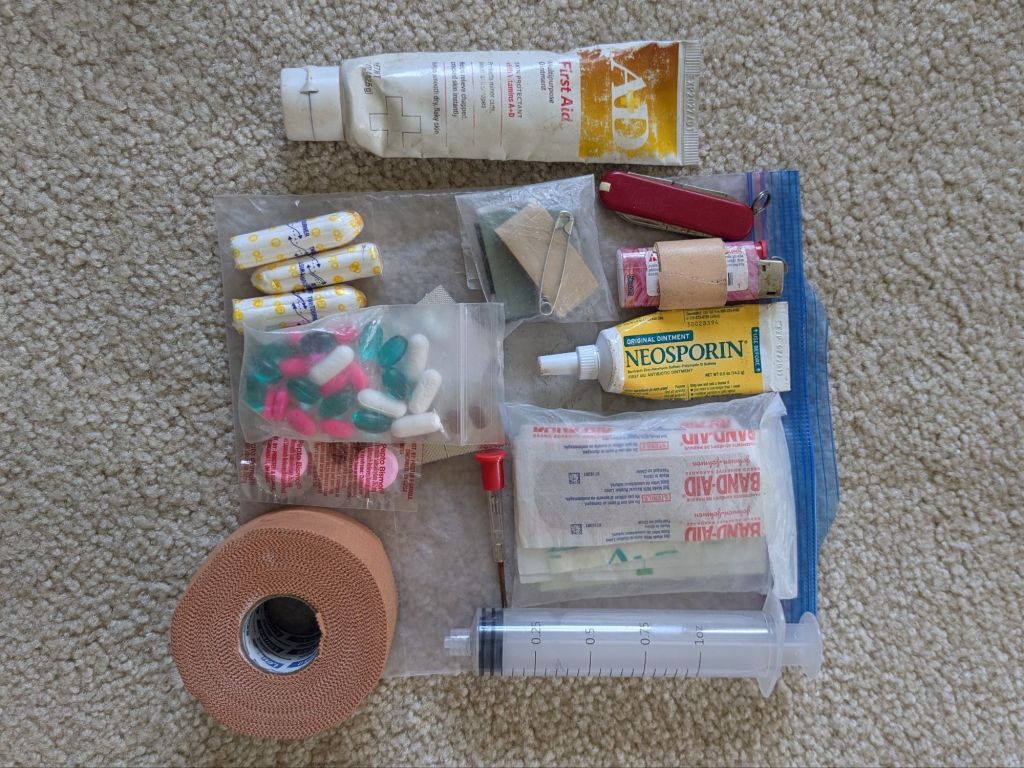
First Aid, Repair, and Emergency Kit
I’ll start the CDT with the first aid kit I ended the PCT with. It included:
- Mini Swiss Army knife – includes tweezers, file, knife, and scissors
- Lighter
- Band aids – various sizes and wound closure strips
- Gauze pads
- Leukotape
- Alcohol prep pads
- Neosporin
- Over-the-Counter medications – Benadryl, ibuprofen, Tylenol, Pepto Bismol, Imodium
- Tampon – fun fact: can be used to stop a nosebleed
- A&D ointment – feels great on chaffed skin and minor sores
- Safety pin
- DCF patch and Tenacious Tape – for gear repair
- Tiny glasses screwdriver
- Syringe
Based on my past experiences, I could probably get away with an even more minimalist first aid/repair kit. The only items I used on the PCT were Leukotape, A&D, ibuprofen, Benadryl, a safety pin, Tenacious Tape, the screwdriver, and scissors. However, I like having a few other first aid items just in case. Though unlikely, I’ll be glad I carry these things if I (or anyone I meet) needs first aid or gear repair.
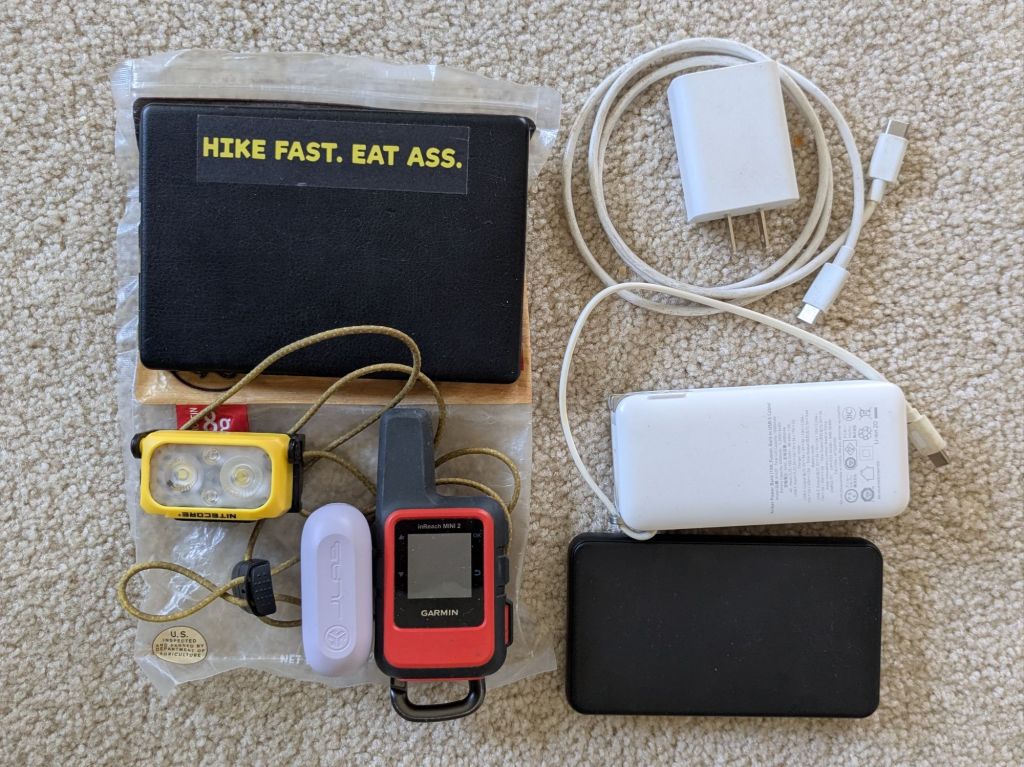
Electronics
In this day and age, I find myself backpacking with a lot of stuff that needs to be plugged in. The electronics I’ll carry on the CDT include:
- Phone: Pixel 6a
- PLB – Garmin In Reach Mini 2
- Headlamp – NITECORE NU25 UL 400 Lumens Ultralight Rechargeable
- Folding travel keyboard – For typing blog posts!
- Bluetooth Earbuds
- Power Bank/Wall Plug – Anker Power Bank (10K, Fusion, Built-In Cable).
- Second power bank – unbranded, 8k bank
- Extra Cable and block – handy for charging 2 things at once.
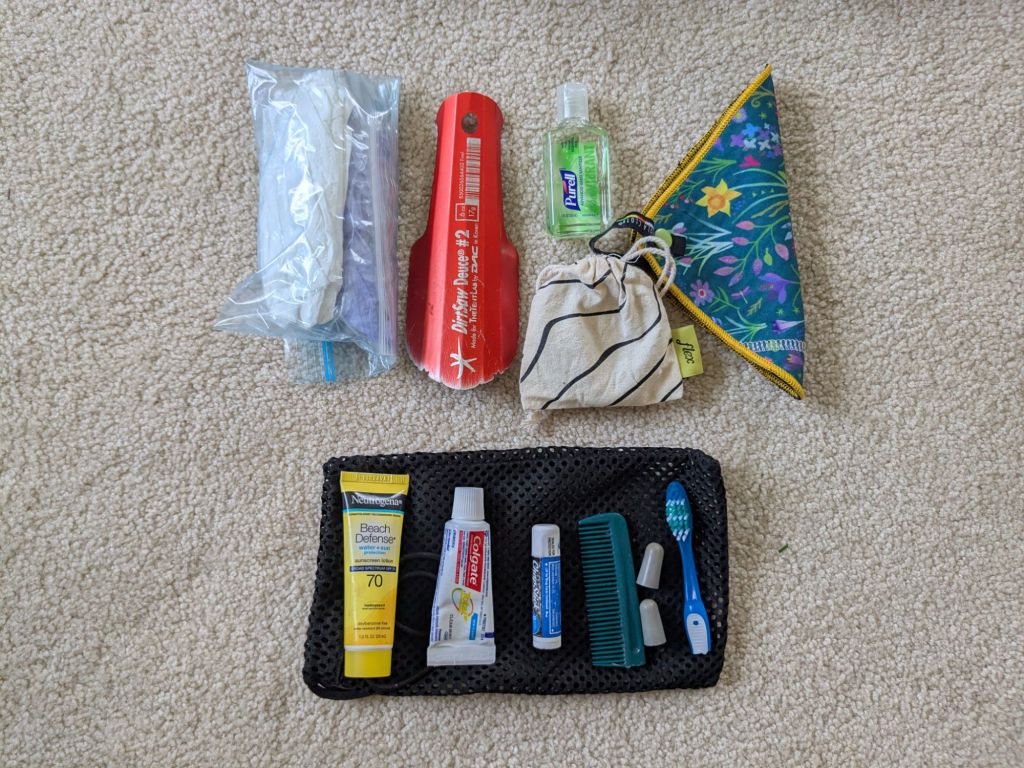
Toiletries
- Kula Cloth
- Trowel – The Tent Lab The Deuce #2
- TP and/or baby wipes in a Ziploc
- Extra Ziploc for packing out used TP/baby wipes
- Flex Reusable Menstrual Disc w/ cloth case
- Hand sanitizer – 1 oz
- Toothbrush
- Toothpaste
- Nighttime mouth guard
- Comb
- Hair ties
- Sunscreen
- Lip balm
- Earplugs
Misc.
- Trekking pole – a single Z-Packs Carbon Fiber Pole, also used for setting up my tarp
- Sun Umbrella – Hyperlight Mountain Gear Umbrella – a new addition for this trail!
- Small stuff sacks and Ziploc baggies – for organization
- Mini carabiner – handy for clipping things to the outside of my pack to dry.
- Duct tape wrapped around a water bottle – always ends up being useful for something.
- Credit cards
- Driver’s license
- Cash
- Printed databook pages/maps
- 50 feet of 3 mm utility cord
Snow Gear
For Colorado:
- Black Diamond Raven Ice Ax
- Kahtoola Microspikes
- An additional warm or wind-resistant layer – if needed
Bear Gear
For north of Lander, WY:
- Ursack Bear-Resistant Bag
- Bear Spray (not pictured)
And that’s everything! As with every thru-hike, I am certain I will make small adjustments to my gear along the way. Inevitably, stuff breaks or doesn’t work the way I want it to. Afterwards, I’ll post another gear update to share what gear worked and what didn’t.
Leave a comment below! What must-have items do you bring backpacking or hiking?


Leave a Reply