Recently, I shared that I’m preparing to thru-hike the Pacific Crest Trail this year! Now, if you’re wondering “What is the Pacific Crest Trail?” or “How long does it take to thru-hike the Pacific Crest Trail” this post is for you!
In this post, I’m answering some of the most common questions that I get asked by my friends and family when I tell them that I’m planning to thru-hike the Pacific Crest Trail.
What is the Pacific Crest Trail?
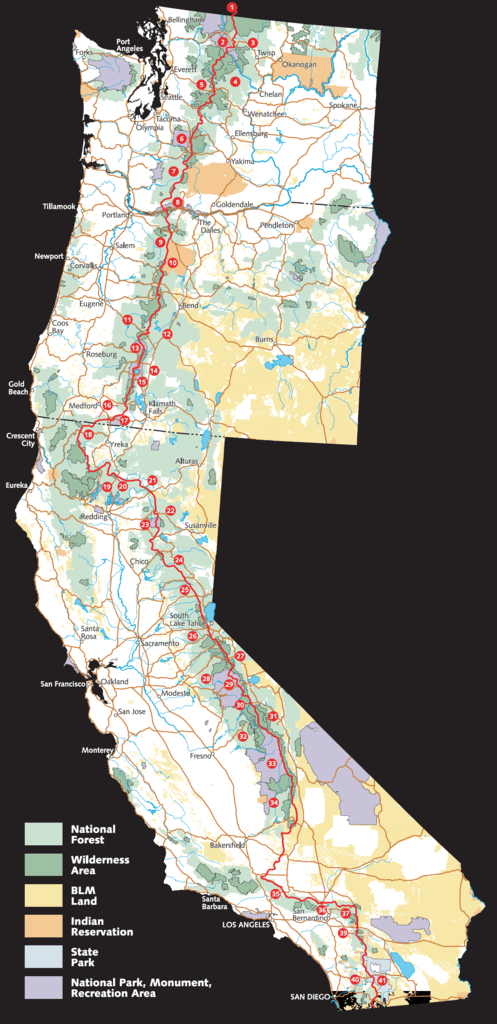
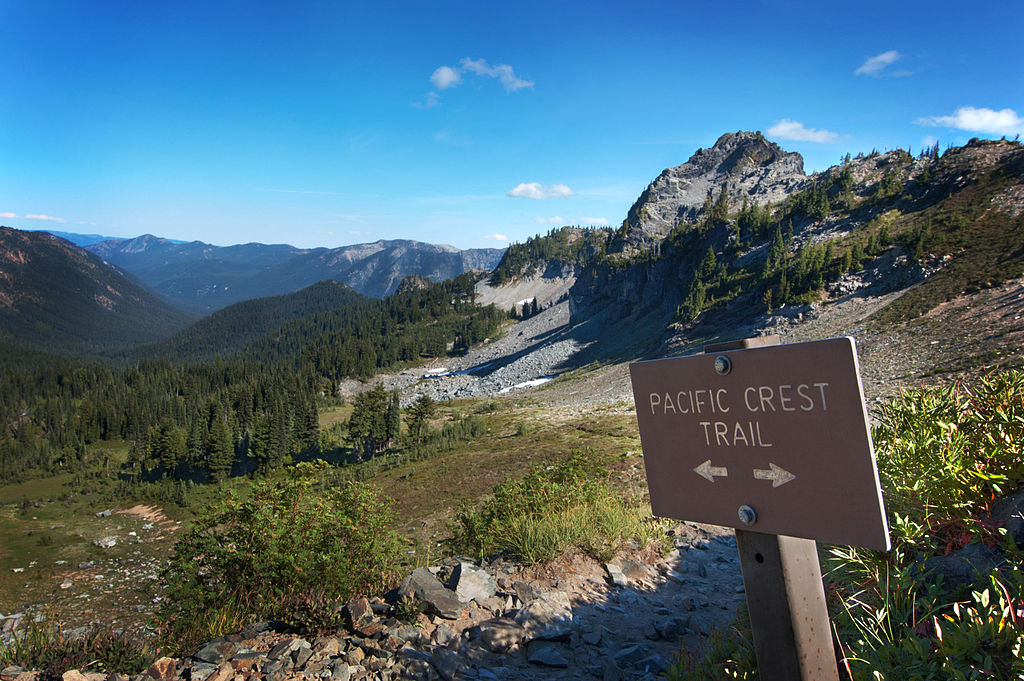
The Pacific Crest Trail, or “PCT” is a ~2,650-mile-long footpath in the western United States. It goes from the Mexican border to the Canadian border through California, Oregon, and Washington. In many ways, the PCT is similar to the more well-known Appalachian Trail of the eastern U.S. The PCT crosses through wilderness areas, national forests, and national parks. Many people use the Pacific Crest Trail for recreation, including backpackers, day hikers, trail runners, horseback riders, and more!
What is a thru-hike?
Each year, many backpackers attempt to hike the Pacific Crest Trail from end to end. Thru-hiking means walking an entire long trail such as the Pacific Crest Trail or Appalachian Trail (AT) in its entirety in one big backpacking trip. There are three main ways to do a PCT thru-hike:
- Hike northbound (Mexico to Canada)
- Hike southbound (Canada to Mexico)
- “Flip-flop”, which means hiking part of the trail in one direction and the rest of the trail in the opposite direction.
How long does a thru-hike of the Pacific Crest Trail take?
A thru-hike of the Pacific Crest Trail often takes between 4 and 6 months. However, a few incredible, record-setting athletes have hiked it in 2 months or less! The weather window to hike the Pacific Crest Trail is relatively short since large mountains in the High Sierra and Washington are snowed in for much of the year.
Where does the Pacific Crest Trail go?
The Pacific Crest Trail spans from the Mexican border to the Canadian border and crosses three states: California, Oregon, and Washington. For logistical and mental purposes, thru-hikers usually think of this trail in terms of 5 main chunks, each with distinct terrain and challenges. They are:
- The desert (aka southern California) ~700 miles
- The Sierras ~400 miles
- Northern California ~600 miles
- Oregon ~450 miles
- Washington ~500 miles

Is thru-hiking the PCT dangerous?
Like anything in life, a thru-hike is not without its risks. Exposure to heat and cold, dehydration, water crossings, animal encounters, severe weather, lightning strikes, injury, and illness are just a few of the risks that hikers (and their loved ones) worry about. While some of these dangers are blown out of proportion, others are very real.
Fortunately, there are steps that hikers can take to reduce their risk. A key step is educating oneself on the risks of traveling in the backcountry and having a plan of what to do if a dangerous situation arises. As a last resort, some hikers carry a personal locator beacon, which can be used to alert and/or communicate with rescue workers in an emergency.
What do Pacific Crest Trail thru-hikers carry?
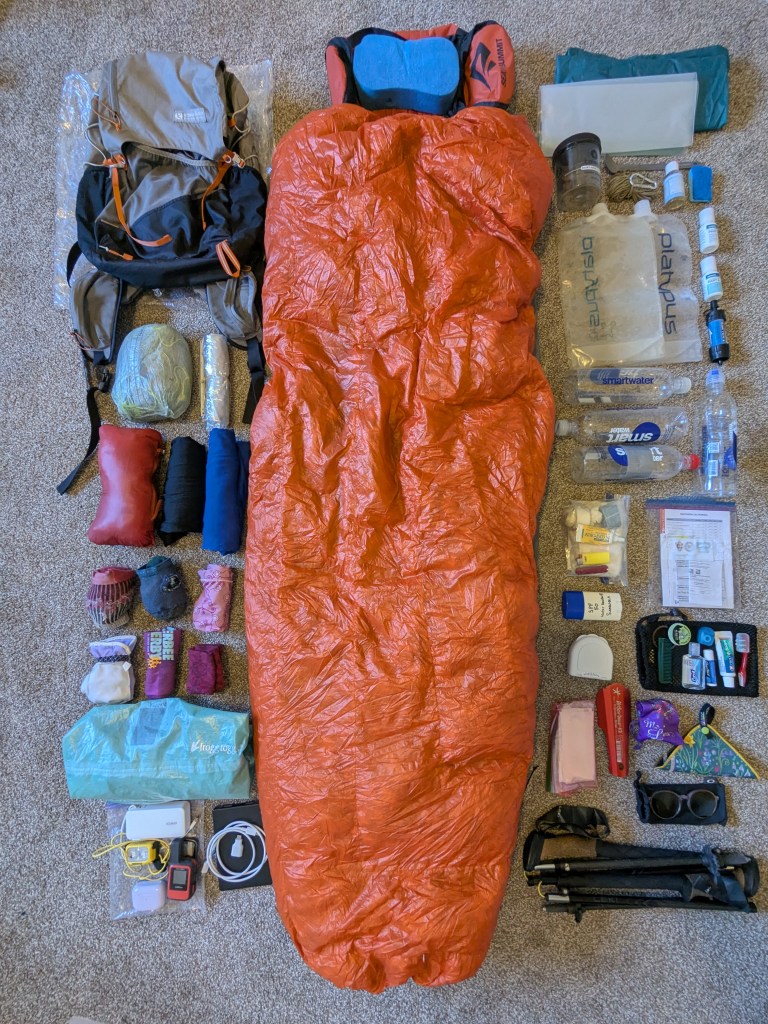
Gear varies from hiker to hiker. In general, thru-hikers usually carry backpacking gear including:
- A backpacking pack
- A sleeping bag or quilt
- A shelter (e.g., a tarp or tent)
- A sleeping pad (inflatable or foam)
- Water bottles or bladders
- A water purification method
- A food bag
- A cook set up (pot and backpacking stove) or cold soaking container
- Layers for various weather conditions
- A light source (e.g., a headlamp)
- Toiletries
- Emergency/first aid supplies
- A navigation method
These aren’t the only things thru-hikers carry. There are many other items that a hiker may choose to bring depending on weather, terrain, budget, and personal preferences (e.g., a sun umbrella, microspikes, an inflatable pillow). You can read about my full starting gear list for the PCT!
How will you get food on the Pacific Crest Trail?
Pacific Crest Trail thru-hikers resupply at towns and businesses along or close to the trail. Hikers can get from the trail to town by hitchhiking, walking on a road or side trail, or using a shuttle service (sometimes provided by trail-friendly businesses).
Some thru-hikers purchase food as they go at grocery and convenience stores. Others prepare packages of food in advance that they (or a designated person) ship to post offices or businesses along the route. Many thru-hikers use some combination of these two methods.

Where will you get water on the Pacific Crest Trail?
Thru-hikers fill their water bottles/bladders from natural sources such as streams, rivers, lakes, and springs. Most carry a water purification method such as a filter, UV water purifier, or chemical treatment to prevent contracting a waterborne illness such as giardia.
On the Pacific Crest Trail, some water sources dry up seasonally, and there can be long sections without reliable water sources. In some particularly dry areas, trail-angels (people who support and assist thru-hikers on their journeys) maintain water caches at road crossings. However, it’s usually advised not to rely on caches being available just in case they are depleted.
Thru-hikers can find up-to-date information on water sources using the PCT Water Report. Thru-hikers also post in the comments section of the FarOut app to notify the hikers behind them of the status of seasonal water sources and caches.
How many people thru-hike the Pacific Crest Trail?
The Pacific Crest Trail Association (PCTA) reports issuing over 4,000 thru-hiker permits per year, in recent years, according to their website (external link). However, the number of people who complete a thru-hike is likely lower. Some people who receive a permit never start the trail, due to changes in plans, issues getting time off work, visa problems, or other reasons. Furthermore, some hikers quit mid-trip for many valid reasons including injury, illness, and loss of interest.
The PCTA keeps a list of people who self-report completing a thru-hike each year. That number has been around 600 to 1,000 hikers in recent years – which would make the completion rate less than 25% of all who receive a thru-hike permit! However, there are likely some hikers who finish and don’t report the completion of their thru-hike to the PCTA.
Do you need a permit to thru-hike the Pacific Crest Trail?
The Pacific Crest Trail crosses through many National Parks, State Parks, and other areas that require permits to hike and camp. Conveniently, the Pacific Crest Trail Association has created an “umbrella permit” for long-distance hikers. This permit (external link) saves thru-hikers from the trouble of obtaining each individual permit for every single permit-requiring area that the trail crosses through.
Furthermore, hikers who want to use a backpacking stove will need an additional permit to do so in California. Finally, northbound hikers who want to hike into Canada at the end of their thru-hike will need an additional Canada PCT Entry Permit.

What’s the best time to start a PCT thru-hike?
There’s a lot of conflicting information out there on the best date to start the Pacific Crest Trail. The best date to start ultimately depends on a lot of factors, such as the winter snowpack and a hiker’s own abilities and preferences. Northbound hikers (those starting at the Mexican border) usually start the trail in March, April, or May. Southbound hikers may start in late June or early July when the snow is usually sufficiently melted from the mountains in Washington.
What is the difference between the Pacific Crest Trail and the Appalachian Trail?
The Pacific Crest Trail and the Appalachian Trail share a lot in common. They are both 2,000+ mile long footpaths traveled by thru-hikers through unique and beautiful places. However, there are several key differences between the PCT and AT, including:
- Length: the PCT is about 2,650 miles long, while the AT is roughly 2,190 miles.
- Elevation gain/loss: though shorter, the AT has steeper terrain, so hikers gain/lose more elevation per mile on average, compared to the PCT.
- Altitude: the Appalachian trail’s highest point is Clingman’s Dome at only ~6,600 feet while the PCT reaches altitudes over 12,000 feet in the High Sierra.
- Water: water sources are relatively more abundant on the Appalachian Trail than on the Pacific Crest Trail, especially in the desert section of southern California.
- Proximity to Civilization: the Appalachian Trail often crosses major roads or goes through towns, providing frequent opportunities for thru-hikers to resupply. Relatively speaking, the Pacific Crest Trail is more remote so thru-hikers need to pack out more food for longer sections between towns.

What other questions do you have about the PCT or my planning process? Ask them in the chat below and I will do my best to answer!


Leave a Reply