
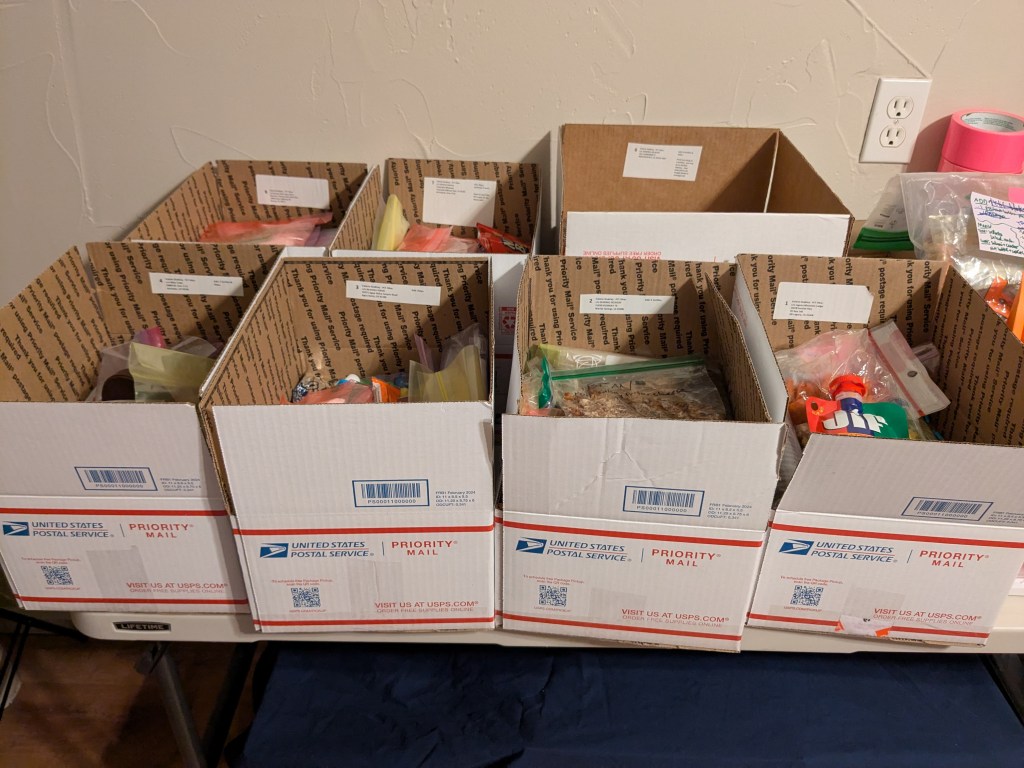
What does 200,000 calories of food look like? Recently, I found out, thanks to the project that temporarily took over my entire basement. As you may know, I am preparing to thru-hike the Pacific Crest Trail (PCT). For me, this means packing up resupply boxes with food to ship to myself along the way.
To complete this task, I purchased over 200,000 calories of food, re-packaged it into individual portions, and placed it into 14 boxes that I will mail to myself in some of the towns along the PCT.
What is a resupply box?
A resupply box or “mail drop” is a package that a backpacker prepares before their trip. The backpacker ships the box to themselves at a location along their route, like a trail-side business or small-town post office. A resupply box contains food and sometimes other items like sunscreen and toilet paper.
Sending boxes is one method for resupplying while thru-hiking a long trail like the Appalachian Trail or Pacific Crest Trail. Hikers may also resupply by grocery shopping in trail towns (towns near a trail, accessed by walking or hitchhiking).
Why send a resupply box?
There are pros and cons to sending resupply boxes on a thru-hike. Ultimately, each hiker must decide what will work best for themselves. These are some of the pros and cons that I’ve considered while figuring out my resupply strategy for the PCT:
Pros
- It may save money: food can be expensive in tiny trail towns. Furthermore, buying in bulk and then re-portioning foods into boxes can save additional money.
- Full control of the menu: it can be annoying to plan a menu based on what is and isn’t available in a trail town’s tiny grocery store.
- Healthier options: resupply boxes can make it easier to eat healthy while on the trail. For example, it can be difficult to get enough vegetables while backpacking. Raw veggies contain lots of water and are heavy. Commercially prepared dehydrated backpacking meals are light and have vegetables but are expensive (especially in small-town stores). Homemade dehydrated meals are a lightweight and lower-cost way to get vegetables on the trail.
- Convenience: for hikers that want to get in and out of trail towns quickly, resupply boxes are an efficient option. No running around town to gather food and supplies.
Cons
- It may cost more: higher prices in trail town grocery stores might not outweigh the cost of shipping and pick up fees. A medium USPS flat rate box costs $19.15 to ship, while a large box is $26.30 in 2025 (source: USPS). Furthermore, hikers may be charged a fee of $5, $10, or more when picking up a box shipped to a trail-adjacent business.
- Timing must be right: hikers can’t retrieve their packages if they arrive at a business or post office outside its hours of business. United States post offices are typically closed Sundays and sometimes Saturdays too. This could lead to an expensive zero day at a hotel in town while waiting for the post office to open.
- Tastes can change: tastes and preferences change over time. A brand of granola bars that was delicious on day 1 of a thru-hike might be nauseating by day 50 and completely inedible by day 100.
- It can be wasteful: the cost-saving benefits of resupply boxes are negated when one discards unwanted food. On the Colorado trail, I knew many hikers who shipped themselves boxes but ended up buying different food. Ultimately, I benefited from this by eating lots of free, unwanted food discarded by other hikers.
Resupply strategies can include a mixture of sending boxes and shopping in trail towns. For example, I’ve prepared boxes for about 1/3 of my PCT resupply stops. In the places where I’m not sending a box, I will walk, hitch, or take a shuttle to a grocery store near the trail and shop.
What goes in a resupply box?
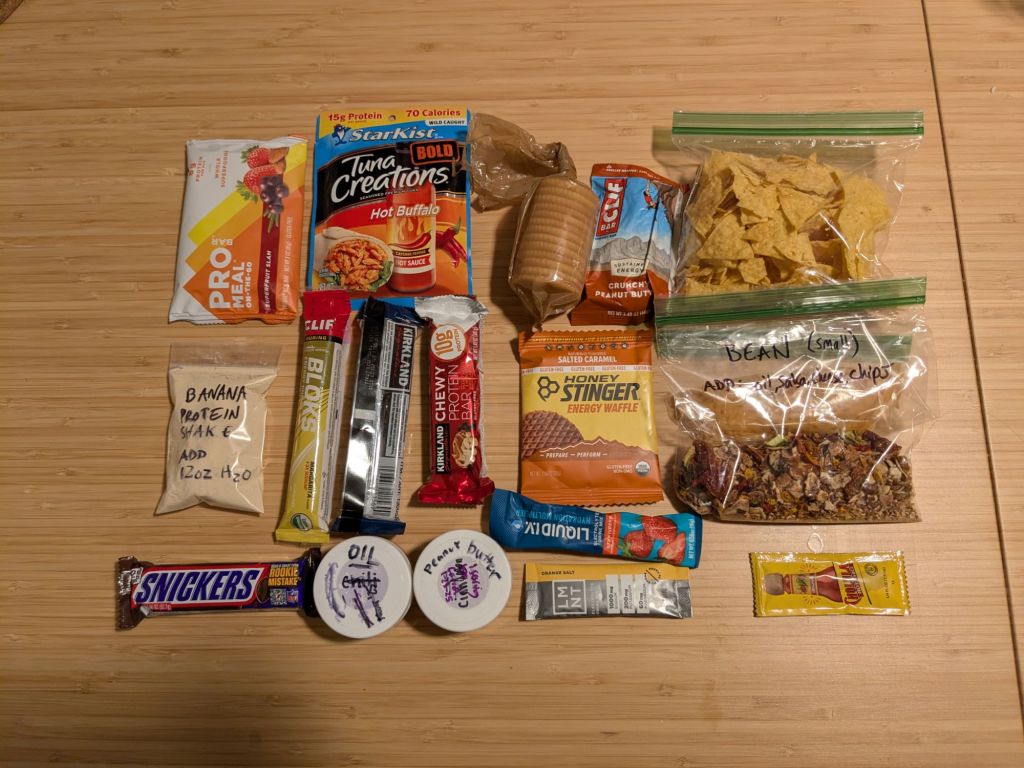
Each resupply box includes enough food to make it to the next resupply point as well as other non-food items. In each of my resupply boxes, I’ve aimed to include a minimum of 4,000 calories per day (and ideally more). Below, you’ll find a description of the different types of foods I’m including in my boxes.
Breakfasts
On the Appalachian Trail, I often opted for a small but sugary breakfast. This usually gave me a quick burst of energy, followed by a crash (and sometimes digestive distress). For the PCT, I’m adding a protein shake at breakfast time, as well as some dried fruit for fiber. Each of my breakfasts includes the following elements:
- Bar/pastry (meal replacement bar, PopTart, or pastry)
- Shake (various flavored protein powders or Huel)
- Dried fruit (raisins, prunes, apricots, blueberries)
Snacks
I’ll be doing lots of eating on the go each day. So I’m including lots of snacks and bars in my resupply boxes. When shopping for snacks, I bought small quantities of many different types of snacks. While it might have been cheaper to buy in bulk, I prioritized variety over price. I hope this will help me avoid getting sick of certain snacks/flavors. Some of the snacks I’ve included are:
- Protein bars (Builders, Aloha, Kirkland-brand)
- Other bars (Fruit bars, nut bars, granola bars)
- Clif bloks
- Honey stinger waffles
- Ritz sandwich crackers
- Electrolyte beverages (LMNT, Liquid IV)
Lunches
For my lunches, I’ve aimed to include a balance of carbohydrates, protein, and fat. These are the types of foods I eat for lunch while backpacking:
- Tuna
- Dehydrated hummus
- Pepperoni
- Summer sausage
- Nut butter (peanut butter, almond butter, Nutella)
- Crackers
- Tortillas
Dinners
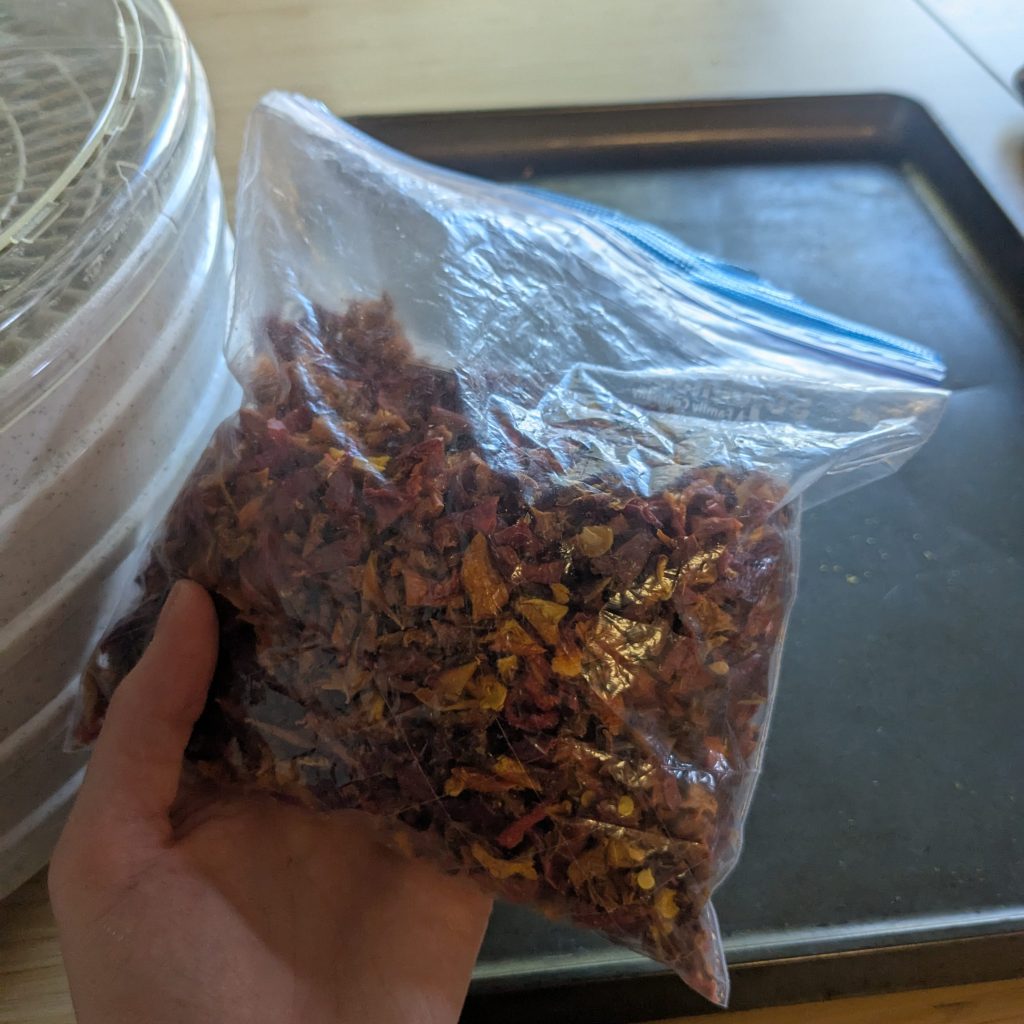
I borrowed a friend’s dehydrator and prepared backpacking dinners for my PCT resupply boxes. I selected recipes that can be prepared without a stove by cold soaking. I’m looking forward to eating backpacking meals that include vegetables, unlike on the Appalachian Trail, where my go-to dinner was a Knorr pasta side.
- Taco bowl
- Quinoa salad
- Buffalo chicken/tuna pasta
- Pasta salad
- Pizza burrito
Treats
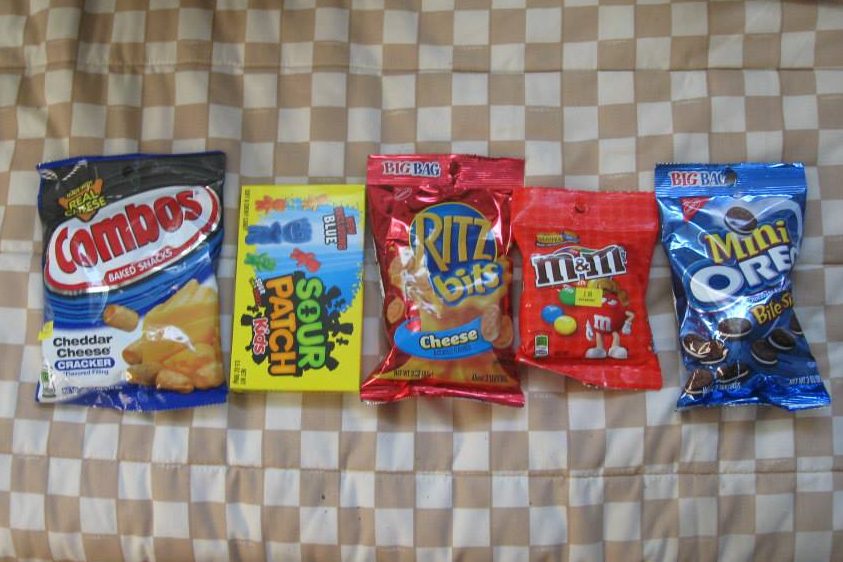
Finally, I’ve put a wide variety of treats in my boxes. Some of the treats I’ve included are:
- Peanut M&Ms
- Snickers bars
- Cookies (e.g., Oreos, Golden Oreos, Nutter Butters, Chips Ahoy)
- Skittles
- Starbursts
Non-Food Items
Food isn’t the only thing I’m putting in my resupply boxes. I’m also considering other consumable items that might be difficult to find or expensive to purchase in small quantities. Here are some of the other things I’m adding to my boxes:
- AquaMira water treatment drops
- PCT Databook pages (backup navigation method)
- Toilet paper
- Hand sanitizer
- Extra Ziploc baggies
- Sunscreen
- Chapstick
- Baby wipes
- Retainer cleaner
- Laundry detergent sheets
- Q-tips
- New sponges for dish washing
- New plastic jars for cold soaking
And that’s it!
Sometimes I worry that I’m packing the wrong foods and will get sick of them before I finish the trail. However, I think it is a good sign that I find it difficult not to steal snacks from my boxes while I wait to start the trail… Needless to say it’s a good thing I bought more peanut m&ms than I needed for my boxes!


Leave a Reply