I’m about to embark on a 2,650-mile walk from Mexico to Canada, also known as thru-hiking the Pacific Crest Trail (PCT). But this journey really began long before my start date. For the last few months, I’ve prepared resupply boxes, figured out what gear to pack, and reflected on my intentions and goals for the trail. I’m also training to prepare my body for the physical demands of a thru-hike.
Training for a thru-hike was not something that I’ve always done. My thru-hike-specific training before hiking the Appalachian Trail was fairly minimal. Prior to my Colorado Trail thru-hike, I spent a month lounging around at the New Jersey shore – I wouldn’t consider my daily stroll to the beach particularly good thru-hike prep.
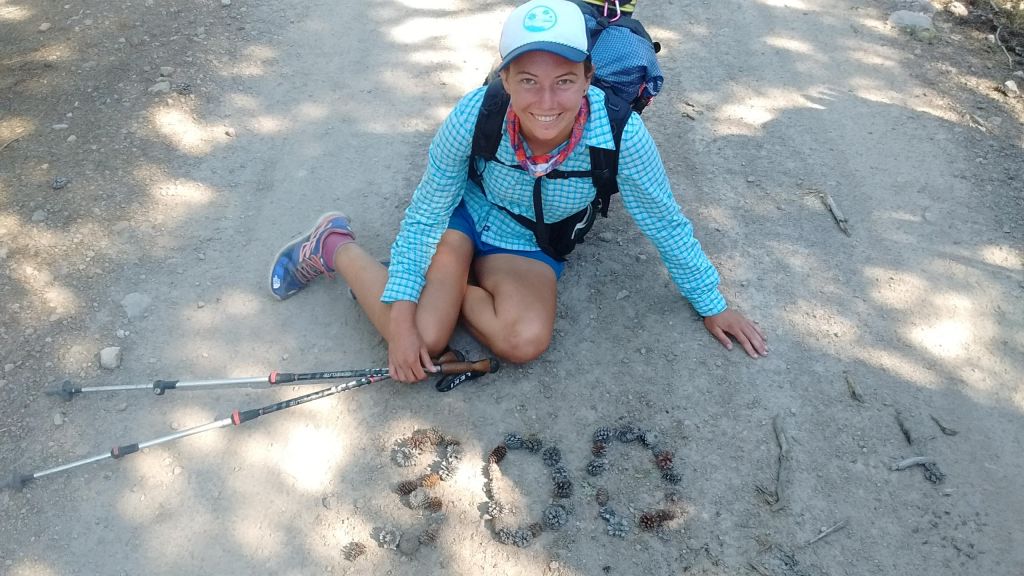
Despite my sub-par training, I completed both my past thru-hikes and had an amazing time! In fact, many successful thru-hikers train very little (or not at all) before their trips.
So then, why train for a thru-hike? There are several reasons:
- It decreases the chance of an overuse injury while on the trail.
- Generally speaking, hiking all day feels less fun when out of shape.
- Training gives the aspiring thru-hiker something productive to do with all that pent-up, pre-trail energy!
Before we dive in, a few big disclaimers for this post:
First, I am not a trainer or exercise professional. This post is purely a summary of what I did to get ready, meant for your entertainment. It’s not advice or a training plan.
Second, as of when I’m writing this, I haven’t hiked even a single step of the PCT (yet)! Did my training strategy work? We’ll have to wait and see. Perhaps the first week I’m on the trail I’ll get horribly injured or realize I’m woefully out of shape. In that case, I’ll have to re-title this post “How NOT to train to walk from Mexico to Canada”!
Strength Training
I’ve heard it said that the only way to train to walk all day every day with a pack is to, well… walk all day every day with a pack. If I had time for that every day, I wouldn’t be at home training – I would already be out thru-hiking! Instead, I focused primarily on strength training.
I knew strength training would give me the best shot at even starting my thru-hike. That’s because last winter I dislocated my kneecap. At the beginning of 2025, I found myself in a knee immobilizer and on crutches, just a few short months before I planned to start the PCT.
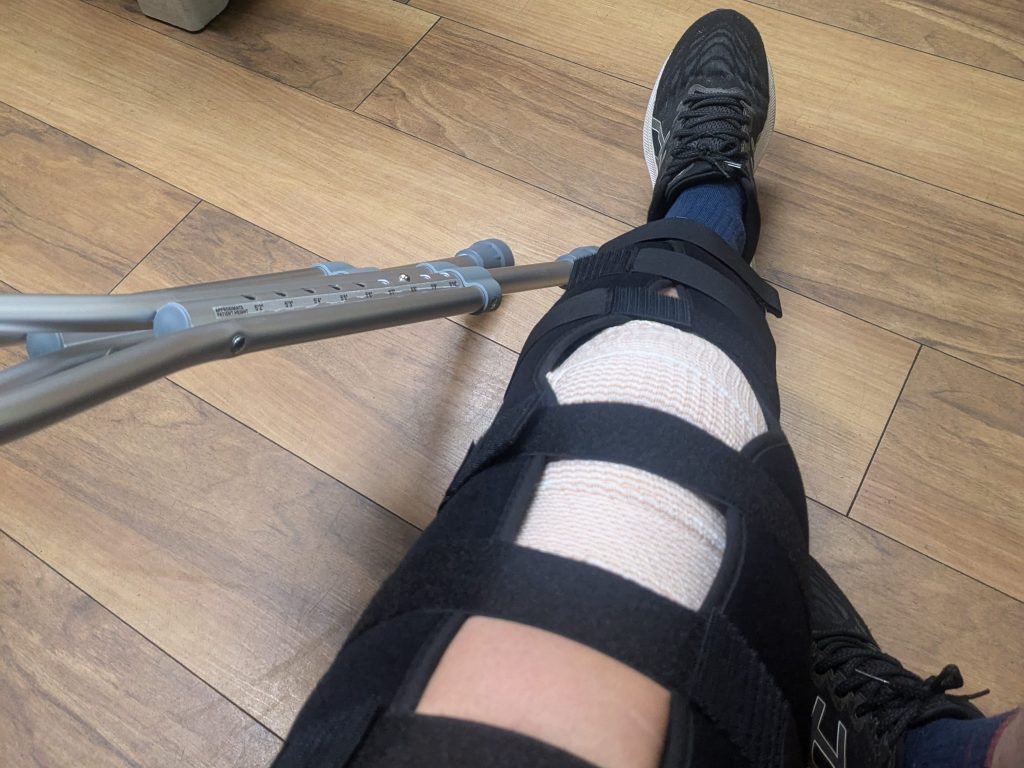
Beyond building general strength for backpacking, my goal was to rebuild the weak, atrophied muscles of my injured leg – which will hopefully stabilize my loose kneecap and prevent another dislocation while I’m on the trail.
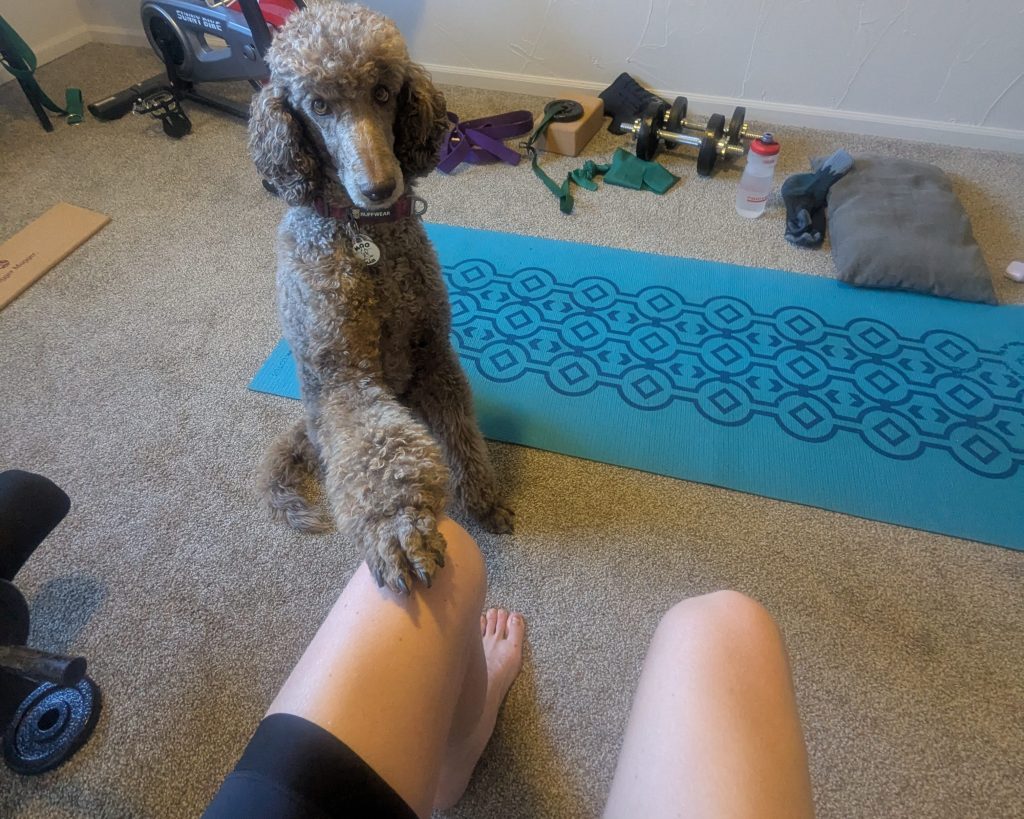
Here’s what I did for strength training:
- Strength trained 3-4 times each week (e.g., lifting weights).
- Focused especially on exercises for my lower body: glutes, hamstrings, quads, etc.
- Worked with a physical therapist who advised me on exercises specifically to help me recover from my injury.
- Gradually built from easier versions to harder versions of exercises.
- Gradually added in plyometrics (jumping exercises) 2 times each week.
Cardio Routine
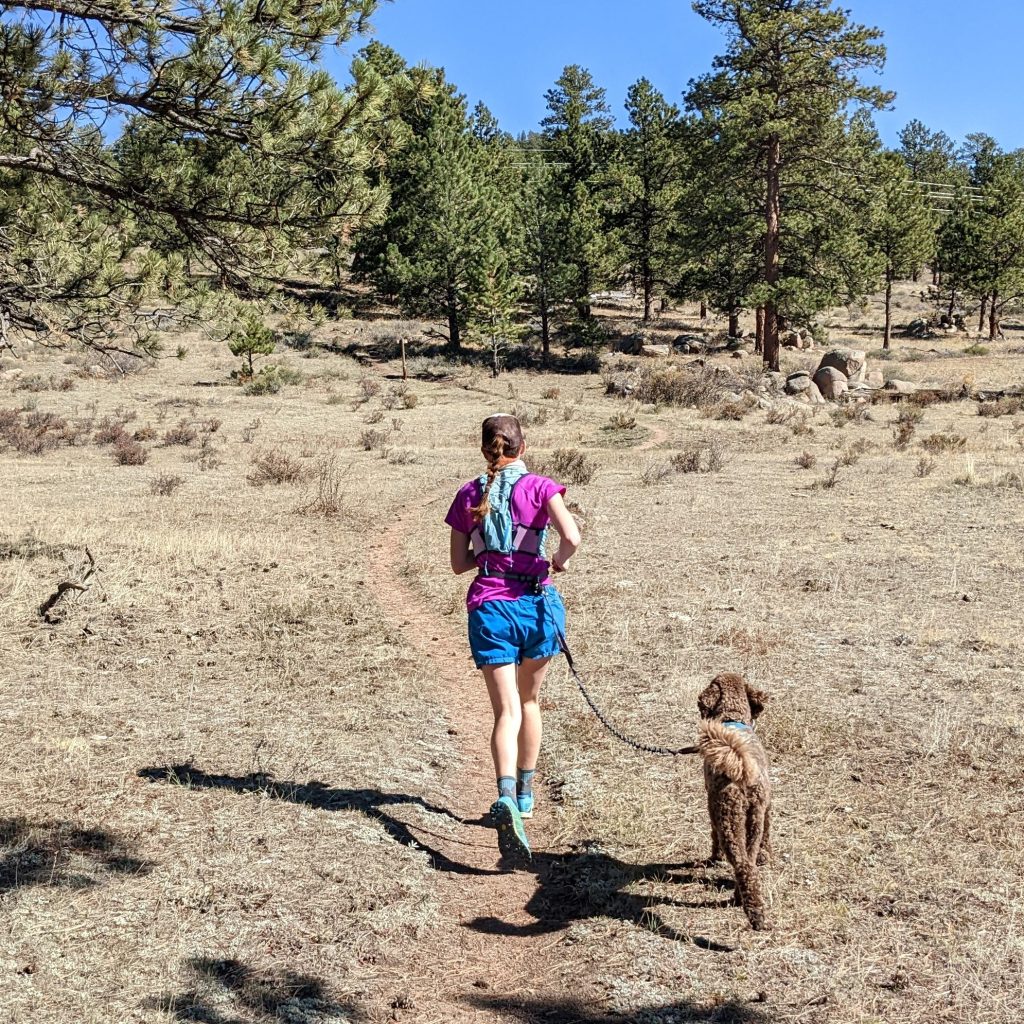
Backpacking isn’t just strength – it’s also cardio. As I prepared for the PCT, I tried to do plenty of cardiovascular exercise each week too. Though I love hiking, running is usually my preferred form of cardio. I can run (slightly) faster than I hike, so I can fit more miles into my busy schedule. However, this winter and spring, my cardio routine was mainly dictated by what my injured knee could and couldn’t handle.
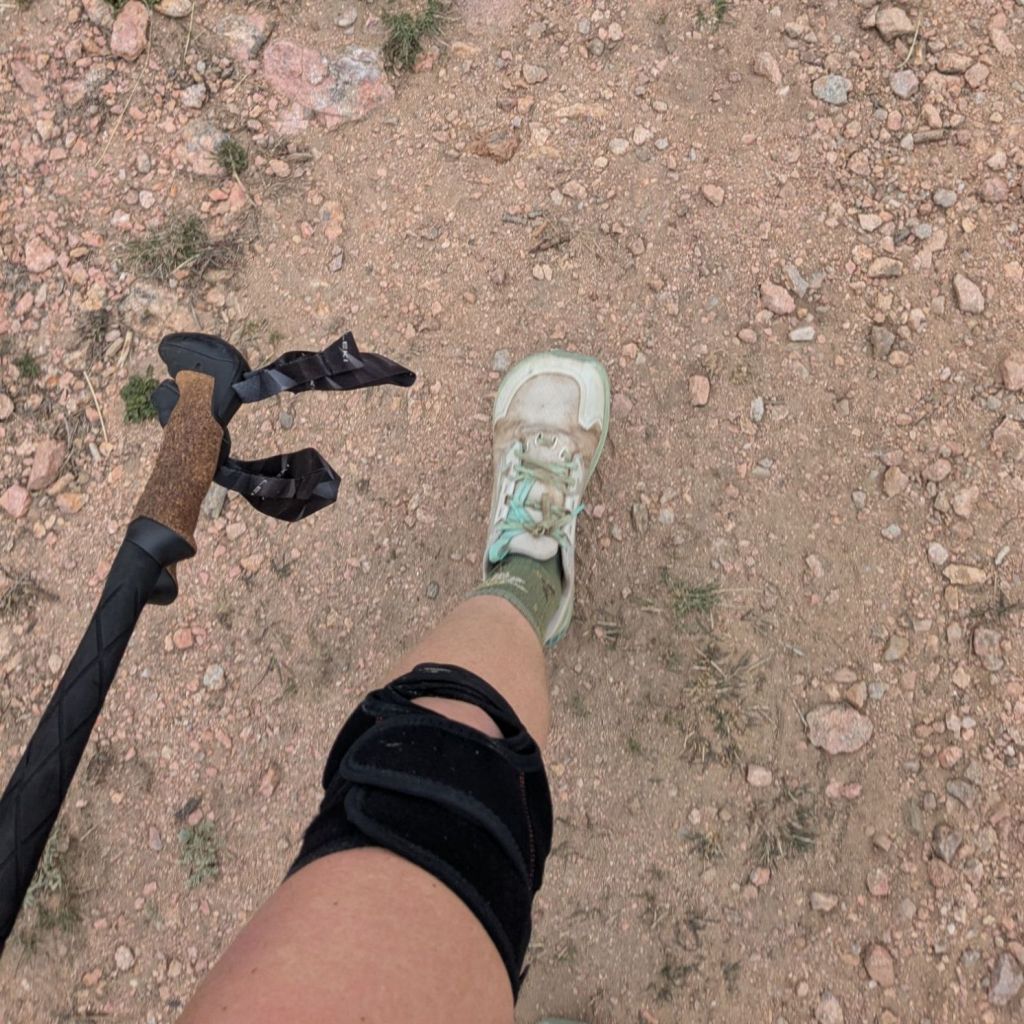
Here’s what I did for cardio…
- Indoor stationary biking
- Long walks and easy hikes
- Walk-jog intervals and road running
- Eventually returning to trail running, on easier trails
- Eventually adding in hikes with a loaded backpack, usually on weekends
- Slowly increasing the duration and intensity of cardio activities, as my knee could tolerate it
I aimed to do some sort of cardio activity 4-5 times each week. This meant I often doubled up – doing both a strength training session and a cardio workout on the same day. All of this left me pretty tired, so I made sure to have at least one full rest day every week for recovery.
Practice Trips and Loaded Backpack Hikes
I did very little hiking with a loaded backpack in my training. Considering that’s what I’m training to do, perhaps I should have done more. However, the times I did hike with a loaded pack, it didn’t feel too difficult – perhaps a sign that all that strength training is paying off!
I did two overnight practice backpacking trips, carrying all the gear I plan to take on the PCT:
- Practice trip 1 (a 32-mile route, over 2 days)
- Practice trip 2 (a 50-mile route, over 2 days)
In addition to overnights, I also did some day hiking on weekends with a loaded backpack, once my knee was healthy enough to carry it. But if I’m being honest, I can probably count my loaded-pack day hikes on one hand.
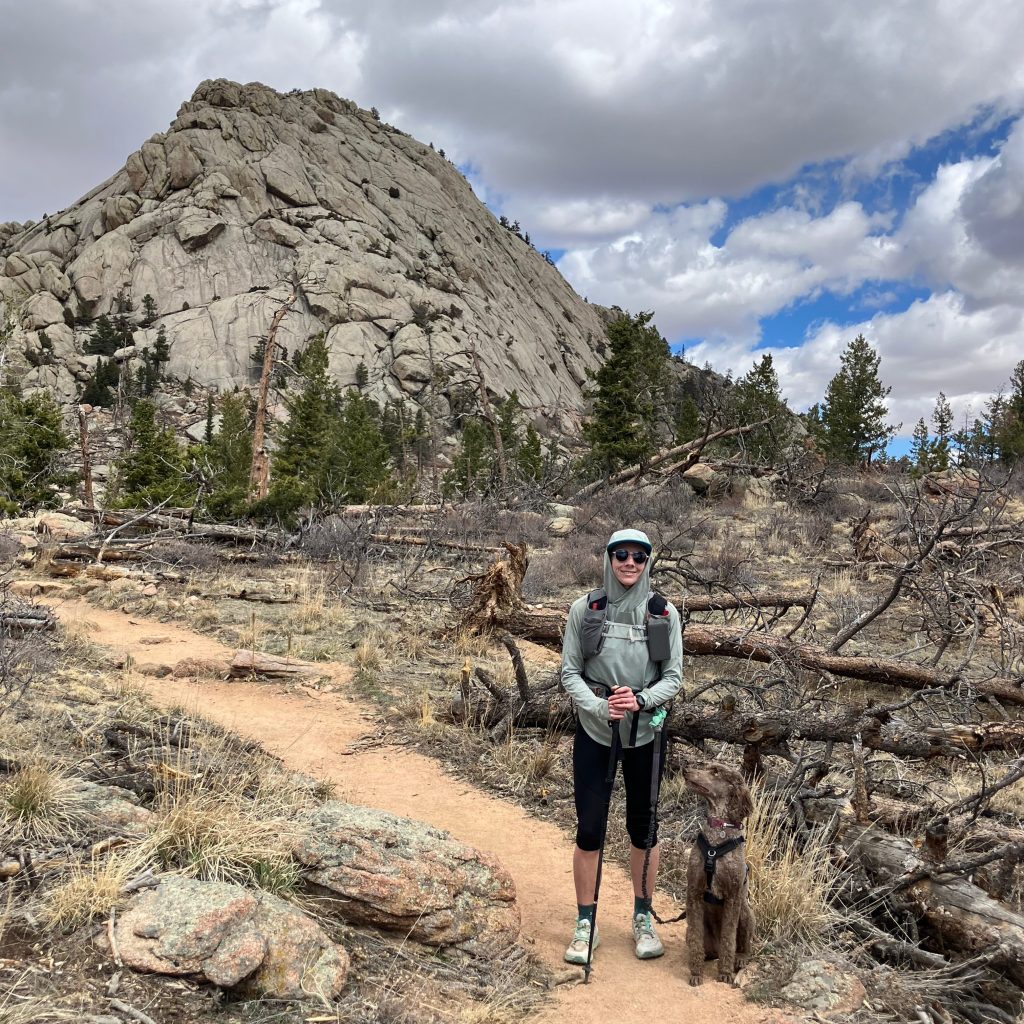
I can’t wait to begin my thru-hike very soon! I’m excited to share my adventure with you, and I hope I’ll be able to report back that all the training paid off!
 Adventures with Val
Leave a comment