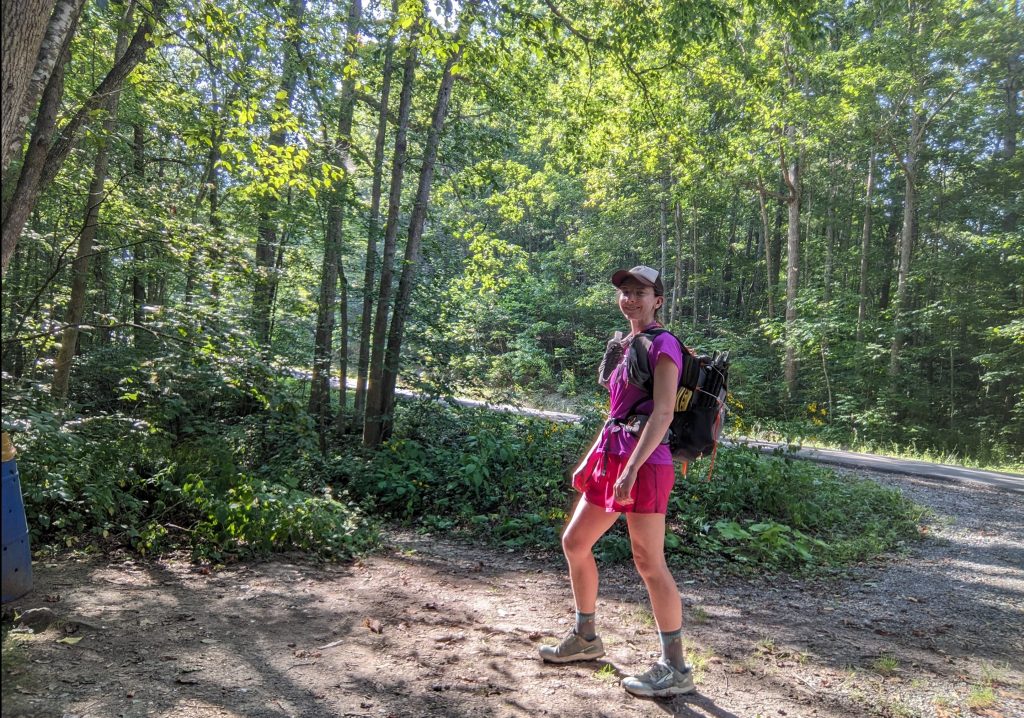
Finding the balance between comfort while hiking and comfort at camp can be challenging for any backpacker. I’ve learned that striking this balance isn’t the same for every person – and it even looks different on different trips. Over my 15+ years backpacking, I’ve tried out many ultralight backpacking “hacks” and figured out what I like and don’t. Here are five ultralight tricks and tips that I like, and two that take it a bit too far for me!
Sharing is caring:
✅Fast-fly only tent set up
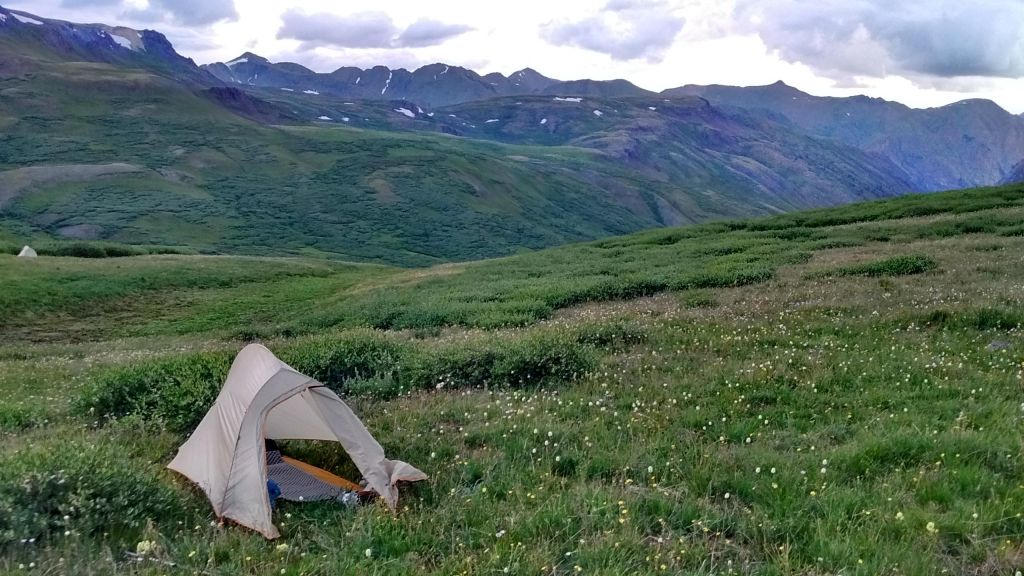
If you’re not familiar, fast-fly is a way of setting up a double wall tent where the rain fly and tent “body” are separate pieces. For this type of tent, you can pitch the tent without the tent body – using the poles, stakes, rain fly, and footprint only. This gives you the option to leave the tent body at home, turning your tent into a glorified tarp. This method has the same drawbacks as using a tarp (i.e., less weather resistant and no bug protection).
Why not just use a tarp then? Good question. I don’t own a tarp (…yet!). But this method is a good option for anyone who wants to sometimes use a tent and sometimes use a “tarp”, without purchasing two separate pieces of gear.
I first used the fast-fly-only method while thru-hiking the Colorado Trail with my Big Agnes Fly Creek UL1 tent. This method works well with my tent and keeps me dry in everything but a full-on downpour when splashback can be an issue. Overall, I love this method for backpacking anywhere that’s not super buggy or rainy.
✅No Pillow
The first time I went backpacking as a kid, my Girl Scout trip leader told me not to bring a pillow, so I didn’t. Back then, I don’t think there were many lightweight backpacking pillow options (certainly none I was aware of). I rested my head on my rain jacket, clothes in a stuff sack, or other items from my pack and thought nothing of it. In fact, I hiked the whole AT with no pillow back in 2014 and slept soundly most nights.
Today, I admit, a lightweight camping pillow occasionally finds its way into my pack. But most of the time I’m content without one. If I’m tired from hiking all day long, I’ll sleep – pillow or no pillow.
✅Going Stove-less
Going stove-less is something I’ve started doing fairly recently and actually love! I ditched my stove, partially to lighten my pack but mostly because I’ve grown a bit sick of most common hot backpacking dinners. Just the thought of eating another pasta side makes me feel a little ill. However, I really enjoy backpacking lunches, especially anything in wrap/burrito form. The solution: ditch the stove and eat lunch food for dinner!
I did a 200-mile section hike on the AT (2023) and the 160-mile Collegiate Loop (2024) with no stove and happily ate a wrap for dinner every night. I thought it was delicious and convenient. Furthermore, I loved having the flexibility to dry camp in beautiful places, without worrying about carrying in enough extra water for cooking. While I’ve only backpacked stove-less on (relatively) short trips so far, I’ve liked it enough that I would seriously consider ditching the stove for my next thru-hike.
However, going stove-less is not something I do every trip. In cold weather, I like making hot beverages and a hot breakfast at camp. Furthermore, stove-less backpacking is not something I will EVER subject my friends and family to. But when it’s just me, no stove is just fine!
✅Cutting Off the Toothbrush Handle
I used to think cutting off a toothbrush handle was very silly. I mean, how much weight can that actually save? But, then I realized that my toothbrush and toiletries would fit conveniently into a snack-size Ziploc baggie without that pesky toothbrush handle. And I never looked back.
✅Short Sleeping Pad
My typical sleeping arrangement for summer backpacking includes a shortened Therma-Rest Z Lite under my torso and my empty pack under either my head and shoulders or my feet. It’s worth noting: I have a pretty easy time falling and staying asleep, even on trail. The shortened sleeping pad is not for everyone.
Even for me, there are times I’ll opt for a full-length pad. On any trip with very cold temperatures or when camping on snow I’ll opt for a warmer, full-length sleeping pad to insulate my body from the ground. But for summer trips, even in the mountains, I don’t feel like I need a full-length pad to stay warm at night.
☹️Ditching Physical Maps
My Appalachian Trail and Colorado Trail thru-hikes both took place before the FarOut app became widely used. (I suddenly feel incredibly, incredibly old writing this!) During those hikes, I carried a data book. Today, I sometimes use my phone for navigation. However, I ALSO always bring some form of paper backup since phones can run out of battery or break.
I speak from experience, as my phone actually DID break during my CT thru-hike. I’m so thankful I had a paper data book with me – at least I had no trouble navigating on the trail for several days until I reached the nearest trail town. Once I got to that town, it was embarrassingly difficult to get around, find lodging (on the 4th of July weekend no less), and catch a bus to a major town with a Verizon store. While doing all this without a phone was frustrating, I never felt like I was in any danger. Would have felt that way if I had been days from the nearest town with no navigation and zero idea how far between water sources?
Don’t know where to find paper maps or data books? Most long trail associations (e.g., the Appalachian Trail Conservancy) have websites that provide guidance on purchasing current data books, guidebooks, and maps. For other backpacking trips, hikers can download and print custom topographic maps with the free USGS topoBuilder tool (external link).
☹️No Extra Socks
Not one, not two, but THREE is the minimum number of socks I’ll bring on any backpacking trip longer than a few days. My system is one pair on my feet, one pair drying on my pack, and a special third pair of clean, dry socks for sleeping only. I’ve tried two pairs and it wrecks my whole system. And I definitely couldn’t cope with only one pair! My extra socks are a few ounces I’ll gladly carry to avoid the annoyance of damp, cold feet!
What do you think of these tips? Do you have a different ultralight backpacking hack that you love? Let me know in the comments section below!


 Adventures with Val
Leave a reply to westonfront Cancel reply