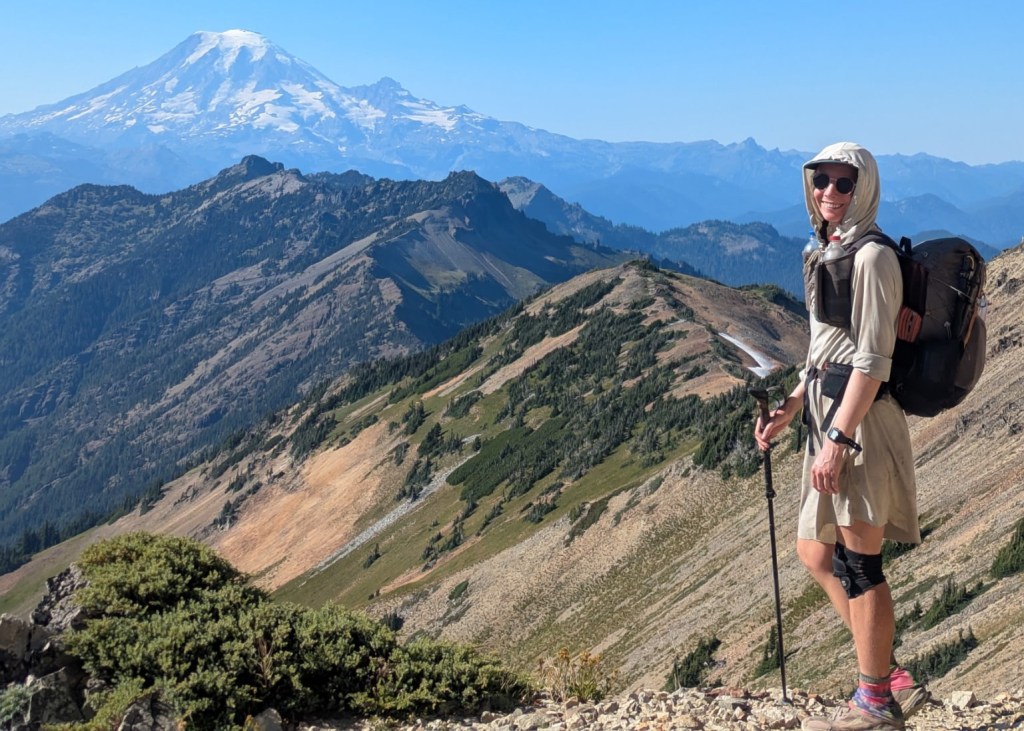
Last year, I walked from Mexico to Canada wearing a dress. When I started my thru-hike of the Pacific Crest Trail (PCT), I’d never hiked in a dress before. Now, 2,650 miles later, I’m fully convinced that a dress is the best hiking garment ever. It’s practical, comfortable, and maybe even cute? In this post, I’ll try to convince you to try hiking in a dress, too!
My PCT Dress
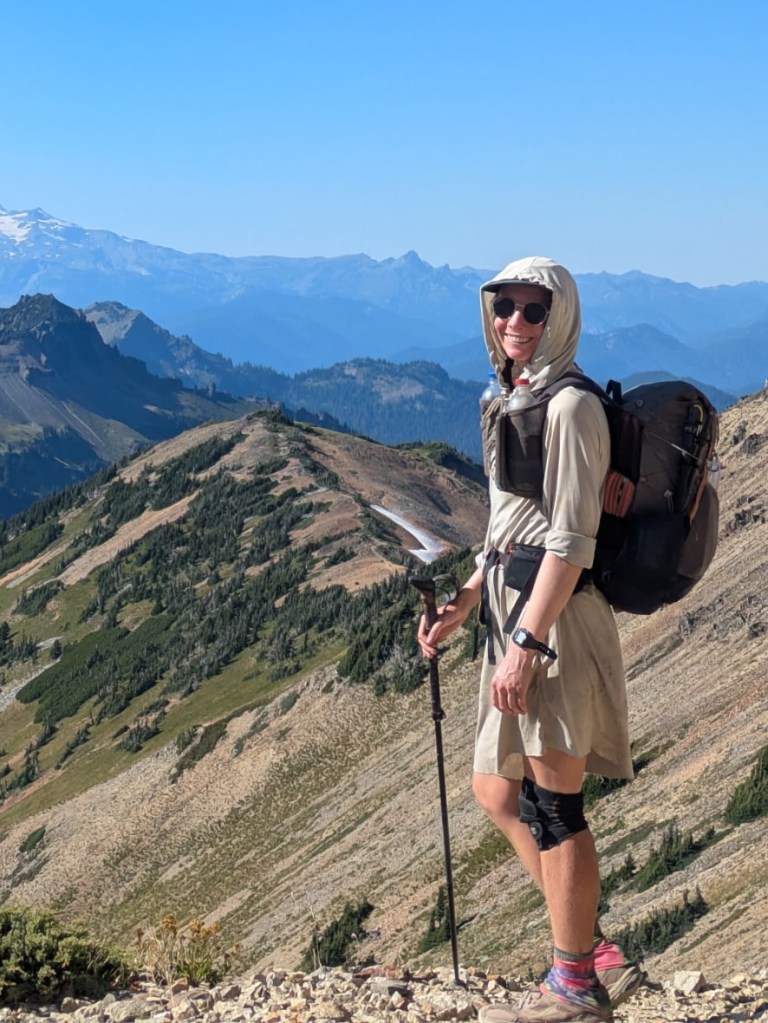
Before I dive into 7 reasons to hike in a dress below, here’s the dress I wore on the PCT. It was a Hotouch long-sleeve polyester dress that I purchased online. The dress was marketed as a beach cover-up, rated UPF 50 for sun protection. It featured a drawstring hood and pockets. It was relatively inexpensive at $30 plus shipping.
When new, my hiking dress was just above knee-length. I liked this dress length for hiking. It provides sun protection to the upper leg, but is breathable and doesn’t restrict movement.
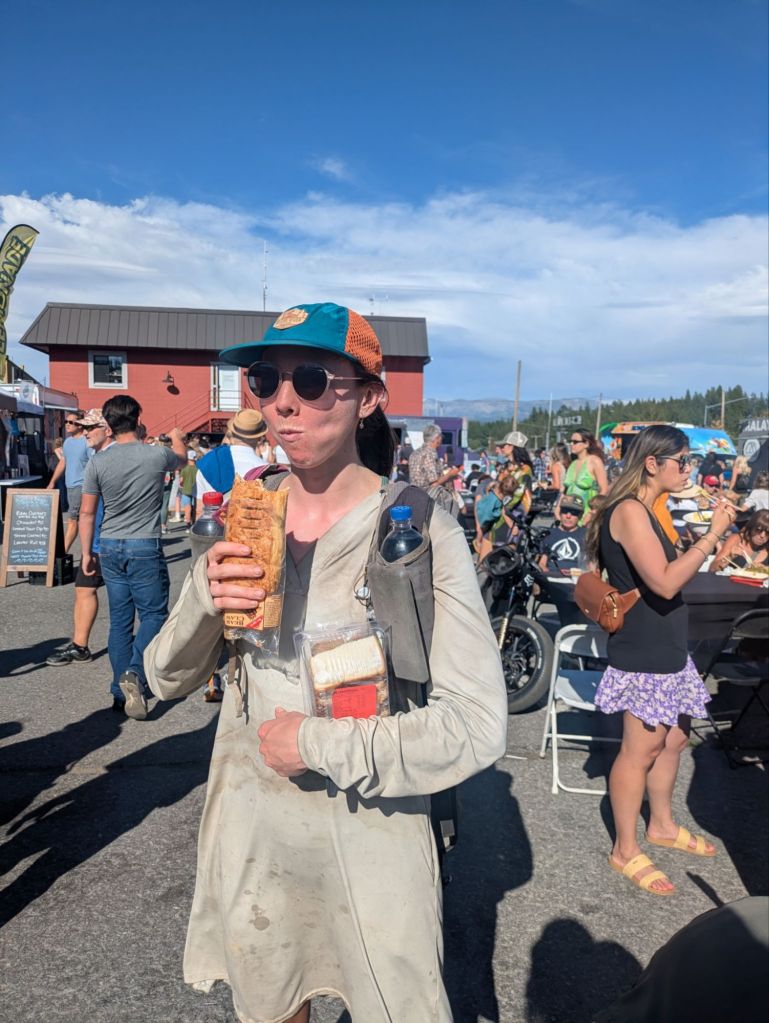
My PCT dress held up for the full length of my thru-hike. Though after 4 months of continuous wear, it was ready to go into the trash. The polyester fabric was very stretched out and deformed. By Washington, the dress stretched so much that I actually had to cut several inches off the bottom to make it knee-length again. By the end, the dress was also badly stained, and the fabric was worn thin. I suspected it was not providing as much sun protection.
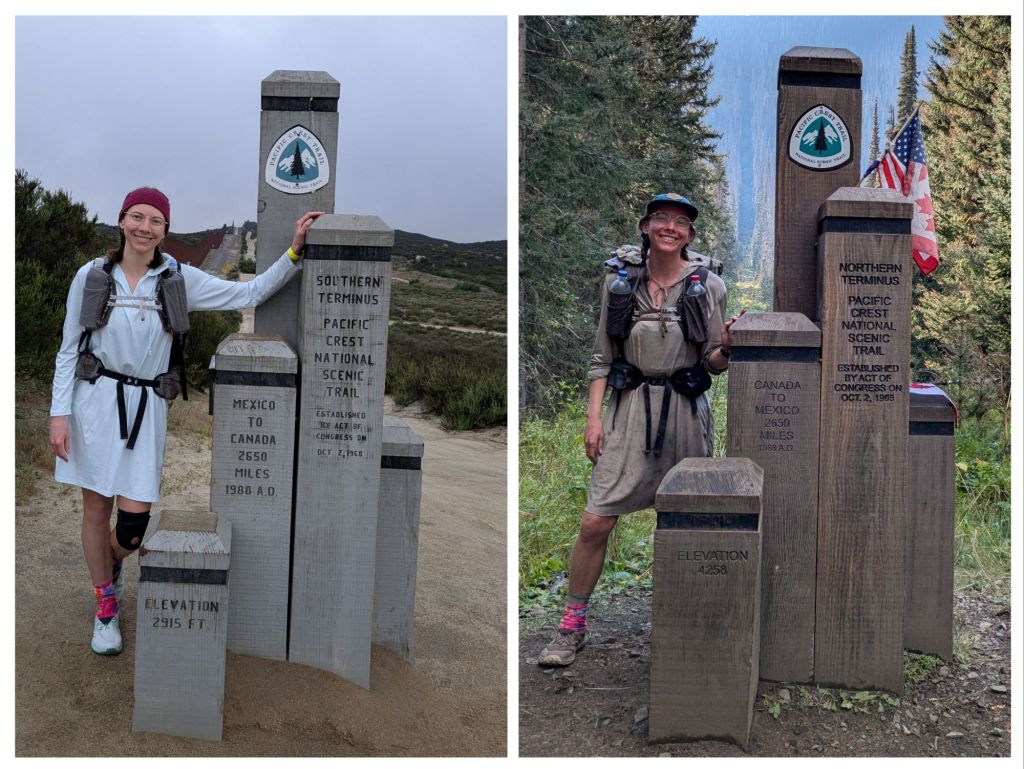
That’s why for the Continental Divide Trail (CDT), I purchased a new dress. I plan to start hiking the CDT later this month! This time, I’ll wear a very similar long-sleeve, hooded beach cover-up dress. The new dress is from Baleaf, but is otherwise very similar to my PCT dress. One new feature I think I’ll like better is the quarter zipper.
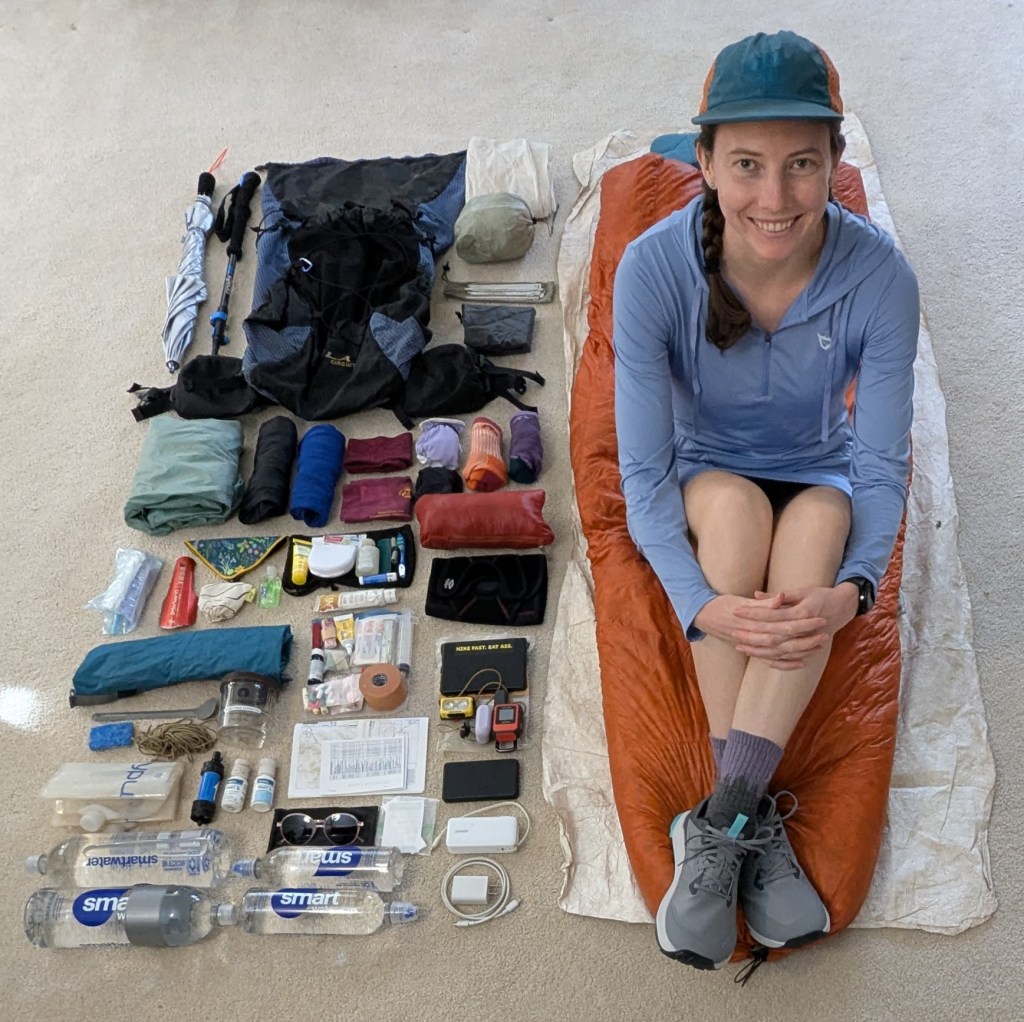
And now, without further ado, here are 7 reasons why you should try hiking in a dress…
1. It provides sun protection
Sun protection is the feature that first attracted me to hiking in a dress. In recent years, I noticed the growing popularity of the sun hoodie. If you’re unfamiliar, a sun hoodie is a lightweight, long-sleeved, hooded shirt worn for sun protection on the upper body. I wondered: why stop there? Why not extend that hoodie over the lower body too, eliminating the need for pants? This leads me to my second point…
2. It’s breathable
A hiking dress keeps you well-ventilated in a variety of conditions, from hot and dry to cool and rainy.
Thru-hikers on long-distance trails often experience temperatures in the 80s, 90s, and sometimes even the 100s! Loose, breathable clothes help keep you cooler in those conditions. Outside of hiking, sundresses and skirts are popular summertime garments that offer unparalleled ventilation. So why not wear one on trail too?
In rainy conditions, a hiking dress paired with a rain skirt also offers good ventilation. A rain skirt is exactly what it sounds like – a water-resistant skirt made of rain-jacket fabric. Sick of your swampy rain pants? Fed up with the bottom half of your hiking pants getting damp when it is drizzling? Consider switching to a hiking dress with a rain skirt.
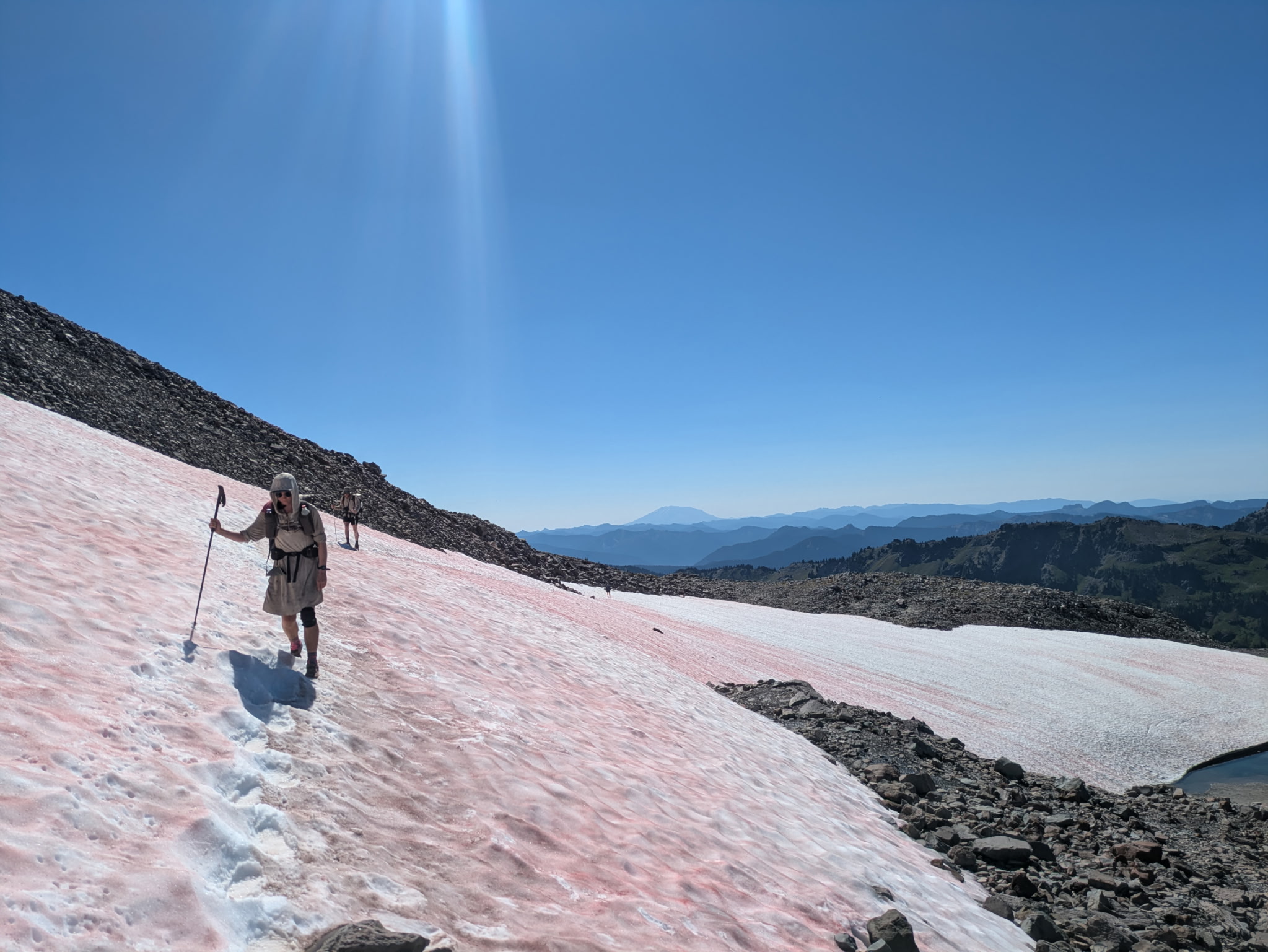
3. It’s comfy
No more shorts riding up! No more restrictive hiking pants! No more wedgies! Just breezy, free-flowing fabric that’s easy to move in.
4. It’s great for layering
There are many things you can wear under a hiking dress, such as:
- Undies
- Spandex shorts – great for preventing chafing
- Thermal leggings
- Wind pants
- Nothing
Furthermore, it is super easy to swap out the layers (if any) you wear on your bottom half under the dress. Imagine waking up on a chilly morning on the trail. Naturally, you want to keep your thermal leggings on for as long as possible while you pack up camp. When you’re ready, there’s no need to duck into the woods to change. It’s easy to slip leggings off/on from underneath the dress without getting naked in front of everyone at the campsite.
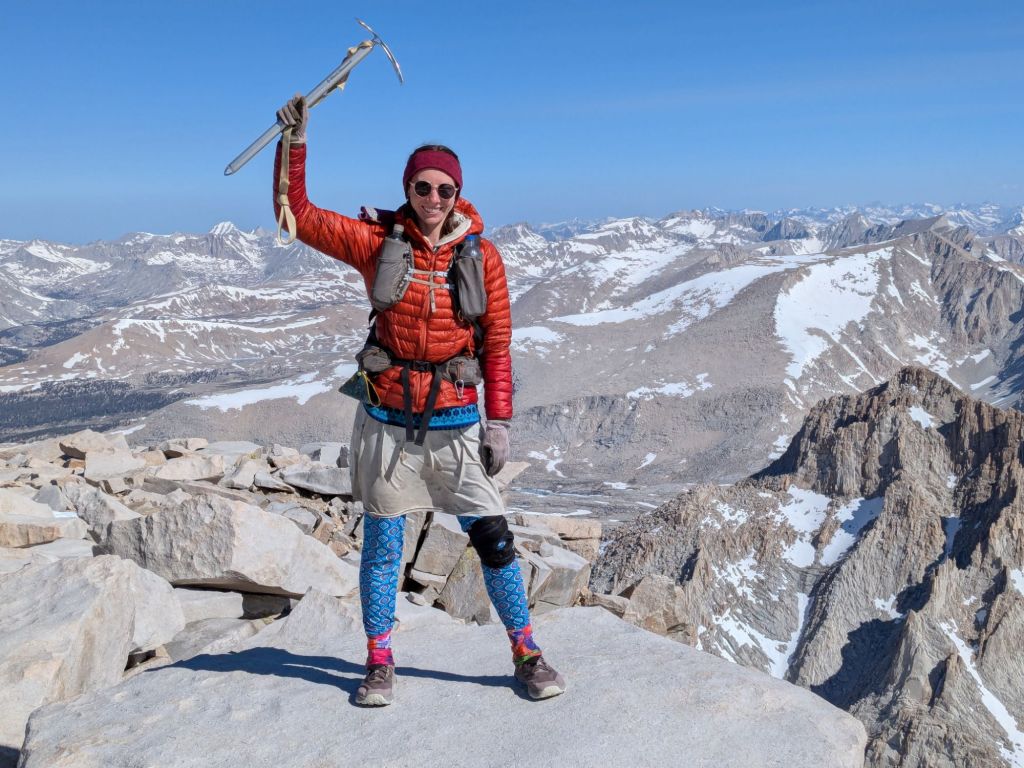
5. Go to the bathroom with ease
In a hiking dress, you’ll enjoy the convenience of peeing without exposing your buttocks to the wind/cold/sun/other people within eyeshot. Depending on what you wear under the dress (and your aim), you might not have to take your pack off or squat!
6. Everyone will envy you
From Mexico to Canada, every hiker I met was insanely jealous of the superior sun protection, ventilation, and comfort of my hiking dress. And I’m not just talking about the women. Many male thru-hikers admitted to feeling envious of my hiking dress, too.
However, it has caught my attention that no gear companies currently make hiking dresses marketed to male hikers. I wonder – which of the cottage gear brands will fill this obvious and yawning market gap? Though to market a male or unisex hiking dress, it would probably need a new name. I recommend “trail robe” or “hiking smock”.
In the future, I predict we’ll see hordes of backpackers of all genders donning their versatile hiking smocks and taking to long-distance trails in comfort and style.
7. It’s cute?
I’m no fashionista. But I’d argue that my hiking dress looked pretty chic when it was fresh and new. However, almost immediately, the PCT started taking its toll on my adorable garment through dirt, sweat, and thorny plants.
Ok, so I’m not claiming that my hiking dress was cute after 2,650 miles when it was discolored, stretched out, and stained. In fact, other thru-hikers made many jokes about the shabby, dirty condition of my dress. For example, hikers likened my appearance in my dress to:
- Dobby the house elf
- A Jedi
- A druid
- Members of various religious groups
- A “filthy beggar”
- An escaped mental ward patient in a hospital gown
That said, among thru-hikers, looking dirty is sometimes worn as a badge of honor. The miles we hike are reflected in the stains on our clothes and holes in our gear. Did my hiking dress look cute after 4 months of continuous backpacking? Perhaps not. But I felt like a badass in it, and that’s what matters.
How to pick out a dress for hiking
Have I convinced you to try hiking in a dress? Great! But before you rush off and order the first hiking dress you see, take a look at the list below. Rather than give you a list of products or brands, I’ve made a list of traits and features. These are things I looked for when selecting my dresses for the PCT and CDT.
It’s worth noting that you absolutely can hike in a dress that’s not marketed as a hiking dress (I did!). Clothes designed and marketed specifically for hiking often cost more. But they don’t necessarily function better. That’s one of the reasons why I hike in a beach cover-up. I hope you also find a great dress for hiking using the guide below.
Fabric
Ensure your hiking dress is made of a fabric suitable for athletic activities. Also, consider the thickness/weight of the fabric. In the hot desert of the PCT, I enjoyed wearing a dress made of relatively lightweight polyester. If you anticipate cold temperatures, a dress made of thicker, warmer fabric may serve you well (e.g., microgrid fleece).
UPF rating
If you’re counting on your dress for sun protection, be sure to check the UPF rating (e.g., UPF 30; UPF 50). A higher number = more UV radiation blocked.
Machine washable
If you’re thru-hiking, I recommend a dress that can be machine-washed and tumble-dried. In town, you’ll be busy resupplying, showering, and eating. Opt for a machine-washable dress to avoid the extra chores of hand-washing and line-drying.
Length
Choose a length that will allow you to move with ease. Also, look for a length that provides the right balance of sun-protection and ventilation for you. For me, this is about knee-length. Another consideration is what (if anything) you’re wearing under the dress. If modesty is a concern for you, pick something long enough that you won’t worry about sitting a certain way when you take a break.
Sleeve length & thumb holes
Opt for long sleeves if you need protection from the sun or cold. Thumb holes are another handy feature to look for.
Hood
A hood is useful in both sunny and cold conditions. When sunny, a hood protects the back of your neck from sunburn. When cold, it keeps your ears warm. In windy conditions, a drawstring lets you pull the hood tight so it won’t get blown down constantly.
Ventilation
For the best ventilation, look for a dress with a loose neck, quarter zipper, or buttons in the front.
No built-in shorts
Before buying a hiking dress, I recommend ensuring it doesn’t have built-in shorts. Personally, I would find it really inconvenient to get fully undressed every time I pee. Taking off my backpack is enough of a hassle. Taking off my dress too? No thanks.
Color
Light colors are preferable in hot, sunny conditions since they reflect more solar radiation than dark fabrics. This keeps you cooler. However, stains are really obvious on light fabrics (if that’s a concern for you). My PCT dress got a lot of stains. A patterned fabric might help make stains less apparent.
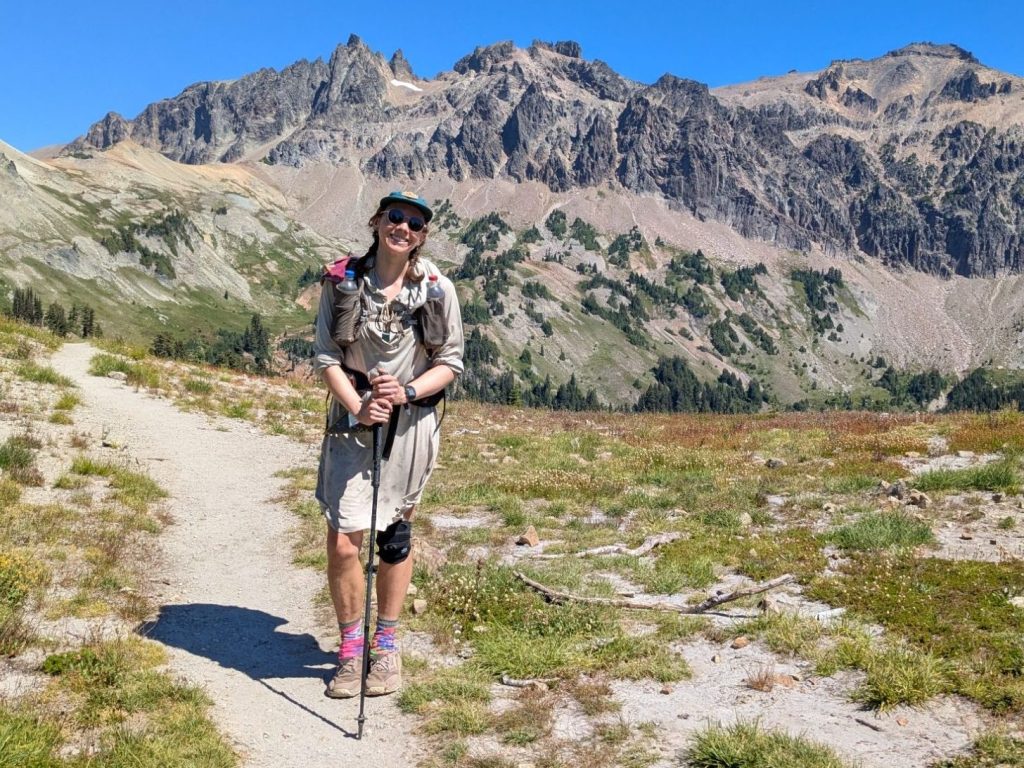
Have you ever hiked in a dress? What did you think of it? If not, have I convinced you to try a hiking dress? Leave me a comment below!
 Adventures with Val
Leave a comment