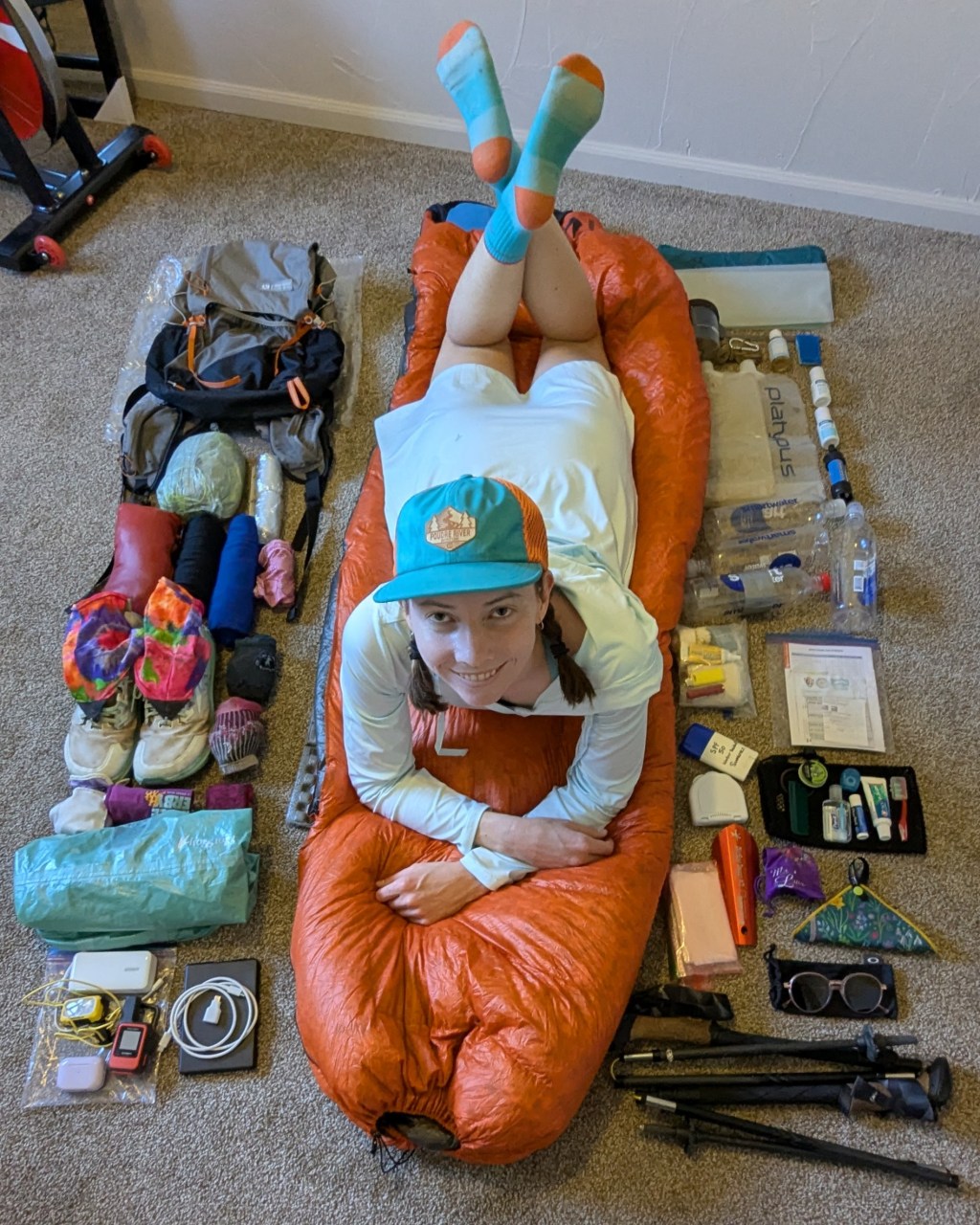
The countdown is on: in less than 3 weeks I’ll be thru-hiking the Pacific Crest Trail (PCT), a ~2,650-mile footpath across California, Oregon, and Washington. I can’t wait to set foot on the trail and share this journey with you as I go. But first, I need to figure out what to bring.
So how does one pack for a 2,650-mile hike? I’m trying to find the right balance for me between affordability, lightness, and comfort. One thing I’ve learned so far is that this balance looks completely different on different trips. I’m taking very little of the gear that I used for my 2014 Appalachian Trail (AT) thru-hike.
The PCT has some big differences from the AT, which I’m trying to address in my packing list. For example, I’m bringing more water containers for long water hauls in the desert. Since the distance between resupply towns will be longer too, I’m trying to keep my gear weight light so I can carry lots and lots of food. I’m also prioritizing safety and self-sufficiency in my packing since parts of the PCT are quite remote.
Update: After I finished thru-hiking the PCT, I made another post reviewing all of the gear I carried!
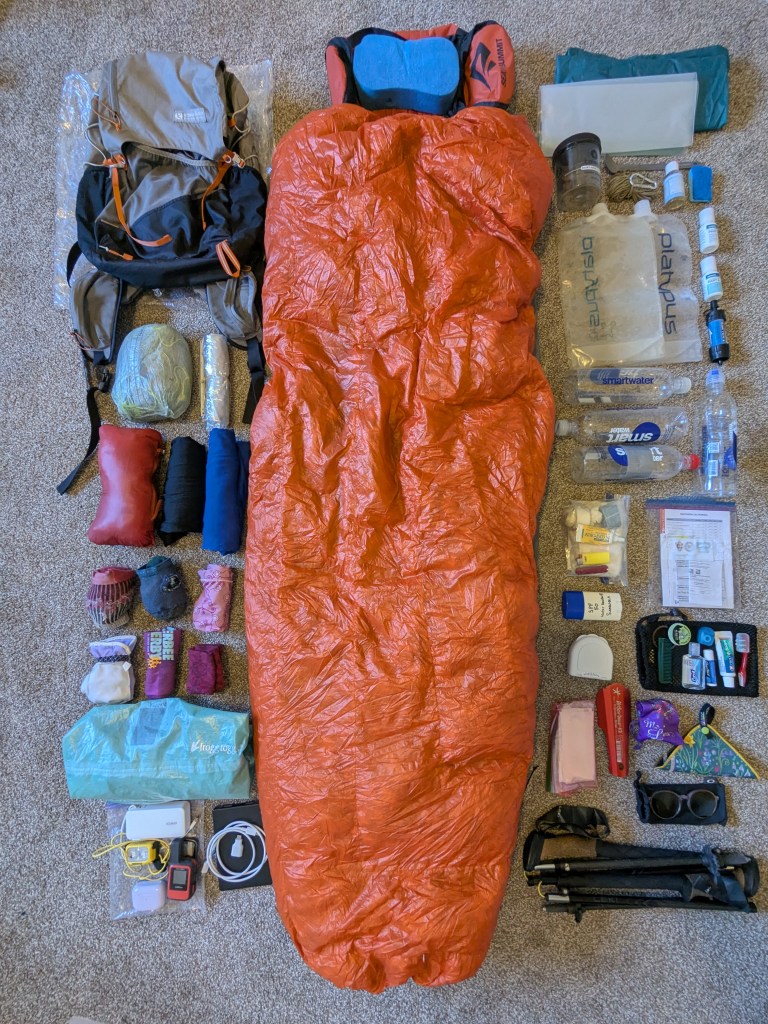
Big 4 & Related Accessories
Backpack: Gossamer Gear Kumo 36L Fastpack
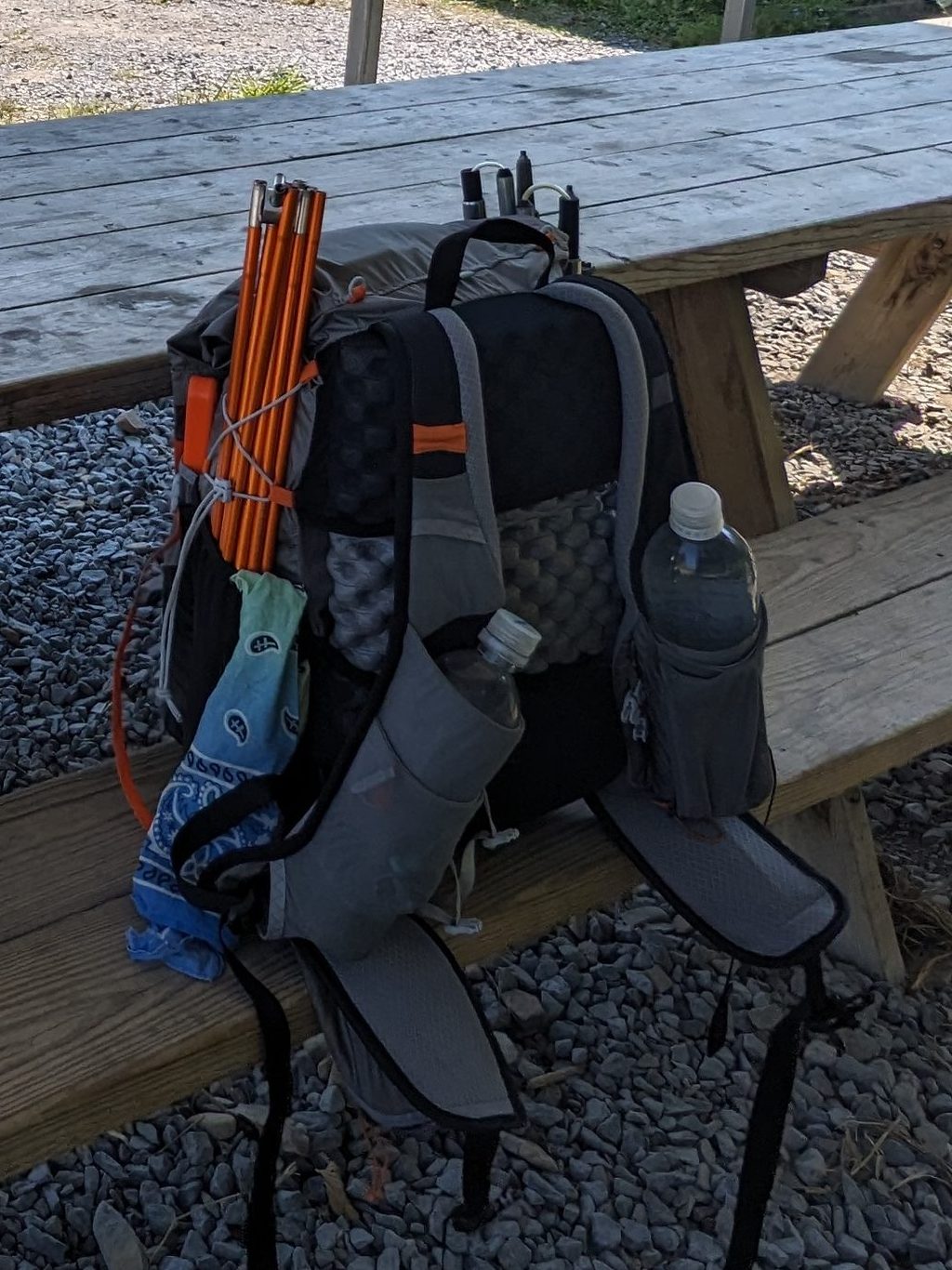
I’ve used this backpack for the last few years, including on the 160-mile Collegiate Loop and a 200-mile section hike on the AT. I loved my Kumo on so many levels on these trips. It may not be the lightest frameless pack on the market, but it is extremely comfortable even with 5+ days of food. It helps that my foam sleeping pad folds up and attaches to the back of the pack to form a makeshift frame. I also love the Kumo’s many front pockets for on-the-go access to water bottles, snacks, sunscreen, phone, etc. At just under $200, this pack was more affordable than many other ultralight backpacking packs.
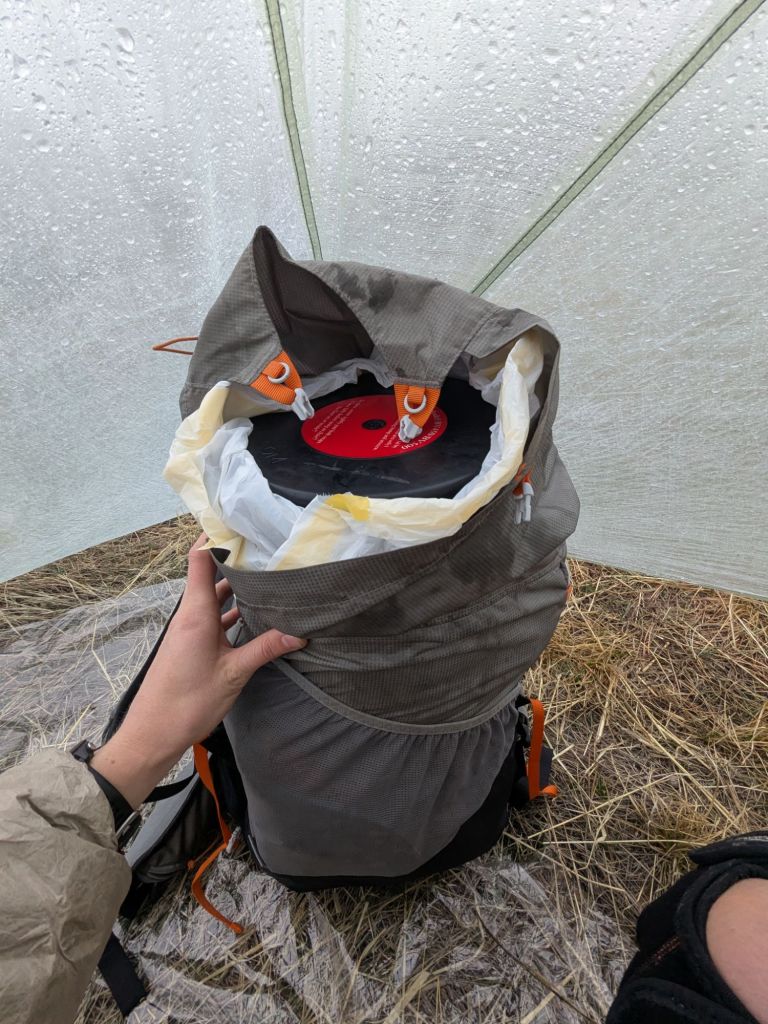
I’m a little nervous about using a pack this small on a thru-hike – especially in the Sierras where I’ll carry a bulky bear canister. Amazingly, a BV500 bear canister does fit (just barely!) inside this pack, which I found out on my recent practice trip. However, it doesn’t leave room for much else inside the backpack!
Since this backpack isn’t waterproof, I’m using a pack liner for some added water resistance.
Quilt: Enlightened Equipment Revelation 20-degree
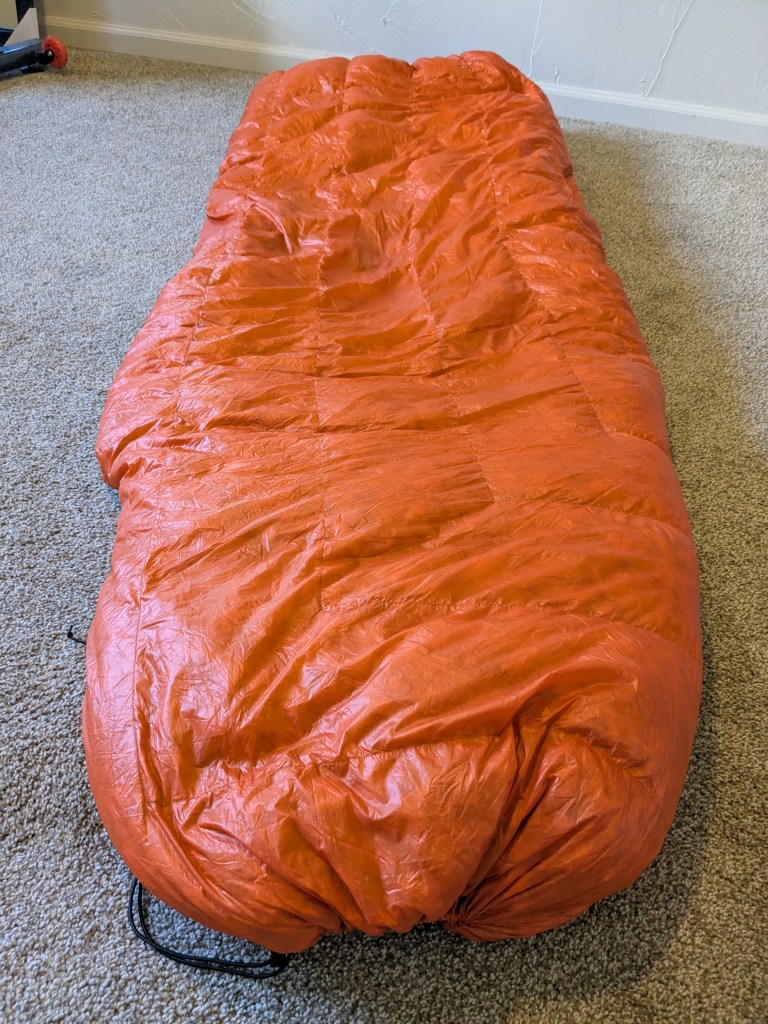
With a May start, I’m hoping that I’ll be warm enough in this “20-degree” down quilt. I get cold easily, so I find this quilt uncomfortable when temperatures dip below freezing. If I’m getting too chilly at night, I also own a sleeping bag liner that I can ship to myself for some added warmth.
Pad: Therm-A-Rest Z Lite Sol
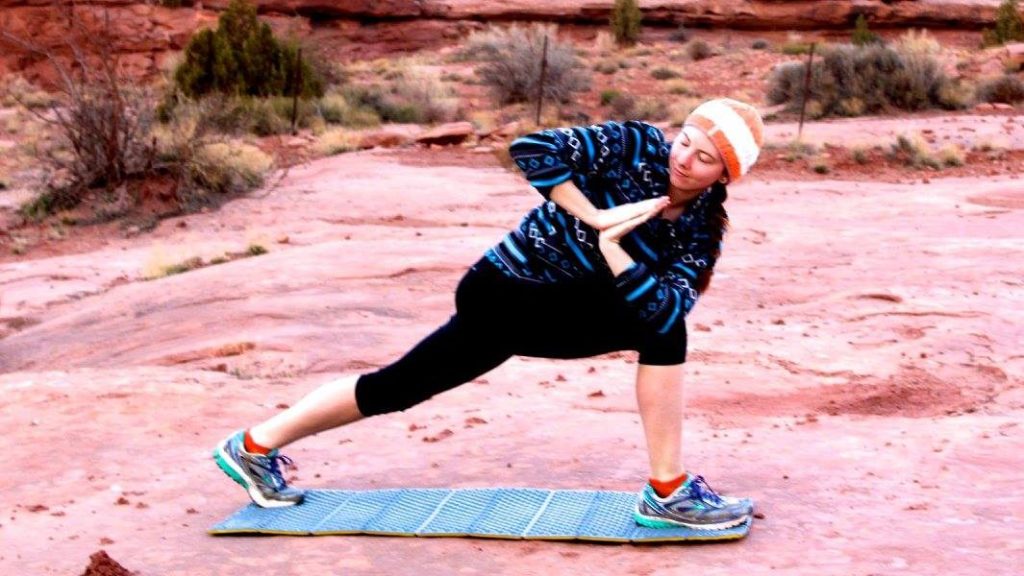
My trusty Therm-A-Rest is one of the only pieces of backpacking gear from my 2014 AT thru-hike that will come with me on the PCT. It is now cut short to 9-sections, so it doesn’t quite span the full length of my body. My favorite feature of this mat is that it can never pop because it’s not inflatable. That said, it is definitely less comfortable than an inflatable pad.
To help make sleeping more comfy, I’m bringing a small “pillow” made from a car sponge too.
Shelter: ZPacks Hexamid Pocket Tarp
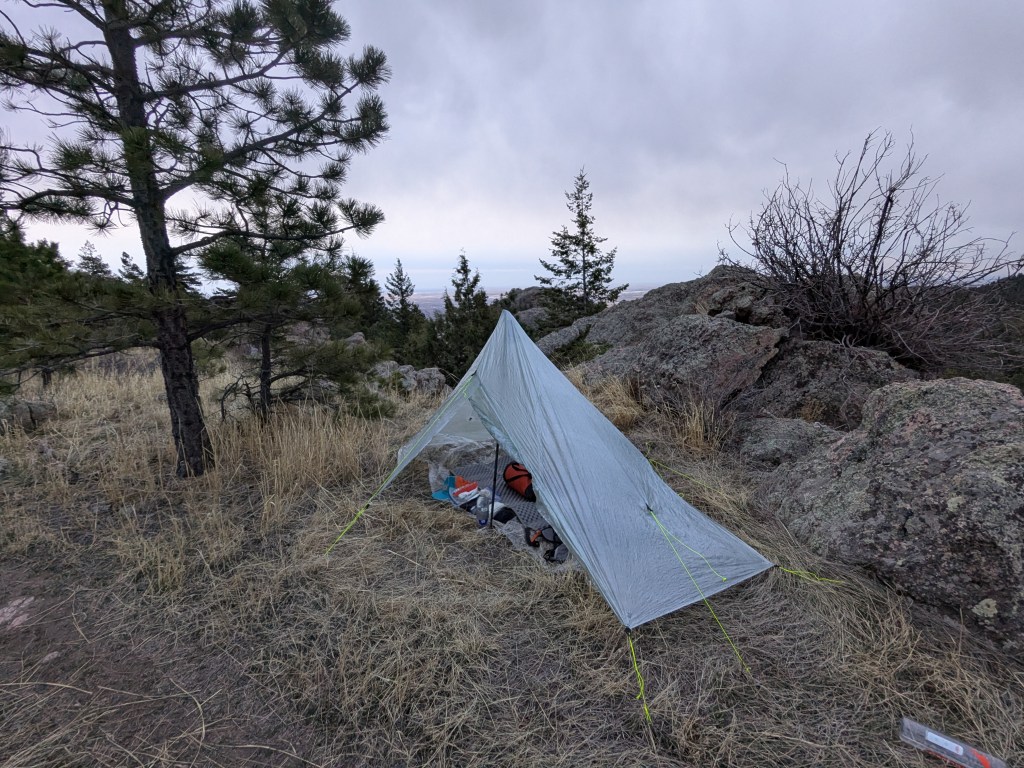
This tarp was my big splurge for the PCT! This is a DFC tarp that I set up with a single trekking pole and 6-10 stakes. The tarp weighs only about 5 ounces, which is insane to me! Yet it is super cozy inside thanks to its pyramid shape.
For 10 years, I used my semi-freestanding Big Agnes Fly Creek UL1 tent on solo backpacking trips, sometimes using the rain fly-only without the tent body. I love my tent too, especially for cold and buggy conditions.
In addition to my fancy new tarp, I’m carrying 10 stakes that originally came with my Big Agnes tent and a groundsheet that I bought separately.
Clothes in my Pack
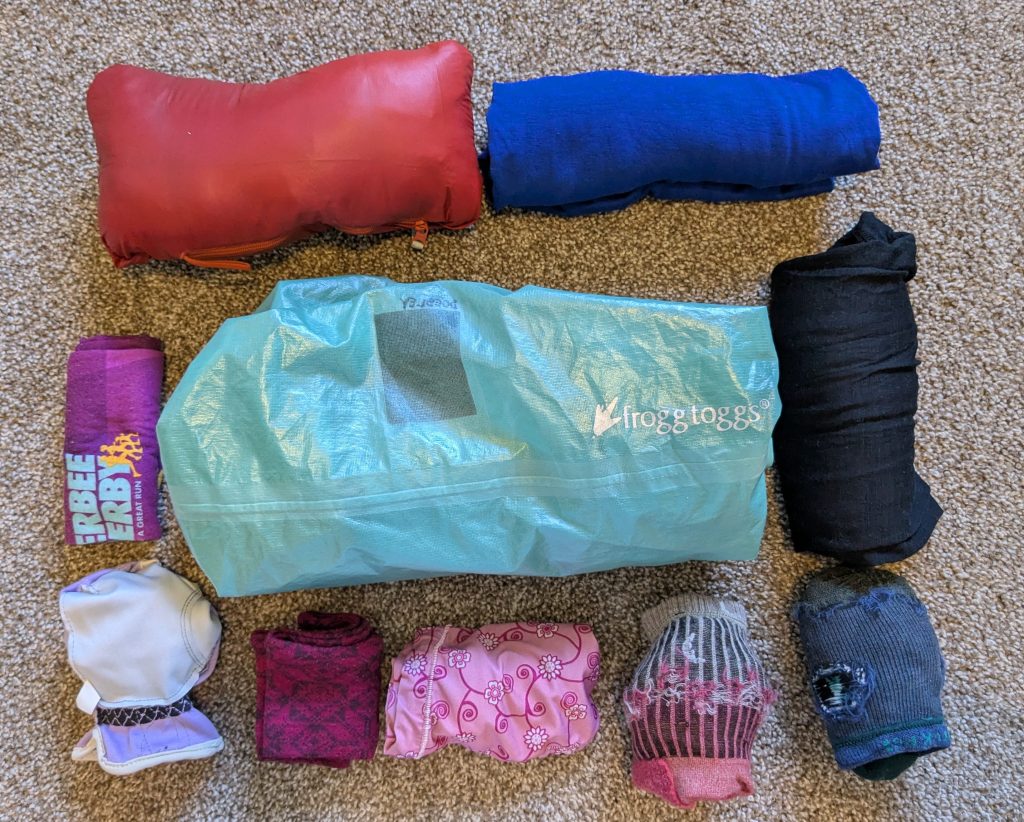
Insulated Jacket: Mountain Hardware Ghost Whisperer 2 Hooded Down Jacket
This is one of the lighter options for a hooded puffy jacket. I coveted this jacket for years but was turned off by its high price. However, I waited and waited until I found a gently used one on the used clothing website Poshmark at a big discount!
I can somewhat see why this jacket is normally so pricey. As a backpacker, I obviously love its light weight, and I actually find it warmer than other puffys I’ve owned since it’s very fitted and not drafty. That said, I’m not sure these things alone would make it worth its full retail price to me personally, had I not found a used one to buy.
Rain Jacket: FrogToggs Xtreme Lite Women’s Rain Jacket
I used to wear the FrogToggs Ultralight rain jacket, which was very cheap and light but not durable. After several years of use, my Ultralight jacket was more hole than jacket. For a thru-hike, I want something more durable. So I upgraded to the slightly heavier Xtreme Lite jacket.
Base Layer Top: REI Kids’ Synthetic Base Layer
I bought this top at REI for my AT thru-hike. While shopping, the sales lady clued me in on a handy way to save money on base layers – shop in the kids’ section!
Base Layer Bottoms: Smartwool Merino Wool Leggings
I got these leggings at a clothing swap held by my local chapter of Trail Sisters (a women’s trail running club). They’re a little lighter and certainly more fashionable than the crazy patterned REI kids’ section leggings I brought on the Appalachian Trail.
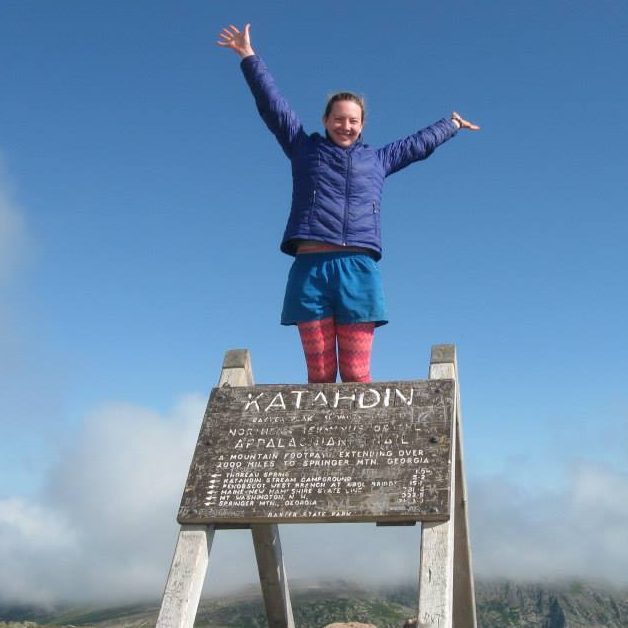
Other carried clothes:
- Merino wool headband – cute and warm; I purchased this on my trip to Iceland!
- Gloves – a cheap pair of gardening gloves that I won’t be sad about if/when they get destroyed
- 2 pairs of socks – Darn Tough Micro Crew Mid-Weight Hiking Socks
- Extra undies
Clothes I’m Wearing
Sun Protection: Long-sleeve hooded UPF 50 Beach Cover Up Dress
I’ve known many a woman backpacker with strong opinions about hiking in a dress… some love it, some hate it. This will be my first time backpacking in a hiking dress… though technically, the garment I’ll be wearing is a beach cover-up.
I’m hoping it will provide more sun protection on my legs than my normal running shorts and long-sleeve shirt combo. I also like the idea of easily swapping out what I’m wearing under the dress (leggings, shorts, or just undies), depending on the conditions. I’ll find out soon if I love or hate wearing a dress on the trail!
Hiking Top & Bottom: Spandex Workout Set
Since I should probably wear something under the hiking dress, I’ve opted for a very minimal spandex workout top-and-bottom combo: a shelf-bra crop top and 3″ inseam shorts. These are skimpy enough to stay cool, but provide enough coverage that I’d feel relatively comfortable wearing them with or without the dress, as I won’t always want sun protection (e.g., after sunset, while swimming).
Socks: Darn Tough Micro Crew Mid-Weight Hiking Socks
I can’t say enough good things about these socks. I started wearing Darn Tough on the AT. Today, I own 7 pairs and wear them 365 days a year whether or not I’m hiking.
Shoes: Altra Lone Peak Women’s Trail Running Shoes
I like their wide toe box which gives my toes room to fully spread out. I wear them trail running and haven’t had any problems with them yet, so I’m hopeful they’ll work ok for me hiking the PCT.
Additional worn items:
- Prescription glasses – w/ sunglasses clip-on
- Shoe gaiters – Dirty Girl gaiters
- Hat
- Buff – usually worn around the neck for wiping sweat/nose
- Undies
Water Stuff

On the PCT, I’ll often need to carry more water than I did on the AT and CT. To make this possible, I’m bringing the following:
Bottles: 4x 700 mL SmartWater bottles
This size fits best in my backpack’s chest pockets without hitting me in the face like the 1 L size.
Bladders: 2x 2 L Platypus collapsible water containers
These take up almost no room in my bag when they’re empty, but provide extra capacity for long water carries. Together with my bottles, I can carry a maximum of 7 L. As I discovered on my recent practice trip, I’m a very thirsty hiker, so I can always add an extra bottle if I end up needing more capacity.
Water Treatment: AquaMira drops parts A & B
I prefer AquaMira to filtering, but had trouble finding it in stores along the AT. Consequently, I switched to a regular Sawyer filter on the AT. On the PCT, I’ll be putting AquaMira into my resupply boxes.
According to the package, each 2-bottle set treats 30 gallons of water. If I consume 6 liters (1.58 gallons) of water per day, I can expect to get almost 20 days out of each set. However, I may use it up more quickly if conditions are extra hot and dry and I’m drinking more water than usual.
Backup Water Treatment: Sawyer Mini
I was on the fence about bringing this. But I’ll feel safer knowing I have a backup treatment method in case I run out of AquaMira between resupply stops – especially in the beginning until I get a better sense of how the desert heat impacts my rate of water (and AquaMira) consumption. Also, the filter gives me a way to remove floaties if I need to fill up from any extra chunky water sources in the desert. I expect I’ll ditch the filter sometime after the desert and fully rely on AquaMira.
Food Stuff
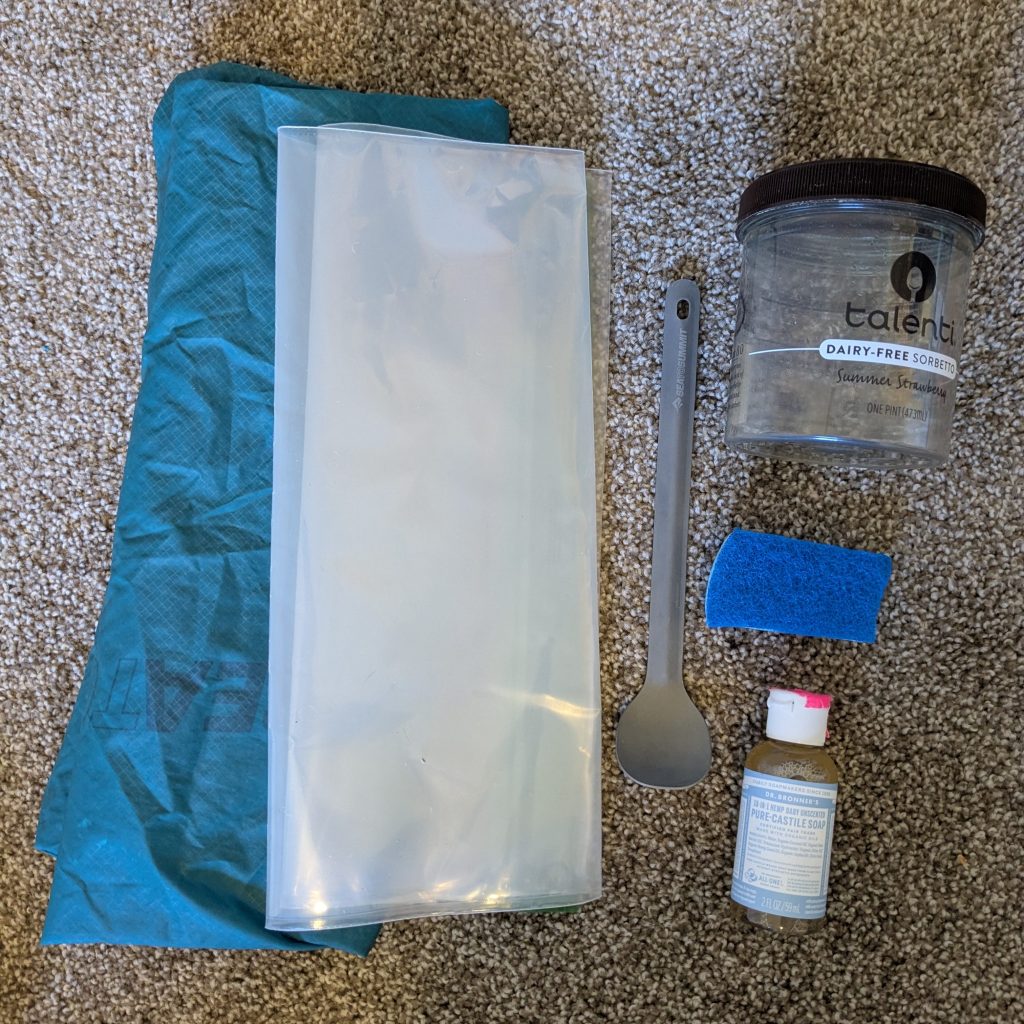
I’m starting the PCT without my stove, so I won’t cook on the trail. Instead, I’ll be cold soaking or eating tortilla-based dinners. For this, I’ll bring:
- Talenti plastic jar
- Long-handled metal backpacking spoon
- 1/3 kitchen sponge
- Dr Bronner’s Unscented Pure-Castile Magic Soap – 2 fl oz bottle
- Odor-reducing food storage baggies – 2x 12″ by 20″ OPsak
- Stuff sack
First Aid, Repair, and Emergency Kit
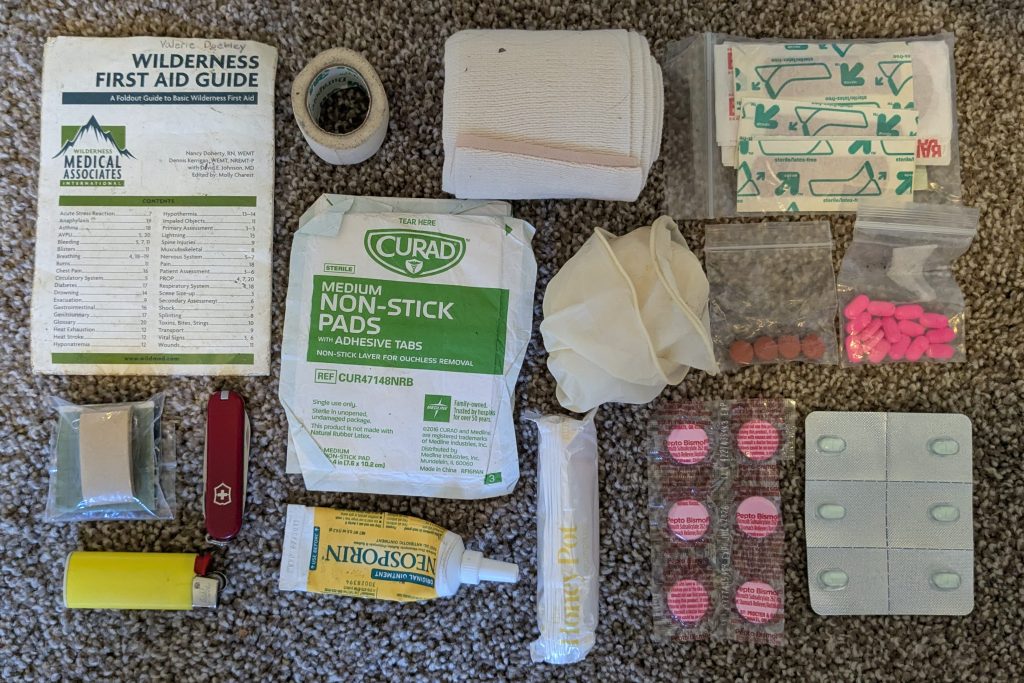
I made my own backpacking first aid kit and emergency kit. Here’s what I included:
- Mini Swiss Army knife – includes tweezers, file, knife, and scissors
- Lighter
- Band aids – various sizes
- Gauze pads
- Medical tape
- Ace bandage – a bulky necessity, with my history of kneecap dislocations
- Alcohol prep pads
- Neosporin
- Medications – benadryl, ibuprofen, pepto bismol, Imodium
- Tampon – fun fact: can be used to stop a nosebleed
- Medical gloves
- Wilderness first aid pamphlet
- Safety pin
- Repair tape for gear
Electronics
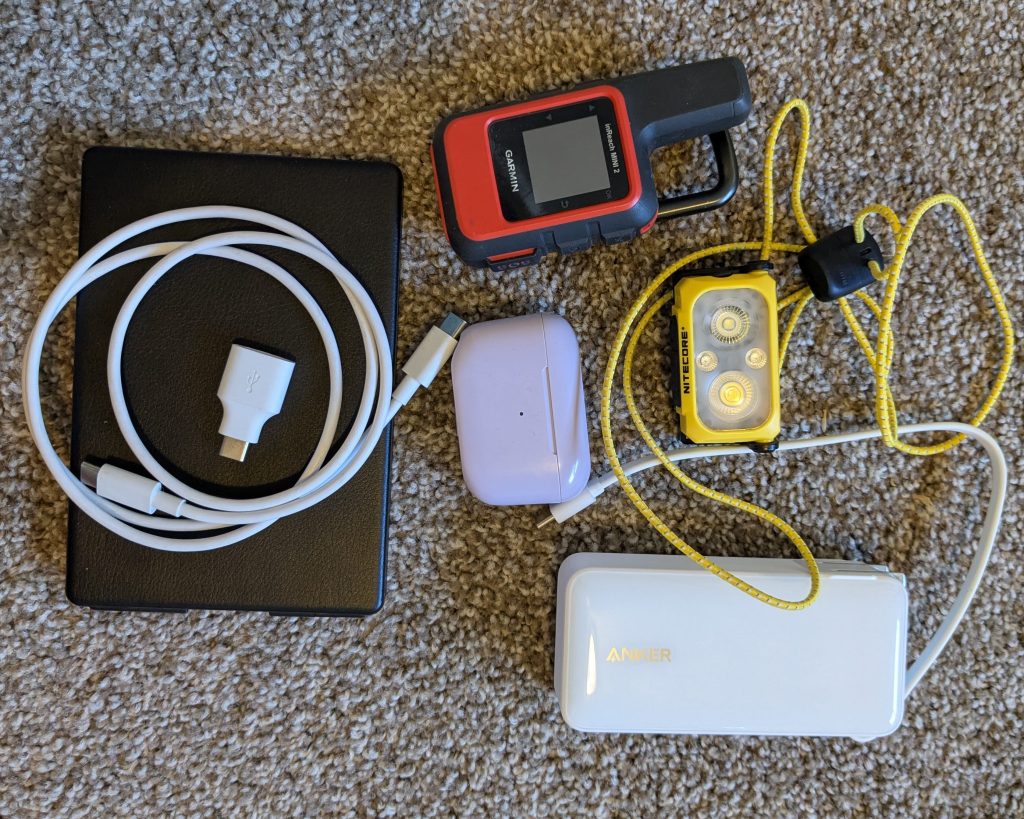
One big way thru-hiking has changed since my 2014 AT hike is that a LOT more things that need to be plugged in and charged! On my AT thru-hike, the only things that needed charging were my phone and a digital camera that I carried for only part of the trail. For the PCT, I’ll bring:
- Phone: Pixel 6a
- PLB: Garmin In Reach Mini 2
- Headlamp: NITECORE NU25 UL 400 Lumens Ultralight Rechargeable
- Folding travel keyboard: for typing blog posts!
- Bluetooth Earbuds
- Power bank/Wall Plug: Anker Power Bank (10K, Fusion, Built-In Cable)
- Extra Cable: so I can charge 2 things at once.
- Adapter: USB-A to USB-C
Toiletries
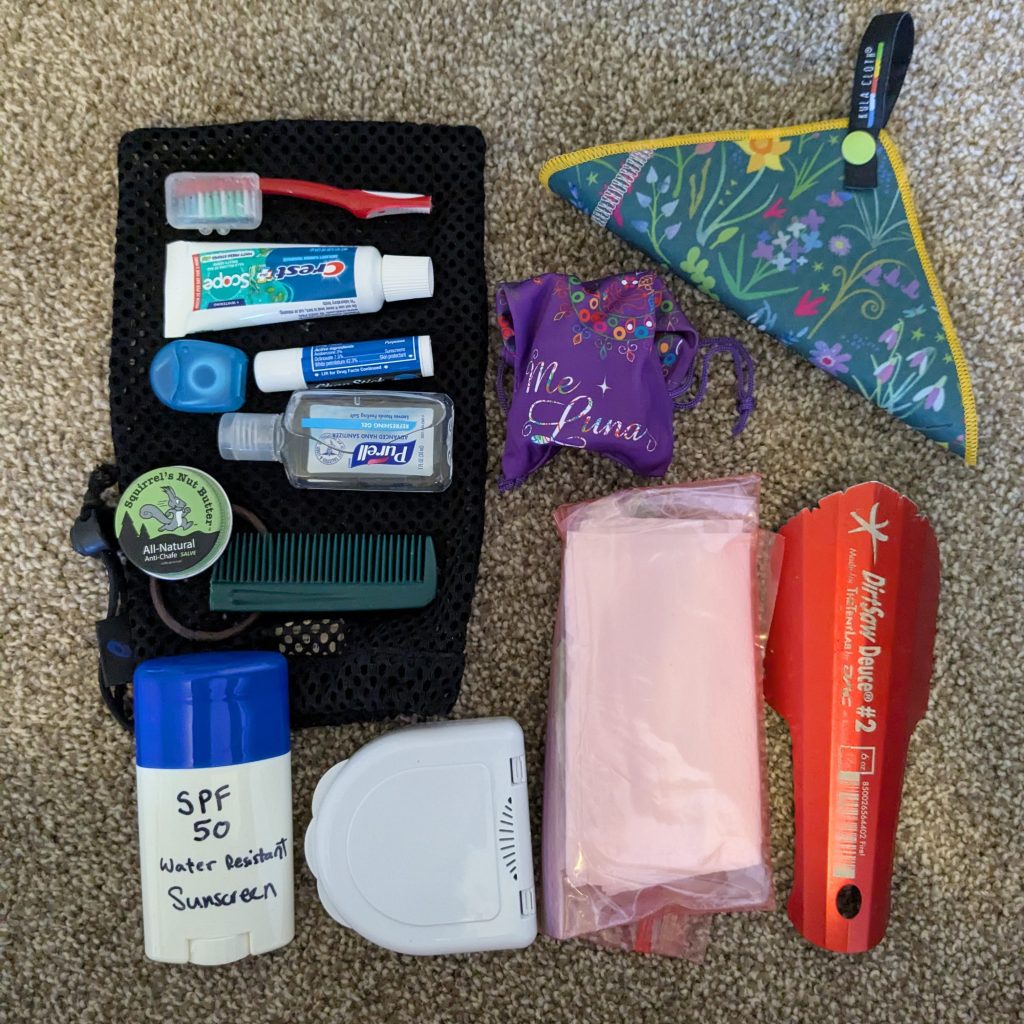
- Kula Cloth
- Trowel: The Tent Lab The Deuce #2
- TP and/or baby wipes in a Ziploc
- Extra Ziploc for packing out used TP/baby wipes
- Hand sanitizer – 1 oz
- Toothbrush
- Toothpaste
- Dental floss
- Night guard w/ plastic case
- Comb
- Hair tie
- Sunscreen stick – SPF 50
- Lip balm
- Squirrel’s Nut Butter Anti-Chafe Salve – 0.5 oz tin
- MeLuna cup w/ cloth case
Paper Things
- Printed PCTA Long Distance Permit
- Printed California Campfire Permit
- PCT Databook Pages – cut into sections and put in my resupply boxes.
Misc.
- Compression sack – an extra layer of protection for my sleeping bag and sleeping clothes
- 3 mm utility cord
- Mini carabiner
- Ziploc baggies – various sizes, for organization
- Trekking poles
- Knee brace – an unfortunate necessity on this trip, thanks to the knee injury that had me starting the year on crutches!
- Credit cards
- Driver’s license
- Cash
Sierra Stuff
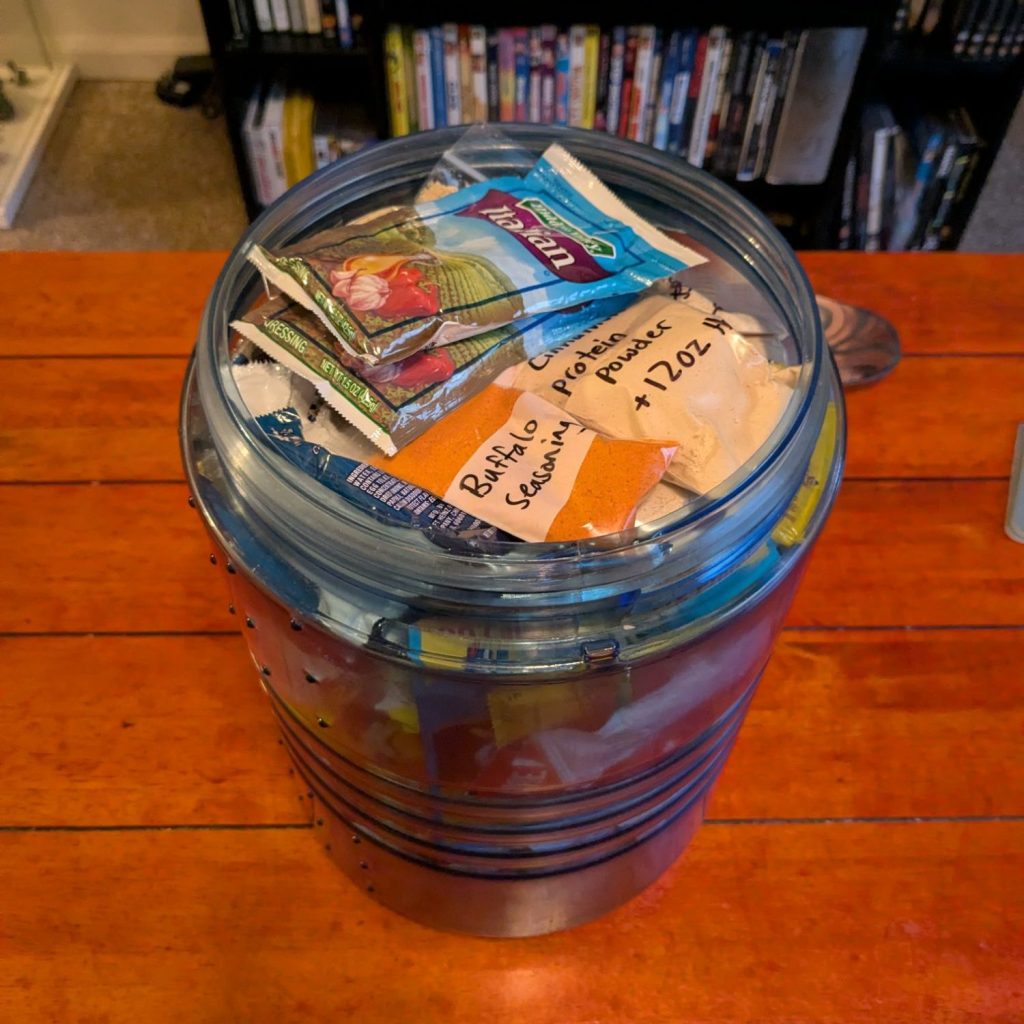
I’ll need a few extra pieces of gear in the Sierras, due to the conditions and regulations. Rules in parts of the Sierras require backpackers to store their food in a bear canister: a sturdy, hard-sided container that prevents bears from getting human food. Additionally, the trail in these high mountains is sometimes covered in snow and ice. I’ll need the appropriate snow gear. I’m mailing these Sierra-specific items to myself to pick up at Kennedy Meadows, mile ~700 of the PCT:
- Bear Canister: BV500
- Ice Ax: Black Diamond Raven 60 cm – certainly not the lightest option out there, but it’s the ice ax I already owned
- Traction: Kahtoola MICROspikes
- Bug head net – for mosquito protection
- 3mm stretchy cord, ~3 ft – to secure gear to the top of my pack if needed, since there will be less room inside the pack with the bulky bear canister.
Phew! That everything!
The funny thing about gear is that it matters so much less once I’m actually on the trail. Pre-trail, it is easy to start feeling like every tiny decision matters so much and will impact my experience. But realistically, it won’t.
I know once I get out there, I will adapt and make adjustments as needed. On past trips, I made the gear I had work for me, even when it was far from perfect. For example, on my first backpacking trip ever, I carried a car-camping sleeping pad, a falling-apart sleeping bag that was older than me, and an external-frame backpack that barely fit all my gear! Even so, I had an amazing trip and fell in love with backpacking.
Furthermore, I’ll have plenty of opportunities to ditch things I end up not needing and pick up extra items I overlooked. With all the gear decisions out of the way, I’m looking forward to finally beginning my hike!
Leave a comment below! What must-have items do you bring backpacking or hiking?
 Adventures with Val
Leave a comment