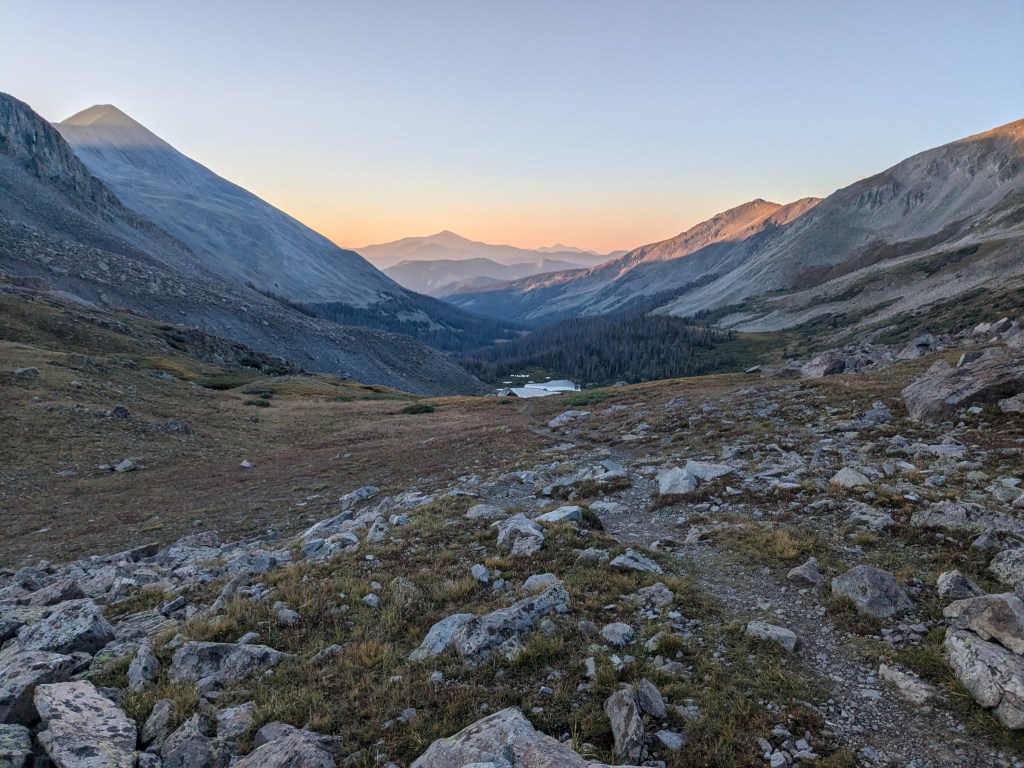
If you know me, then you likely know that the Colorado Trail holds a special place in my heart. The unmatched views, high elevations, (relatively) reasonable grade, and wonderful trail towns make the Colorado Trail unforgettable. This wonderful trail is one of many things that makes me proud to call Colorado my home!
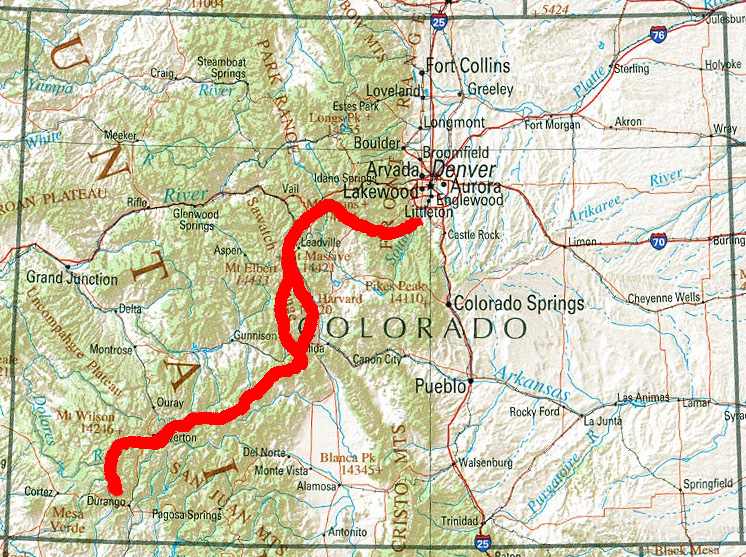
If you’re not already familiar, the Colorado Trail, or “CT”, is a 485-mile-long footpath between Denver and Durango, Colorado. It traverses through the heart of the Rocky Mountains, showcasing some of the most beautiful scenery Colorado has to offer. Each year, the Colorado Trail attracts hikers, backpackers, bikers, pack animals, and thru-hikers – those who trek the entire trail in one long backpacking trip!
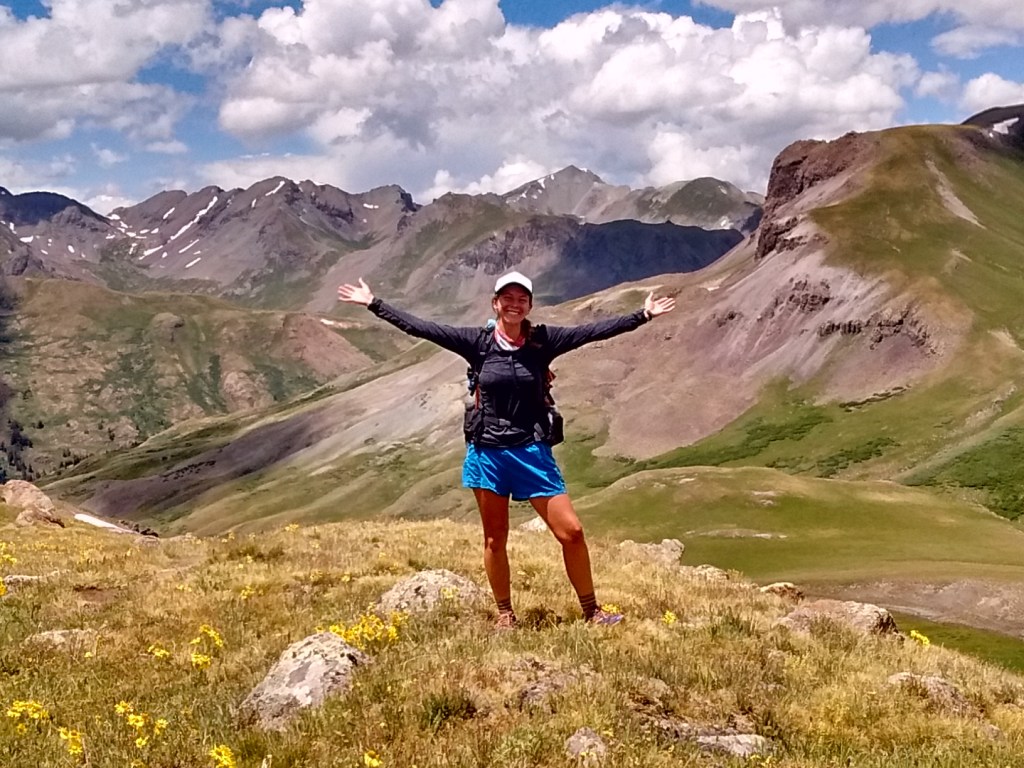
I thru-hiked the Colorado Trail in 2016, two years after my thru-hike of the Appalachian Trail. Even after hiking the whole trail, I still return to section hike on the Colorado Trail at every opportunity – including my 5-day hike of the Collegiate Loop last summer. The CT is a fantastic place for a hike of any length! But, given the opportunity, thru-hiking is the perfect way to experience everything the Colorado Trail has to offer.
If you’re on the fence about thru-hiking the Colorado Trail, get ready to be convinced to do it! I’m here to dispel your concerns and provide a little shove out the door to take this once-in-a-lifetime journey!
You (probably) won’t have to quit your job
At just under 500 miles, the Colorado Trail is short enough that you might be able to do it using saved-up vacation time or a seasonal break. When I thru-hiked the CT, I was a college student on summer break. But I met many teachers, seasonal workers, and folks with jobs that give generous amounts of vacation time.
For those who want to return to their job post-thru-hike, the CT is a more attractive option than trying to negotiate 4, 5, 6, or even 7+ months off to hike Pacific Crest or Appalachian Trail. I feel that a motivated hiker who has trained and conditioned in advance can reasonably complete the Colorado Trail in about a month. That’s about 16 miles per day on average, including days off. Will your boss be able to replace you in one measly month?
If a month feels like a stretch to you, here’s the breakdown of average miles-per-day (including any zero and “nero” days) needed for different length CT thru-hikes:
- 8 weeks: 9 miles per day
- 7 weeks: 10 miles per day
- 6 weeks: 12 miles per day
- 5 weeks: 14 miles per day
- 4 weeks: 17 miles per day
- 3 weeks: 23 miles per day
- 2 weeks: 35 miles per day!
You may surprise yourself and hike the Colorado Trail faster than you expect. After you’ve been on the trail for a week or two, your legs will start adjusting to hiking all day long. Furthermore, if you’re used to hiking on very steep trails like the Appalachian Trail, you’ll be pleasantly surprised by the relatively easier grade of the CT. I know I was! The CT is mostly graded for pack animals, so while the climbs are quite long, most are not excessively steep.
Ultimately, the amount of time a thru-hike takes has less to do with hiking speed and more to do with the number of days off. A day or two of rest in each resupply town can easily add upwards of a week to a thru-hike. When planning a trip for a tight time window, it’s important to consider your goal. Is it to complete the whole trail? Relish the journey regardless of the destination? Both are valid ways to enjoy the trail.
The resupply logistics are not difficult
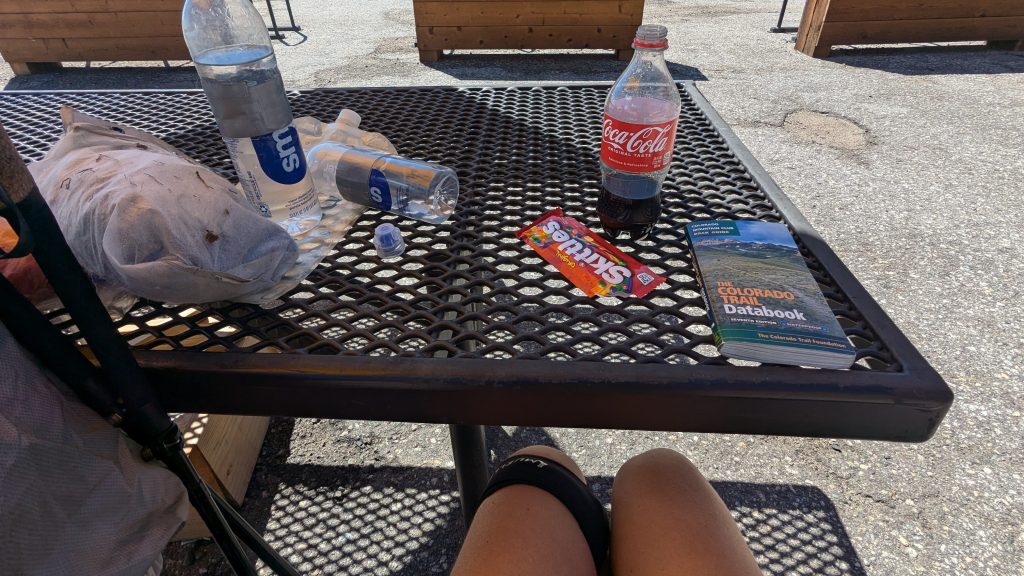
Thru-hikers must obtain food, or “resupply”, in nearby towns while on trail. Perhaps you’re feeling overwhelmed by the massive chore of preparing resupply boxes to mail to yourself in towns along the way. What if I said you didn’t need to? Conveniently, the whole Colorado Trail can be hiked without mailing any resupply packages, especially for those without dietary restrictions. When I thru-hiked the CT, I didn’t mail a single box to myself – and I’m glad I didn’t! Instead, I shopped at grocery stores in towns near the trail.
One could easily thru-hike using between 5 and 8 resupply stops throughout the 485-mile long trail. Though you could resupply more often if you wanted to. Here are a few of the places where a CT thru-hiker might resupply (in order from north to south):
- Bailey
- Jefferson/Fairplay
- Breckenridge/Frisco*
- Copper Mountain Ski Resort**
- Leadville
- Twin Lakes*
- Buena Vista
- Mount Princeton Hot Springs**
- Salida*
- Monarch Crest Store**
- Gunnison/Saguache
- Creede
- Lake City*
- Silverton*
*these are the stops I would deem most crucial. For a hiker with a time crunch, one could resupply using only these places to minimize time-consuming trips to town.
**these are not towns and have very limited resupply options and services available
Most of these stops involve hitchhiking or catching a shuttle to get to town. Many of the towns have supermarkets. A few have smaller grocery stores or convenience stores. Thankfully, I never had to resupply at a gas station or convenience store. I wrote a blog post with details about everywhere I resupplied along the Colorado Trail.
There’s no confusing permit system
There is no restrictive permitting system for the CT (as of 2025). You won’t need to enter a lottery. You won’t need to worry about getting your ideal start date. You can simply start hiking.
In fact, you don’t need a permit at all to hike most of the Colorado Trail, with two exceptions:
- Free, self-service Wilderness Area permits
- State Wildlife Area permit (needed only in some circumstances, explained below)
For the Wilderness Areas, there’s nothing you need to do in advance. When the trail crosses into a Wilderness Area, there will be a self-service kiosk next to the trail where you can fill out a form for a free permit. Easy peasy.
In recent years, a State Wildlife Area (SWA) permit may also be required for certain routes/itineraries, though most thru-hikers won’t need it. First off, anyone who takes the Collegiate West route will avoid the SWA completely (side note: read my guide to choosing between the Collegiate East and West!) For Collegiate East hikers, as I understand it, this permit is only required if you want to camp (or hunt or fish) within the SWA. The SWA is only a roughly half-mile-long section of trail within CT segment 12. If you don’t have a permit, simply don’t stop to camp (or hunt or fish) within the SWA. There’s more information (external link) about SWA permit requirements on the Colorado Trail Foundation website.
You won’t be alone (if you don’t want to be)
It may feel daunting to set off on a trek through the wilderness, especially for solo thru-hikers. However, on the Colorado Trail, you likely won’t be alone. Here’s why: the weather window for thru-hiking the Colorado Trail is short. Due to the snow in the mountains, the prime hiking season for the CT is just three months – July, August, and September. Because of this, most thru-hikers are on the trail around the same time.
Whether you start the trail solo or with a partner, you’ll have plenty of opportunities to socialize with other hikers, if you choose. I only camped alone for three nights during my thru-hike. The other nights I camped next to other thru-hikers, section hikers, or weekend backpackers.
On the other hand, if you want to be alone, you can always “stealth camp”. Stealth camping means picking a random place in the woods off the side of the trail to pitch your tent, rather using than a more popular campsite from the databook/FarOut App.
The scenery is unparalleled
As I’ve mentioned in my post ranking the Colorado Trail’s 33 segments from best to worst, there are very few parts of the Colorado Trail that aren’t amazing. If you enjoy big mountain views, pine forests, miles up above the tree line, and stunning alpine wildflowers, the Colorado Trail will not disappoint!
The Colorado Trail goes up and down in elevation quite a bit. Consequently, you get a nice variety of scenery as the plants change with altitude. Here are a few of the habitats you’ll travel through (from lowest to highest):
- Shrubland and pasture
- Pine forest
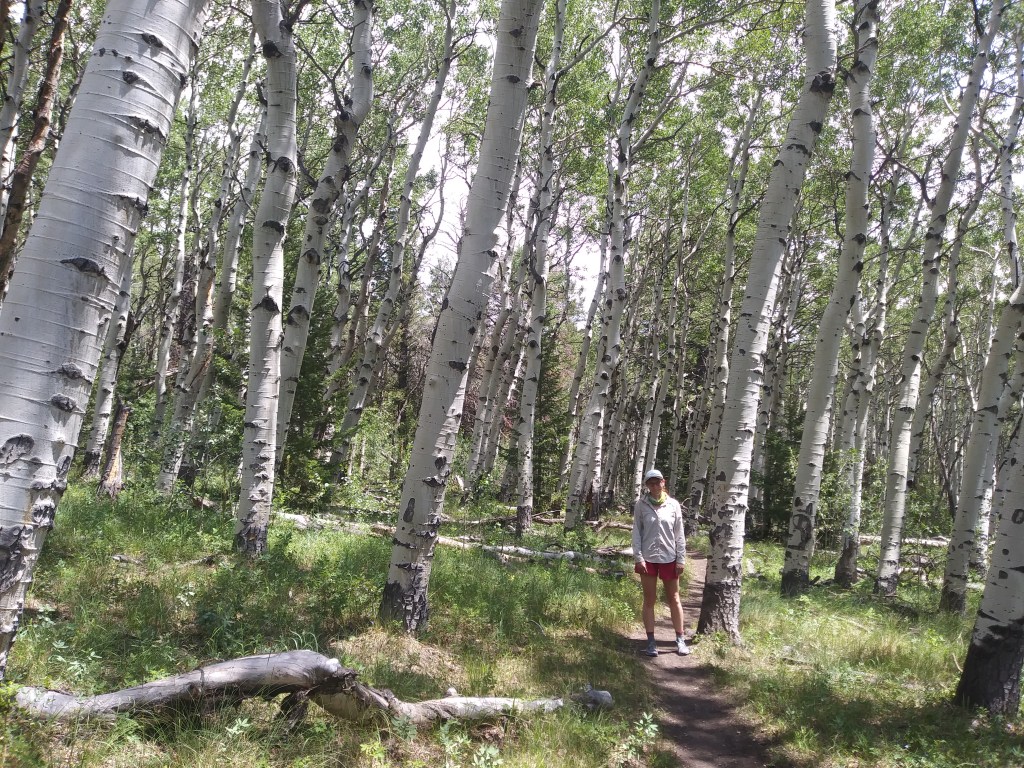
- Aspen forest
- Subalpine spruce-fur forests
- Alpine tundra
One of the best parts of the CT is seeing the amazing variety of the Colorado landscape. If you don’t like the scenery, just keep hiking and it will change. There were only three segments (17, 18, and 19) that I’d consider to be true pasture/farmland. Yes, they were a bit dull and with few good campsites. BUT, they were also so flat that most hikers fly through them. It took me about a day and a half to get across the cow pasture portion of the CT. Then I was climbing back up into the alpine. Embrace the fact that a thru-hike means you get to walk through everything – from farmland to towering mountains, and everything in between!
Join the Conversation:
Are you planning to thru-hike the Colorado Trail? What are your biggest concerns? What is your reason for thru-hiking? Have you already hiked the Colorado Trail? What was your favorite part? Share it in the comments section below!
 Adventures with Val

Leave a comment