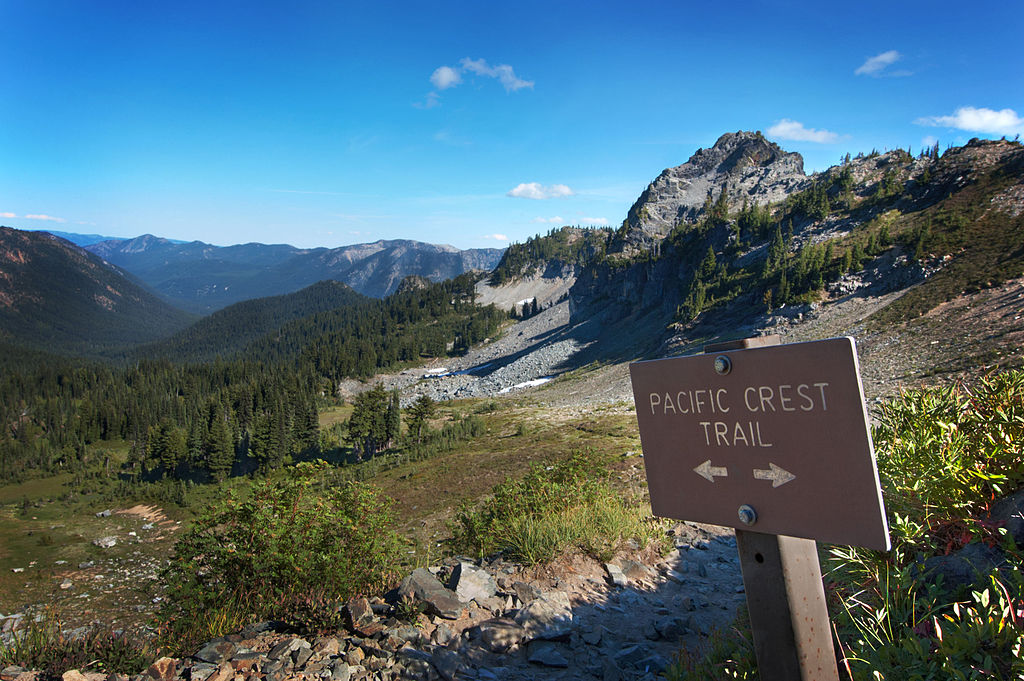
This week, I have an exciting announcement to share: I’m planning to thru-hike the Pacific Crest Trail this year! I’ve been dying to share my plans but held off while I waited to get my permit figured out. Now with my permit application submitted, it finally seems real!
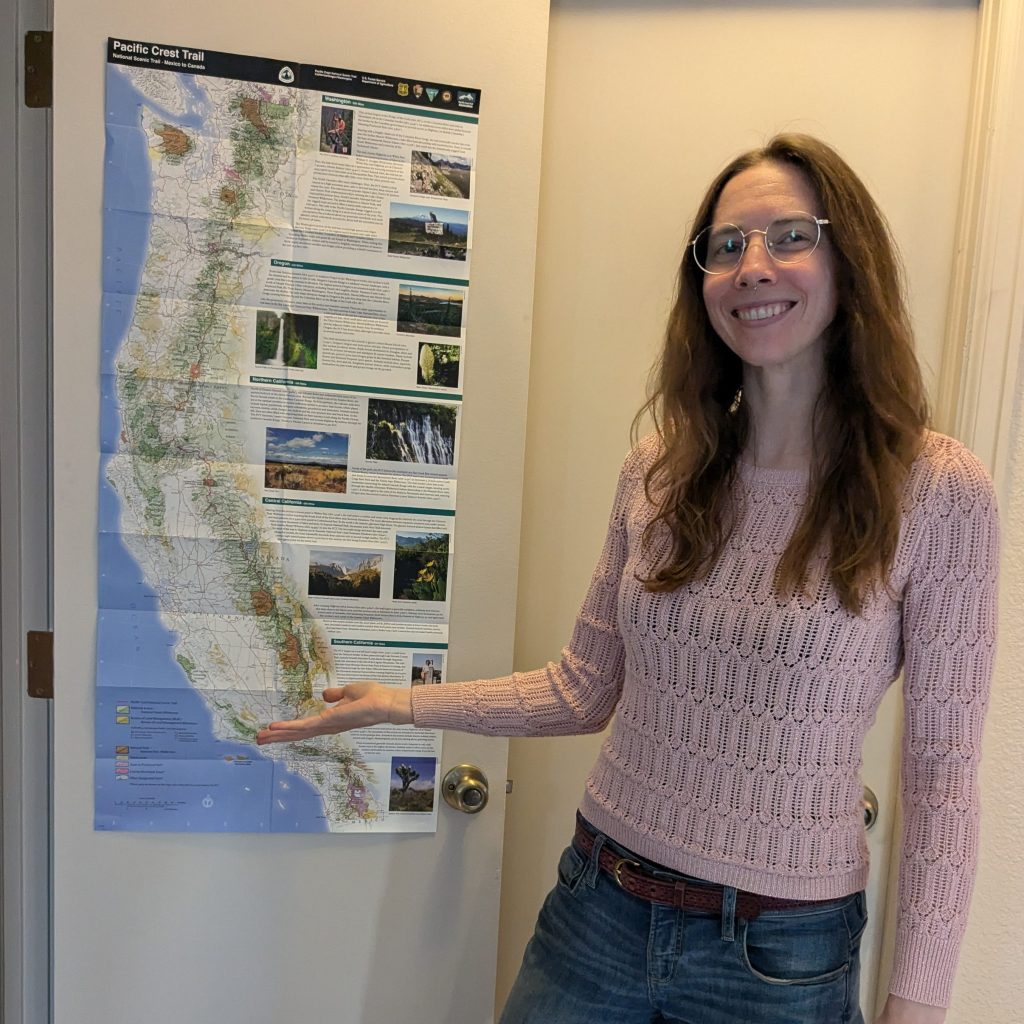
I’ve been planning this trip for about half a year, and dreaming of doing it for much longer than that. In fact, one of the reasons I decided to start this blog was to create a place to write about my upcoming thru-hiking adventure.
The Pacific Crest Trail, or “PCT” is a ~2,650-mile-long footpath in California, Oregon, and Washington in the United States. Its endpoints are at the Mexican and Canadian borders. The trail crosses through many wilderness areas, national forests, and national parks.
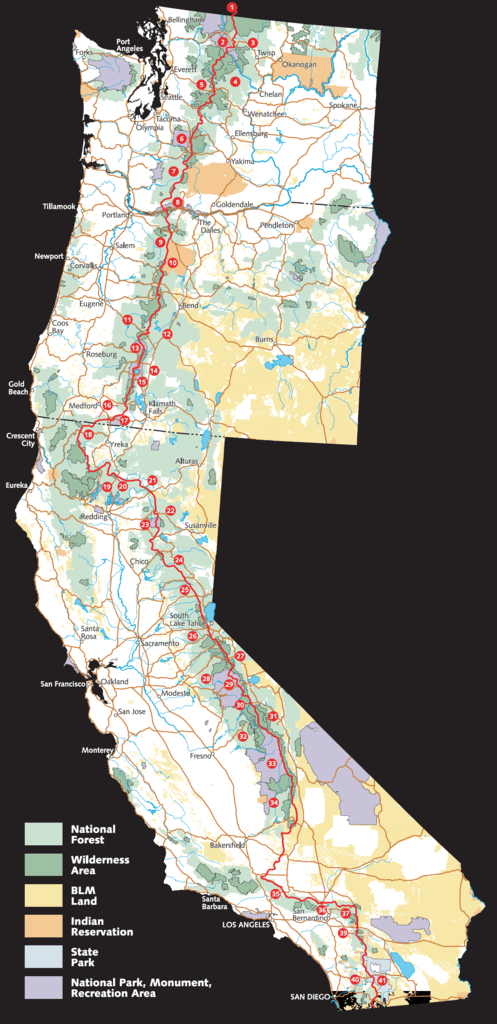
Each year, many backpackers attempt to hike the Pacific Crest Trail from end to end. Thru-hiking means walking an entire long trail such as the Pacific Crest Trail or Appalachian Trail (AT) in its entirety in one big backpacking trip. There are three main ways to do a PCT thru-hike:
- Hike northbound (Mexico to Canada)
- Hike southbound (Canada to Mexico)
- “Flip-flop”, which means hiking part of the trail in one direction and the rest of the trail in the opposite direction.
I am planning to hike the Pacific Crest Trail northbound, starting at the Mexican Border in May. Northbound thru-hikers usually start in March, April, or May. Since I got a permit for a May start date, I’ll begin the trail on the later end. For most thru-hikers, it takes between 4 and 6 months to complete the PCT. This is partially because the weather window each year to hike the PCT is not very long, due to snow.
Why I want to hike the PCT
I’ve been dreaming of the PCT for over a decade. In 2014, I thru-hiked the Appalachian Trail after graduating high school. Immediately, I craved another thru-hike, even though I had no idea when the stars would align to let me take that kind of time off again.
I started reading about the Pacific Crest Trail and bought the PCT Databook. But with a busy schedule of college classes and a campus job, my PCT obsession never materialized into anything more than daydreams. Instead, I hiked the 500-mile Colorado Trail over summer break, then transitioned into trail running and day hiking.
Somehow, it’s been 10 years since then! In those years, a lot has happened. To summarize, I:
- Graduated college
- Got a 9-to-5 job
- Grew frustrated with the 9-to-5 lifestyle
- Quit the 9-to-5 job and went back to school for a master’s degree
- Realized another degree wasn’t going to fix anything
- Started a small business
- Grew that business to the point where I can now take some time off!
Suddenly, I find myself in a place where I have the flexibility to do another thru-hike. Deciding to go is the easy part.
My main reason for wanting to thru-hike the PCT is simply because I love hiking and backpacking. I know from my thru-hikes on the Appalachian Trail and Colorado Trail (CT) that I love the day-to-day of life on the trail, with all its challenges and rewards: the high highs, the low lows, and the quiet moments in between.
Another reason I want to hike the PCT is to challenge myself. This is a big, scary goal, but one that is important to me. The PCT is going to challenge me in ways that the AT and CT did not. The PCT is longer than either of these trails, crosses through hot deserts with limited water, and scales snowy mountain passes that may require an ice ax and crampons. Though it’s all a little intimidating, I’m looking forward to pushing myself outside my comfort zone.
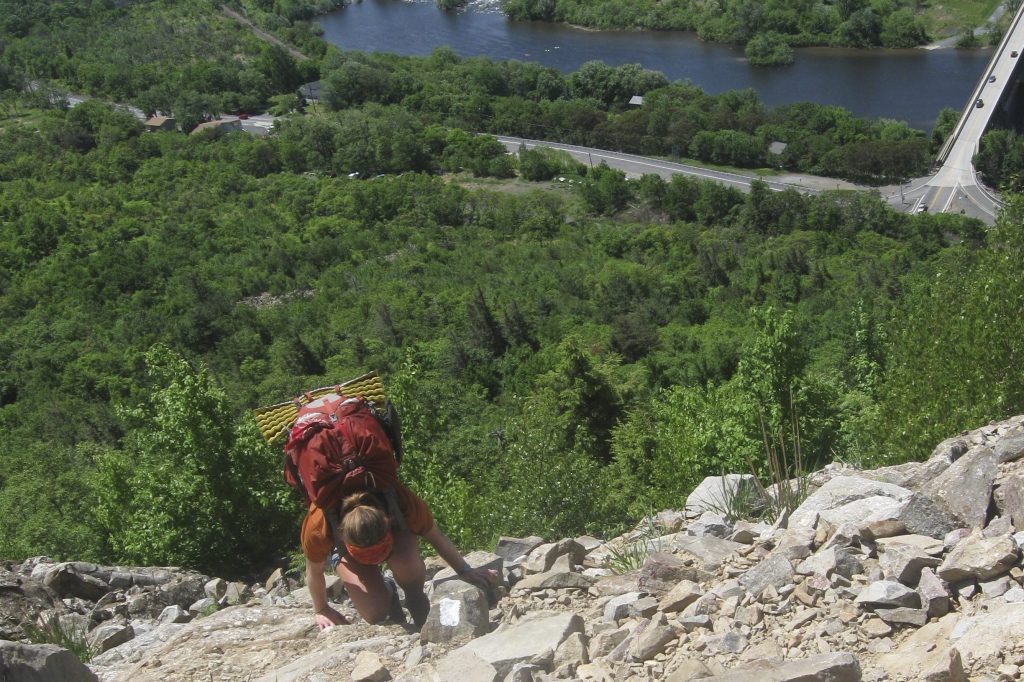
Challenges I’ll Face
The heat
I am most nervous about the dryness and heat of the desert. I grew up in Wisconsin and have lived in northern Colorado for my entire adult life. Consequently, I don’t have much experience with extreme heat. While I have backpacked in deserts before, I’ve never done so in the late spring or summer. I’ve only hiked in 100-degree heat once in my life, and it did not go well. I ended up getting hyponatremia (low blood sodium), threw up, and bailed on my planned route.
With my May start date, I’ll likely see some hot days in the desert with highs in the 90s or even 100s. While many hikers start the PCT in May every year, many consider April a better time to start to avoid heat. The desert section makes up the first 700 miles of the PCT. I won’t have time to dilly-dally if I want to get out of the desert before the worst of the summer heat hits! This is definitely daunting for me.
The rivers
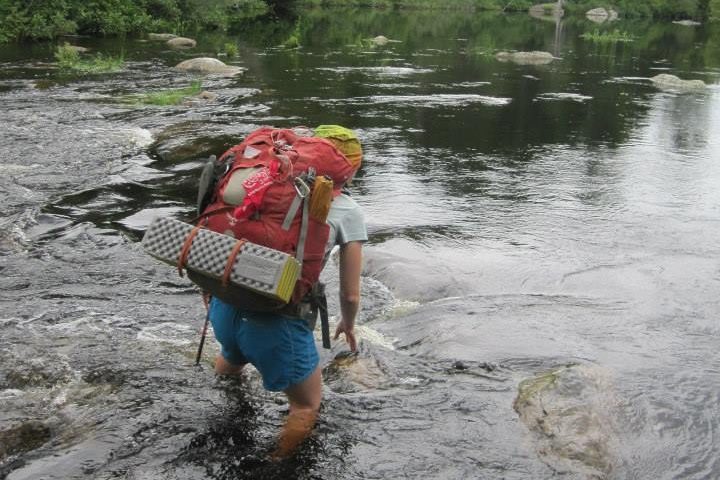
Another aspect that intimidates me is the river crossings. Snow melts in the spring and early summer, filling rivers and making crossings more difficult. While I’ve forded (waded across) rivers before, I never felt comfortable or particularly competent doing so. The Appalachian Trail had a handful of river fords, but I expect to encounter more frequent and challenging fords on the PCT.
Staying healthy and injury-free
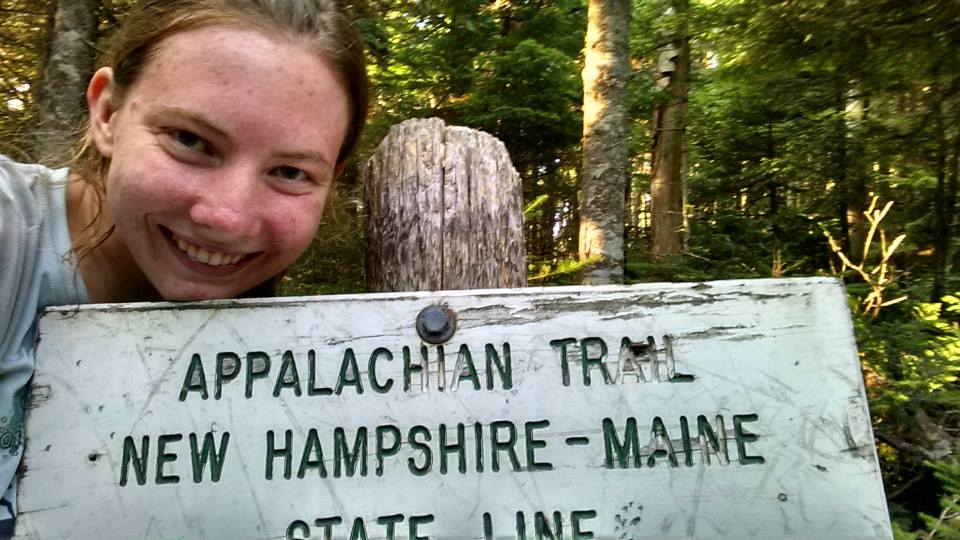
Finally, I am concerned about the possibility of injury or illness on trail. Something was definitely off with my nutrition and self-care on the Appalachian Trail. In my photos from New Hampshire and Maine, I look sickly, with big bags under my eyes and a puffy face. I also remember suffering from a generalized, dull ache in all my bones toward the end of my trip. I suspect my body was reacting to months of poor nutrition and the stress of hiking day after day without enough rest.
I also have problems with knee cap subluxation and dislocation. While I do my best to keep my leg muscles strong to compensate, I’m aware more than ever that this injury can strike at any time. A dislocation could end my thru-hike and would be especially problematic if it struck while deep in the wilderness.
At 19, I muscled through minor injuries and ailments and completed my thru-hike. I suspect that now, at 30, similar neglect of my body could result in a trip-ending illness or injury. I’m planning to take steps to better care for myself this time, but am still apprehensive about the possibility of getting hurt.
What I’m looking forward to most
I am looking forward to many aspects of the Pacific Crest Trail. I’m excited to have new experiences, meet new people, and challenge myself in new ways. These were some of my favorite things about hiking the Appalachian and Colorado Trails – the parts that I couldn’t predict or plan for.
In planning my thru-hikes, I could map out the miles, campsites, and resupply stops. But I couldn’t predict the many amazing things that happened spontaneously. Like waking up to a foot of snow in the Smoky Mountains – or the comradely built while post-holing through that snow to get to the next campsite with a group of other thru-hikers! Or getting invited to a Memorial Day picnic with a family I just met while hiking through a recreation area. Or catching the sunrise from a remote mountain peak.
I am also excited to explore a new area. I have not spent much time in any of the states the PCT passes through and am excited to take in new landscapes and national parks.
My (very limited) experience with the PCT thus far
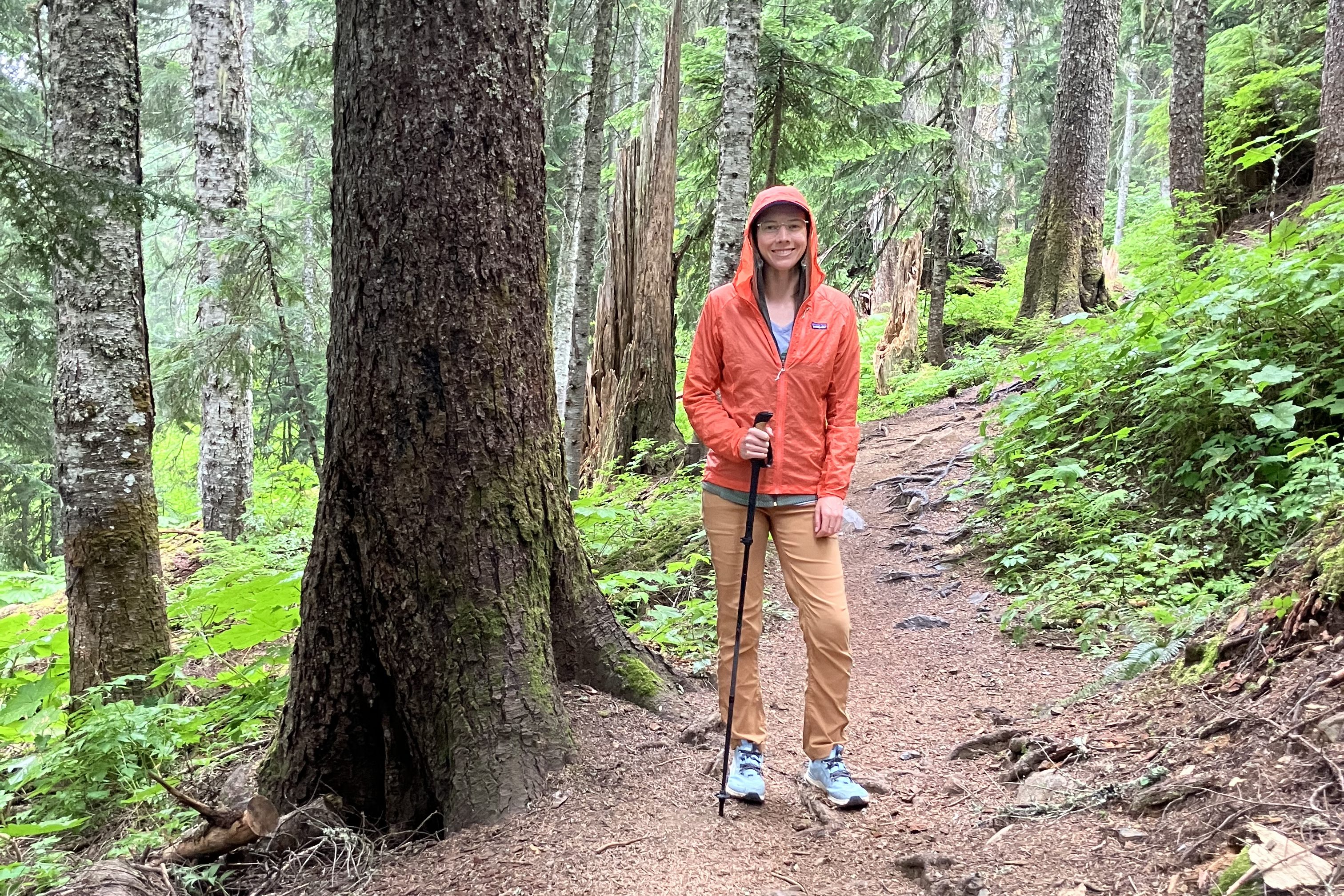
I’ve set foot on the Pacific Crest Trail only two times. The most recent was last July. I was in Washington to run the Jack and Jill Marathon, which started at Snoqualmie Pass – which happens to be where the PCT crosses I-90.
The day after the marathon, I did a short recovery hike on the PCT. Though I only hobbled about a mile into the woods, I was hooked! The forest was so lush and green and the trees were so big – different from the semi-arid Colorado Front Range where I live. My sore, post-race legs demanded that I turn around and head back to the car, my heart ached to keep walking to Canada! When I returned home, I started making plans to thru-hike in 2025.
My other PCT encounter was much longer ago. In 2013, my dad, sister, and I took a vacation to the San Diego area and drove out to Anza-Borrego Desert State Park. At the time I was in high school, but I was already in full planning mode for my anticipated Appalachian Trail thru-hike after graduation. I was obsessed with all things thru-hiking and trail-related.
So naturally, when the three of us crossed the PCT in our rental car, we pulled over to take pictures and peer down the trail. The thin footpath emerged from the desert on one side of the highway and continued on the other side. A single triangular marker was the only indication that this humble trail was a part of something much bigger.
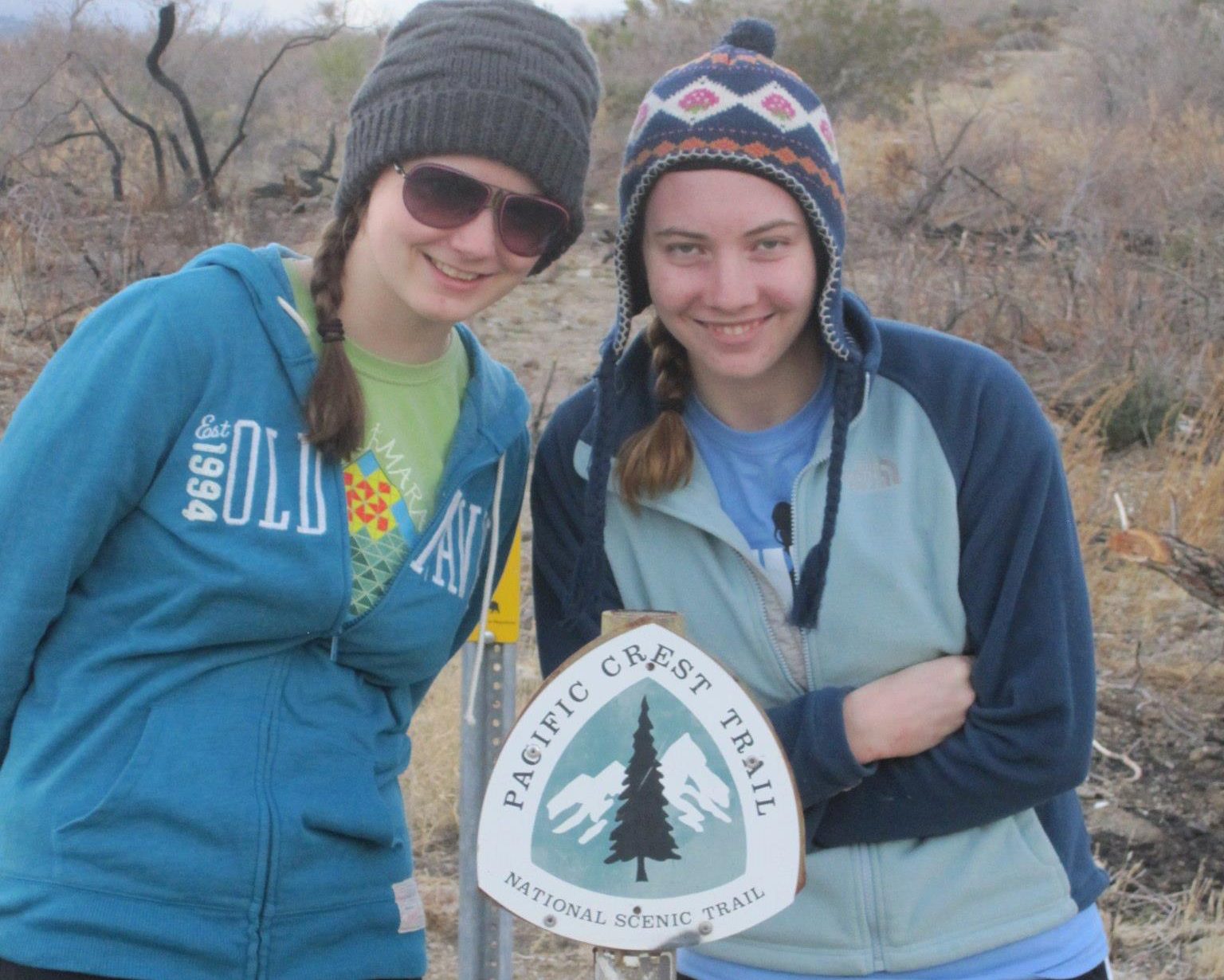
To me, it’s wild to think that the dusty path I saw in the Anza-Borrego Desert is one with the lush, green trail I walked down in Washington. I am beyond excited to connect these two contrasting places on foot and see everything that lies in between.
What’s next?
At this point, I have about 4 months left to prepare before my start date. During this time, I’ll be planning the logistics of my hike, deciding which gear to bring, and training.
During these upcoming months, I’ll keep you updated about how my preparations and planning are going. Before I leave on my trip, I’ll share my starting gear list, give updates about my training, and more on this blog. I’ll also continue posting about backpacking, hiking, and outdoor adventure in general. Once I begin my hike in May, you can expect some changes to the format of this blog. During my thru-hike, I’ll post regular updates about my progress on the trail (when cell service is available!).
Join the Conversation: what questions do you have about the Pacific Crest Trail or planning and preparing for a thru-hike? If you have done a thru-hike, what is something you wish you’d known beforehand? Let me know in the comments section below!
 Adventures with Val
Leave a comment